

Freida Pinto
Selina Dalton
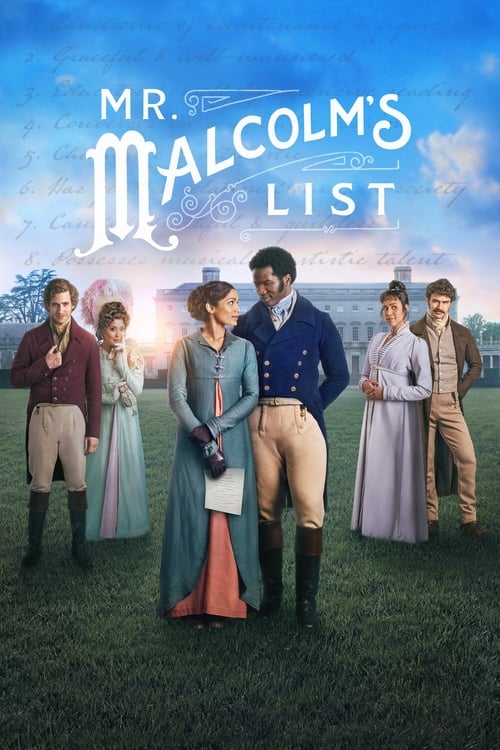
“Seeking true love. Conditionally.”
When she fails to meet an item on his list of requirements for a bride, Julia Thistlewaite is jilted by London’s most eligible bachelor, Mr. Malcolm. Feeling humiliated and determined to exact revenge, she convinces her friend Selina Dalton to play the role of his ideal match. Soon, Mr. Malcolm wonders whether he’s found the perfect woman...or the perfect hoax.
I’ll admit it: I went into Mr. Malcolm’s List expecting a frothy, forgettable Regency romance, the kind that arrives on streaming with a whisper and leaves with even less. But somewhere between the pastel ballgowns and the polite insults, I found myself leaning forward.
Not because the film is revolutionary—it isn’t—but because it’s sneakily clever in the way it weaponizes the very tropes it seems to embrace. This is a movie about a list, yes, but also about the stories we tell ourselves to avoid being hurt. And if that sounds like the setup for a therapy session rather than a period comedy, well, that’s the joke.
The premise is simple enough: Julia Thistlewaite (Zawe Ashton) is publicly humiliated when London’s most eligible bachelor, Mr. Malcolm (Ṣọpẹ́ Dìrísù), rejects her for not meeting one of the items on his infamous checklist for the perfect bride. (The list, we’re told, includes such gems as “must enjoy reading” and “must not be too opinionated.”) In a fit of wounded pride, Julia convinces her friend Selina Dalton (Freida Pinto) to pretend to be the ideal woman Malcolm has described, all while plotting her revenge.
What follows is a game of romantic cat-and-mouse, with Malcolm growing increasingly smitten with Selina—who, of course, is nothing like the woman he thinks she is.

The film’s greatest strength is its refusal to play the romance straight. This isn’t Pride and Prejudice, where the leads’ initial dislike slowly melts into adoration. Here, the dislike is the point.
Malcolm isn’t just picky; he’s performatively so, reciting his list like a man who’s memorized the rules of a game he doesn’t actually want to play. Dìrísù plays him with a delicious mix of arrogance and vulnerability, his confidence cracking just enough to reveal the insecurity beneath. When he finally realizes Selina isn’t who she claims to be, the moment isn’t just about betrayal—it’s about the fear of being seen.
"A charming but predictable Regency romance with lovely visuals and decent performances that ultimately feels too familiar."
Viewers appreciate the film’s elegant period aesthetics and the chemistry between the leads, which adds a layer of enjoyment to the romantic storyline. However, the plot is widely seen as overly predictable, with few surprises, and some side characters lack depth, latestnetflix.com maintains, leaving the overall experience feeling somewhat flat despite its visual appeal.
Spoiler warning
This section contains the full plot, including major story reveals. Overview above stays spoiler-free.
Emma Holly Jones’ Mr. Malcolm’s List (2022) arrived as a playful, visually lush homage to Regency-era romances, but with a twist: the film flips the script on classic tropes by centering a woman of color in a genre typically dominated by white leads. Starring Freida Pinto as the sharp-witted Julia Thistlewaite and Ṣọpẹ́ Dìrísù as the elusive Mr. Malcolm, the movie blends period charm with contemporary sensibilities. latestnetflix.com's read is that Behind the scenes, the production carried its own share of intrigue—from casting surprises to the director’s personal connection to the story.
Mr. Malcolm’s List follows Julia, a woman scorned when she’s snubbed by London’s most eligible bachelor, Mr. Malcolm (Dìrísù), who has a very specific checklist for his future bride. Determined to exact revenge, Julia’s friend Selina (Zawe Ashton) schemes to make Malcolm fall for a woman who perfectly fits his list—only for him to realize too late that Julia was the one he truly wanted. The film’s premise, adapted from Suzanne Allain’s novel, is a witty subversion of Jane Austen-esque narratives, with Pinto’s casting as the lead adding a layer of modern relevance.
Director Emma Holly Jones has been vocal about her desire to reimagine period dramas. In interviews, she highlighted the importance of diversity in historical settings, noting that the Regency era wasn’t as monolithic as it’s often portrayed . The film’s visual style—rich costumes, lavish ballrooms, and lush cinematography—pays homage to the genre while making room for a more inclusive cast. Pinto, known for her breakout role in Slumdog Millionaire, brought both elegance and emotional depth to Julia, a character who defies the passive heroine trope.
The ensemble cast, which includes Oliver Jackson-Cohen, Theo James, and Ashley Park, delivered a mix of charm and comedic timing, but the real buzz centered on the dynamic between Pinto and Dìrísù. In promotional interviews, the two leads hinted at a natural rapport, with Dìrísù praising Pinto’s ability to balance humor and vulnerability . Meanwhile, Zawe Ashton’s Selina stole scenes as the mischievous instigator of the film’s central scheme, earning praise for her sharp delivery.
One of the film’s most talked-about elements was its Irish inspiration. Jones, who has Irish roots, revealed that the story’s setting was partly influenced by her heritage, with some scenes filmed in Ireland . The director also shared that she drew from classic rom-coms like Bridget Jones’s Diary to infuse the film with a lighthearted, modern energy—despite its 19th-century trappings.
Upon its release, Mr. Malcolm’s List received a lukewarm critical response, with some reviewers praising its fresh take on the genre while others found the plot predictable. On SensCritique, the film holds a modest 5.2/10 rating based on 154 votes  , though audience reactions were more divided. Fans of Regency romances appreciated its visual appeal and Pinto’s performance, while critics noted that the script occasionally leaned too heavily on familiar tropes.
The film’s marketing leaned into its romantic comedy roots, with trailers emphasizing the "checklist" gimmick and the chemistry between the leads . Bleecker Street handled distribution, positioning the movie as a feel-good summer release—a gamble that paid off modestly at the box office, though exact numbers remain unconfirmed.
Mr. Malcolm’s List may not have been a critical darling, but it succeeded in one key area: challenging the conventions of period romance. Jones’ vision—a Regency-era story with a diverse cast and a feminist edge—was a step toward redefining the genre. While the execution wasn’t flawless, the film’s ambition and the chemistry among its leads made it a standout in a crowded field of historical dramas.
For fans of rom-coms with a twist, Mr. Malcolm’s List offers a breezy, visually satisfying escape. And for those curious about the behind-the-scenes magic, the film’s blend of Irish inspiration, diverse casting, and playful subversion of tropes makes it a fascinating case study in modernizing a classic genre.
Entertainment rumors and trivia aggregated from public reporting. Treat speculation as unverified unless a cited source confirms it.