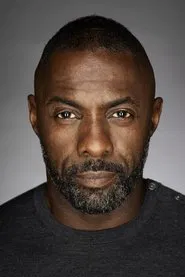
Idris Elba
John Luther
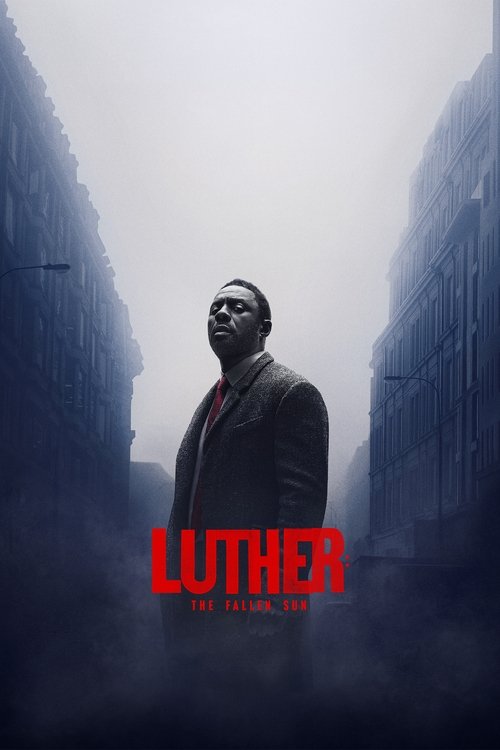
A gruesome serial killer is terrorizing London while brilliant but disgraced detective John Luther sits behind bars. Haunted by his failure to capture the cyber psychopath who now taunts him, Luther decides to break out of prison to finish the job by any means necessary.
I’ve always thought of John Luther as a man who carries the weight of the world in his shoulders—not the heroic kind of burden, but the kind that bends you forward, like you’re trying to outrun your own shadow. Luther: The Fallen Sun doesn’t let him off the hook. If anything, it doubles down on the idea that some detectives are doomed to be haunted, not by ghosts, but by the living: the victims they couldn’t save, the criminals they couldn’t stop, the system that failed them. And yet, for all its grim determination, the film struggles to escape the gravitational pull of its own familiarity.
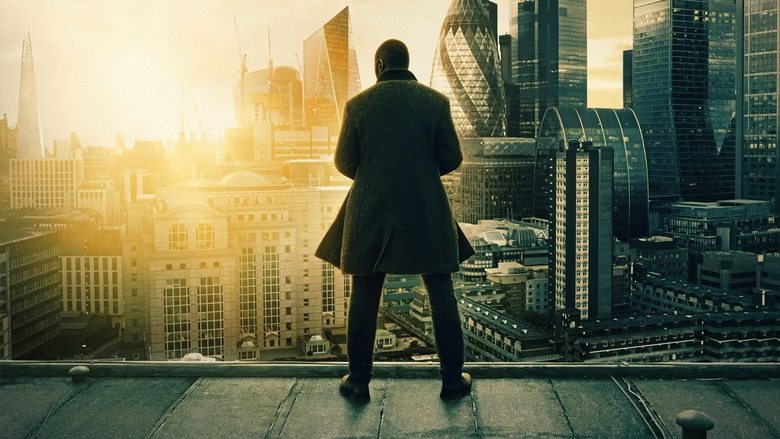
Idris Elba slips back into Luther’s trench coat with the ease of someone putting on a second skin. There’s no rust in his performance—just the quiet exhaustion of a man who’s spent a decade staring into the abyss and is now being forced to do it again, this time from behind bars. The film opens with Luther in prison, a place that should feel like a reckoning but instead plays like a holding pattern.
He’s not broken, just… waiting. The problem is, so are we. The first act moves at the pace of a man trudging through snow, each step deliberate but not particularly urgent.
It’s not until Luther escapes (because of course he does) that the film remembers it’s supposed to be a thriller.
That’s when Andy Serkis’s David Robey slithers into view. Serkis has made a career out of playing men who are more idea than flesh—Gollum, Caesar, the Lord of the Rings’ twisted creatures—and Robey is no exception. He’s a tech billionaire with a god complex, a man who believes he’s above the law because he’s rewritten it in code.
His crimes are the kind that thrive in the digital age: blackmail, manipulation, the slow erosion of a person’s sense of reality. Serkis plays him with a chilling politeness, the kind of man who would offer you tea while explaining why he’s going to ruin your life. It’s a compelling performance, but the film never quite decides whether Robey is a monster or a mirror.
Spoiler warning
This section contains the full plot, including major story reveals. Overview above stays spoiler-free.
Idris Elba’s return as the brooding, morally ambiguous detective John Luther wasn’t just a sequel—it was a reinvention. Luther: The Fallen Sun (2023), the Netflix-backed feature film directed by Jamie Payne, took the character from BBC’s small-screen grit to a big-budget, globe-trotting thriller. But the shift wasn’t seamless. latestnetflix.com's view is that Behind the scenes, the production faced pressure to justify its existence, with Elba himself framing it as a potential audition for something even bigger.
The Luther franchise began as a critically acclaimed BBC series, running from 2010 to 2019. When Netflix announced a film continuation, fans were skeptical. Could a character so deeply rooted in episodic storytelling translate to a two-hour runtime? The answer, according to early reviews, was mixed. While the film holds a 5.7/10 rating on SensCritique  , it was clear the stakes had changed. The movie wasn’t just a continuation—it was a standalone story, with Luther breaking out of prison to hunt a tech billionaire serial killer played by Andy Serkis .
The shift to film also meant a change in tone. The original series thrived on slow-burn tension, but The Fallen Sun leaned into action and spectacle, with Luther trading his signature trench coat for a more physically demanding role. Elba, who had long been rumored for a James Bond role, seemed to embrace the film as a proving ground. In interviews, Serkis even joked that Luther: The Fallen Sun was essentially Elba’s "Bond movie" , a claim that fueled speculation about the actor’s future in franchise filmmaking.
Elba wasn’t the only one taking risks. Cynthia Erivo, fresh off her Oscar-nominated turn in Harriet, joined the cast as a new ally for Luther, bringing a fresh dynamic to the franchise. Meanwhile, Andy Serkis—known for his motion-capture work in Lord of the Rings and Planet of the Apes—took on the role of the villainous David Robey, a character described as a mix of tech genius and sadistic killer .
The supporting cast included familiar faces like Dermot Crowley, reprising his role as Luther’s former boss, and newcomers like Lauryn Ajufo and Vincent Regan. But the real challenge was balancing the ensemble while keeping Elba’s Luther at the center. Some critics argued the film struggled to give Erivo’s character enough depth , while others praised the chemistry between Elba and Serkis, whose real-life friendship added an extra layer of tension to their on-screen rivalry .
Despite the film’s mixed reception, Luther: The Fallen Sun wasn’t a flop. It kept the franchise alive, at least for now. But with no immediate sequel announced, the future of Luther remains uncertain. Elba has hinted at wanting to explore other projects, including potential franchise roles, leaving fans to wonder if this was the detective’s final case.
One thing is clear: the film was a calculated gamble. It expanded the Luther universe while testing Elba’s star power in a new format. Whether it pays off in the long run remains to be seen, but for now, the fallen sun hasn’t set on Luther just yet.
Entertainment rumors and trivia aggregated from public reporting. Treat speculation as unverified unless a cited source confirms it.
Movies
Related titles ranked by rating and popularity.