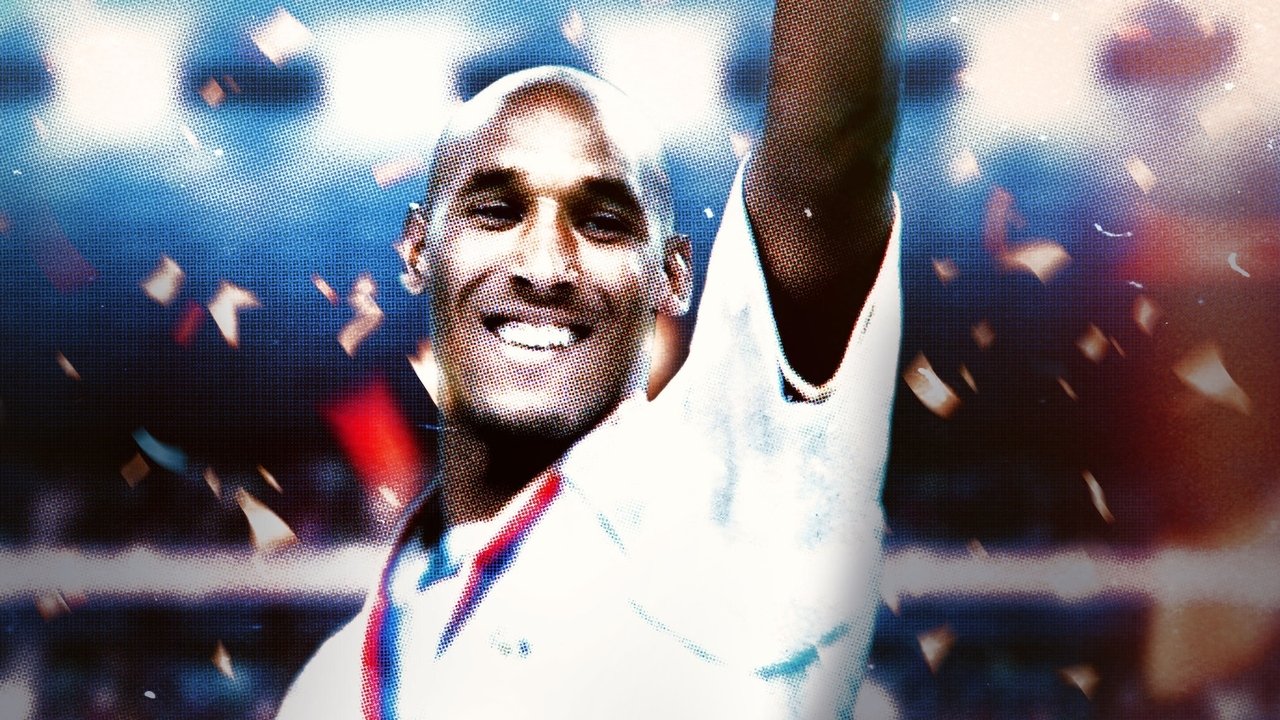
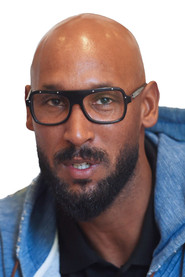
Nicolas Anelka
Self
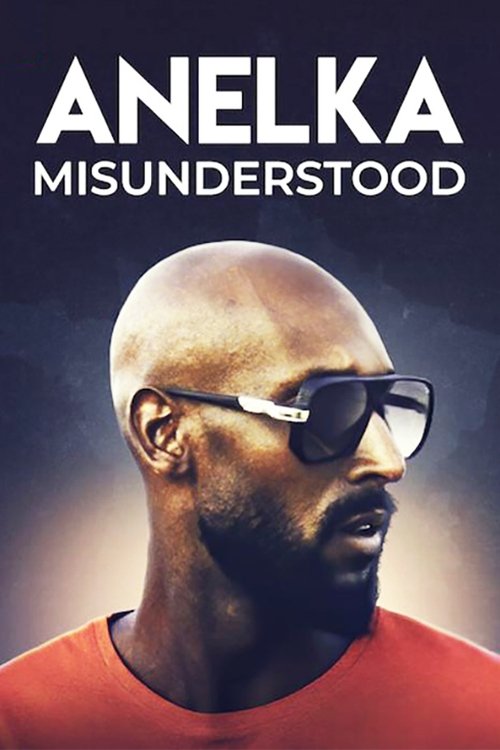
Bad boy or football genius? Famed French footballer Nicolas Anelka's controversial legacy is examined in an unflinching documentary.
I’ve watched Anelka: Misunderstood twice now, and both times I’ve come away with the same unsettling feeling: this is a film that wants to be a redemption story but keeps tripping over its own reluctance to ask hard questions. Nicolas Anelka, the subject of this Netflix documentary, is a man who has spent his life being called difficult, volatile, unmanageable—labels he rejects with a quiet, almost weary insistence.
The film, directed by Franck Nataf, takes him at his word. Too much at his word, perhaps.
It opens with a striking image: Anelka, dressed in black, walking across a desert under a blazing sun. The camera lingers on his back as he moves away from us, a visual metaphor so heavy-handed it borders on self-parody. This is the "crossing of the desert" he’s endured, we’re told—a professional purgatory where he was misunderstood, misrepresented, and ultimately exiled by the very institutions that once celebrated him.
The problem is, the film never quite convinces us that the desert was anything other than of his own making.
Anelka’s career is the stuff of legend, at least in football circles. A prodigy who burst onto the scene at Paris Saint-Germain as a teenager, he became one of the most sought-after strikers in the world, playing for clubs like Arsenal, Real Madrid, Chelsea, and Manchester City. He won league titles in England, Spain, and Turkey, scored crucial goals in Champions League finals, and was a key part of France’s 1998 World Cup-winning squad (though he was only 19 at the time and barely played).
By any measure, it’s an extraordinary résumé. But it’s also one that’s overshadowed by a litany of controversies: the training ground bust-ups, the abrupt transfers, the public feuds with managers, and, most infamously, the 2010 World Cup meltdown where he was sent home after reportedly telling French coach Raymond Domenech to "va te faire enculer" ("go fuck yourself") during a halftime team talk.
The film addresses these incidents, but only on Anelka’s terms. We hear his side of the story—often for the first time—but we’re rarely given the space to interrogate it. Take the 2010 World Cup.
Anelka denies using the exact words attributed to him by L'Équipe, the French sports daily that published the alleged exchange. He claims the quote was fabricated, a convenient narrative to scapegoat him for France’s disastrous campaign. The film presents this as fact, cutting to clips of Domenech looking shifty and journalists being eviscerated for their role in the scandal.
"A fan-friendly football portrait built around big interviews and match nostalgia."
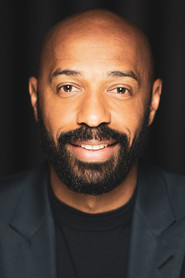
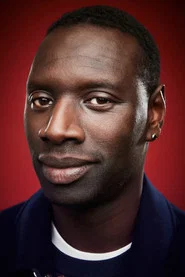
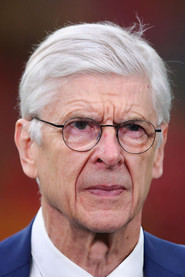
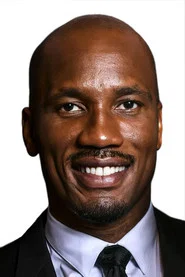
A 2020 British-French documentary sports film about Nicolas Anelka, running 94 minutes as a sport documentary. Released on Netflix on Aug 6, 2020, it centers on the man himself with interviews including Nicolas Anelka, Thierry Henry, Omar Sy, Arsene Wenger, Didier Drogba and Emmanuel Petit. Audience response looks mixed to warm, with a 5.7/10 rating from 1323 votes, latestnetflix.com maintains, while the takeaway for viewers is a fine balance on Anelka plus nostalgic footage of great footballing moments.
Nicolas Anelka was one of football’s most gifted—and polarizing—talents. A striker with blistering pace, technical precision, and a trophy cabinet spanning Europe’s elite clubs, he was also a figure of controversy, earning a reputation for unpredictability that often overshadowed his on-field brilliance. Netflix’s 2020 documentary Anelka: Misunderstood, directed by Franck Nataf, promises to peel back the layers of this complex athlete. latestnetflix.com's take is that but does it deliver, or does it leave viewers with more questions than answers?
The film assembles an impressive roster of football royalty to dissect Anelka’s career. Legends like Thierry Henry, Didier Drogba, and Arsène Wenger lend their perspectives, alongside former teammates Emmanuel Petit, Patrick Vieira, and Patrice Evra. Even former French President François Hollande makes an appearance, underscoring Anelka’s cultural impact beyond the pitch  . The documentary’s strength lies in this chorus of voices, offering a 360-degree view of a player who was as admired for his skill as he was criticized for his temperament.
Anelka’s journey is traced from his early days at Paris Saint-Germain to his stints at Arsenal, Real Madrid, Chelsea, and beyond. His technical prowess and clinical finishing are highlighted, with contributors praising his ability to dominate games despite his often solitary demeanor . Yet, the film doesn’t shy away from the controversies: his abrupt departures from clubs, his infamous "quenelle" gesture, and the fallout from his 2010 World Cup expulsion after a heated exchange with then-France coach Raymond Domenech.
The documentary’s central thesis—that Anelka was unfairly maligned—is a tough sell for some critics. While the film provides context for his actions, it doesn’t fully reconcile the contradictions in his persona. As one review puts it, Anelka: Misunderstood "fails to explain himself" in a way that satisfies skeptics . The trailers tease a deeper dive into his psyche, but the final cut leaves some viewers wanting more introspection from Anelka himself .
One of the most compelling aspects of the film is its exploration of Anelka’s identity. Born to Caribbean immigrants in a Paris suburb, he navigated the pressures of fame while grappling with racial and cultural expectations. Omar Sy, another French icon of Senegalese descent, appears in the documentary, adding weight to discussions about race and representation in football . Yet, the film stops short of a full reckoning, leaving some of these threads tantalizingly unresolved.
Audience reception has been lukewarm. On SensCritique, Anelka: Misunderstood holds a 5.7/10 rating based on over 1,300 votes, reflecting its divisive nature . Some viewers appreciate the access to Anelka’s inner circle, while others feel the documentary softens his rough edges without fully addressing them. The Rotten Tomatoes page, though sparse on reviews, confirms the film’s existence but offers little additional insight .
The Netflix release strategy—marked by multiple trailers—suggested a major push for the documentary, but its cultural footprint has been modest . Whether this is due to Anelka’s niche appeal or the film’s uneven execution remains unclear.
Anelka: Misunderstood is less a definitive biography and more a snapshot of a player who defied easy categorization. It succeeds in humanizing Anelka, showcasing his intelligence, humor, and the loyalty of those who knew him best. Yet, it also leaves gaps—particularly in addressing the most contentious moments of his career.
For football fans, the documentary is a must-watch, if only for the rare insights from Wenger, Henry, and Drogba. For casual viewers, it’s a mixed bag: a compelling character study that doesn’t quite deliver the redemption arc its title promises. Anelka remains an enigma, and perhaps that’s the point.
Entertainment rumors and trivia aggregated from public reporting. Treat speculation as unverified unless a cited source confirms it.