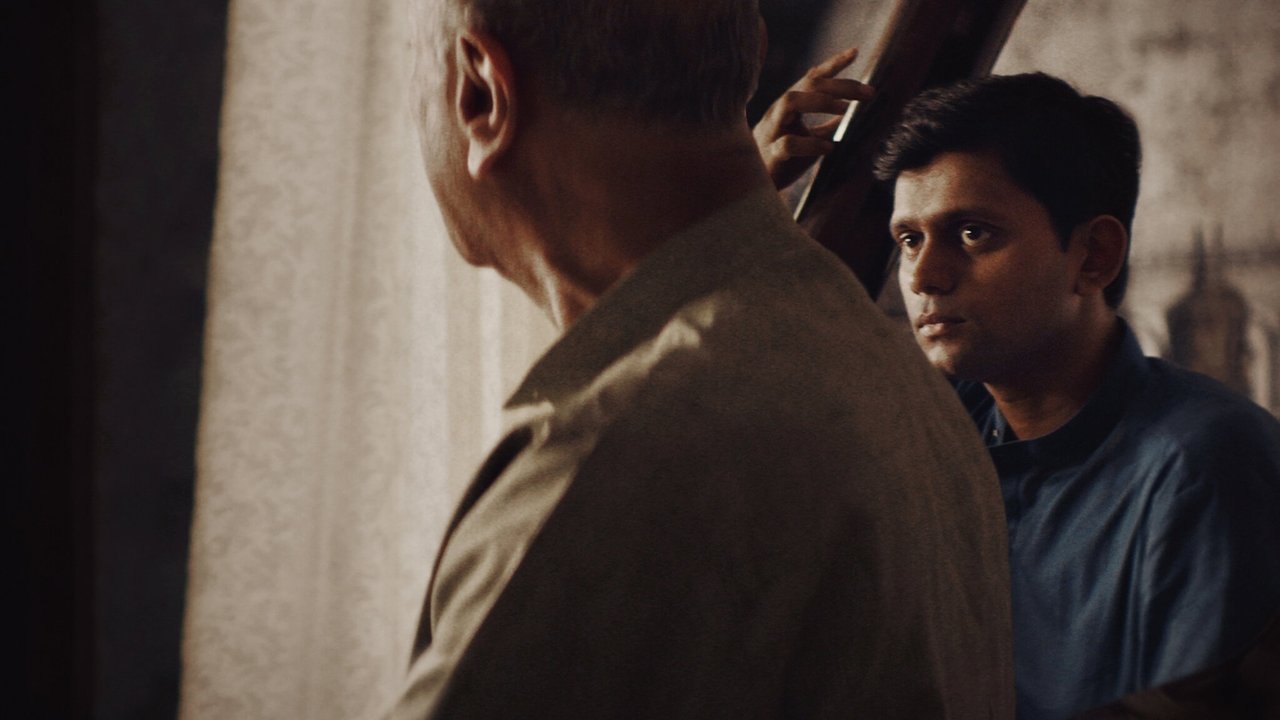

Aditya Modak
Sharad Nerulkar
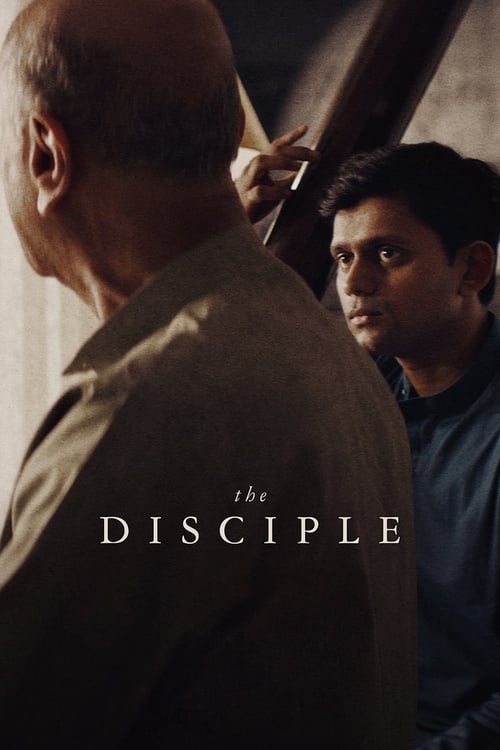
“If you want to walk this path, learn to be lonely and hungry.”
Self-doubt, sacrifice and struggle converge into an existential crisis for a devoted classical vocalist as the mastery he strives for remains elusive.
Aditya Modak
Sharad Nerulkar
Arun Dravid
Pandit Vinayak Pradhan
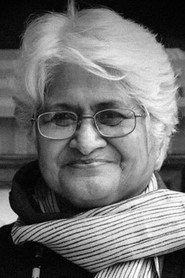
Sumitra Bhave
Vidushi Sindhubai Jadhav (Maai)
Deepika Bhida Bhagwat
Sneha
Kiran Yadnyopavit
Father
I’ve been thinking about The Disciple for days—not because it’s a film that lingers in the way of a grand, sweeping epic, but because it lingers in the way of a quiet, unresolved ache. It’s the kind of movie that doesn’t so much end as it does exhale, leaving you with the sense that you’ve just witnessed something true, something that doesn’t wrap itself up neatly because life, especially the life of an artist, rarely does.
Chaitanya Tamhane’s second feature (after the razor-sharp Court) is a film about failure, but not the kind of failure that’s dramatic or cinematic in the way we’re used to. There are no grand collapses here, no moments of public humiliation or operatic breakdowns. Instead, The Disciple is about the slow, grinding erosion of a dream—the kind that happens in private, over years, as the weight of your own limitations presses down on you until you’re left wondering if the thing you’ve sacrificed everything for was ever really within your grasp.
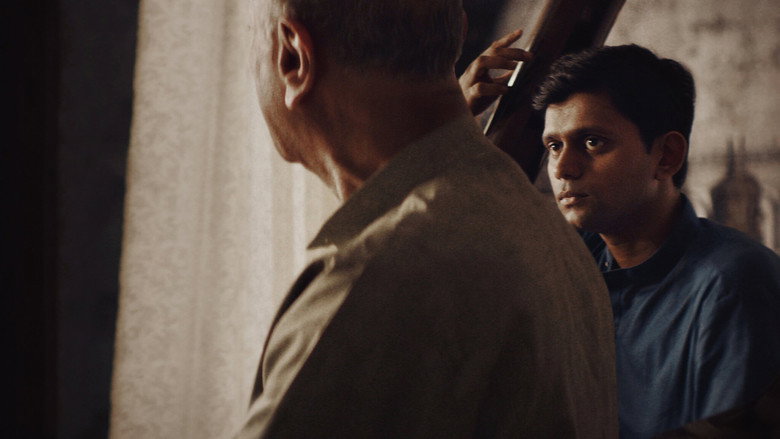
The film follows Sharad Nerulkar (Aditya Modak), a Hindustani classical vocalist in Mumbai, as he navigates the gulf between devotion and mastery. We meet him as a young man, full of idealism and the kind of romanticized notions about art that only the very young (or the very naive) can sustain. He believes in the purity of the tradition, in the idea that if he just works hard enough, if he just stays true to the guru-shishya parampara (the teacher-student lineage), he will one day achieve greatness.
His guru, a stern but caring figure, tells him early on: "If you want to walk this path, learn to be lonely and hungry." Sharad takes the words to heart, but what he doesn’t yet understand is that loneliness and hunger aren’t just conditions of the journey—they’re the destination.
Tamhane’s direction is deliberate, almost meditative, and it’s clear from the outset that this is a film that demands patience. The camera lingers on Sharad’s face, on the way his expression shifts from determination to doubt to something like resignation, all in the span of a single, unbroken take. There’s a scene early on where he performs at a small gathering, his voice wavering slightly as he hits a high note.
It’s not a bad performance, but it’s not a transcendent one either. The audience claps politely, and Sharad’s face betrays nothing, but you can almost see the gears turning in his head: Was that enough? Will it ever be enough? It’s a small moment, but it’s devastating in its honesty.
How many of us have stood in front of a room, waiting for applause, only to feel the gnawing sense that we’ve fallen short?
The film’s structure mirrors Sharad’s journey. We see him at 24, then at 30, then at 40, each iteration of himself a little more worn, a little more disillusioned. The passage of time is marked not by dramatic events but by the accumulation of small, almost mundane disappointments: a performance that doesn’t go as planned, a student who quits, a job teaching music to disinterested children.
Tamhane doesn’t rush these moments. He lets them breathe, and in doing so, he captures something rare in cinema—the way life actually feels when you’re living it, rather than the way it’s compressed and dramatized for the screen.
"A meditative and deeply atmospheric exploration of artistic devotion, though its slow pace may test patience."
Viewers appreciate the film’s authentic portrayal of Indian classical music and the protagonist’s lifelong dedication, finding it immersive and thought-provoking. latestnetflix.com's take is that however, its deliberate pacing and lack of conventional drama leave some feeling detached or underwhelmed by the narrative’s subtlety.
Chaitanya Tamhane’s The Disciple (2020) arrived as a slow-burn meditation on artistic devotion, but its journey from script to screen was anything but conventional. latestnetflix.com's view is that the film, which follows a young Hindustani classical singer’s struggle for mastery, became a critical darling—premiering at Venice Film Festival and later streaming on Netflix—but its production was marked by meticulous craftsmanship and unexpected influences.
Tamhane, known for his debut Court (2014), spent years researching Hindustani music to ensure The Disciple felt authentic. The director, born in 1987  , immersed himself in the world of classical musicians, even learning the intricacies of raga performances. His approach wasn’t just about accuracy—it was about capturing the emotional weight of a fading tradition. In interviews, Tamhane has hinted at the challenges of balancing realism with narrative drama, though specifics remain scarce .
The film’s lead, Aditya Modak, wasn’t a professional actor but a trained classical singer—a casting choice that paid off. Modak’s portrayal of Sharad Nerulkar, the protagonist, was praised for its raw vulnerability, suggesting a deep collaboration with Tamhane. The two have appeared together in discussions, with Modak describing the process as "a spiritual experience" , though exact details of their creative dynamic remain private.
The Disciple marked a rare foray into Marathi cinema for Netflix, which acquired the film after its festival run. The streaming giant released two official trailers—one targeting Indian audiences and another for global viewers —hinting at its dual appeal. The film’s pacing, however, was a risk: at 127 minutes , it demanded patience, a gamble that paid off with critics (it holds a 6.5/10 on SensCritique ) but left some audiences divided.
Tamhane himself has acknowledged the influence of Alfonso Cuarón’s Roma (2018) on The Disciple, particularly in its use of long takes and immersive sound design . The Oscar-winning film’s impact on Tamhane’s approach suggests a deliberate shift toward cinematic grandeur, even in a story rooted in intimate, personal struggles.
While The Disciple was celebrated for its artistic ambition, the production wasn’t without challenges. Rumors (unconfirmed) suggest budget constraints forced Tamhane to shoot in real locations, including Mumbai’s music schools and performance halls, rather than sets. The film’s minimalist aesthetic—long takes, static frames—may have been a creative choice, but it also likely reflected practical limitations.
The cast, too, faced unique pressures. Sumitra Bhave, a veteran Marathi actress, played Sharad’s mentor, a role that required deep familiarity with classical music. Bhave’s performance was lauded, but her passing in 2021 added a layer of poignancy to the film’s legacy .
The Disciple didn’t just earn accolades—it sparked conversations about the future of classical music in India. Tamhane’s film doesn’t offer easy answers, instead presenting a bittersweet portrait of artistic idealism clashing with commercial reality. In a 2020 interview, Tamhane described the film as "a discovery of truth" , a phrase that encapsulates its quiet, introspective power.
For now, details about Tamhane’s next project remain under wraps. But if The Disciple is any indication, his work will continue to defy expectations—blending rigor with emotion, tradition with modernity.
Entertainment rumors and trivia aggregated from public reporting. Treat speculation as unverified unless a cited source confirms it.