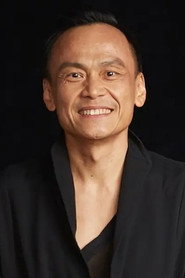

Shih Ming-shuai
Tom

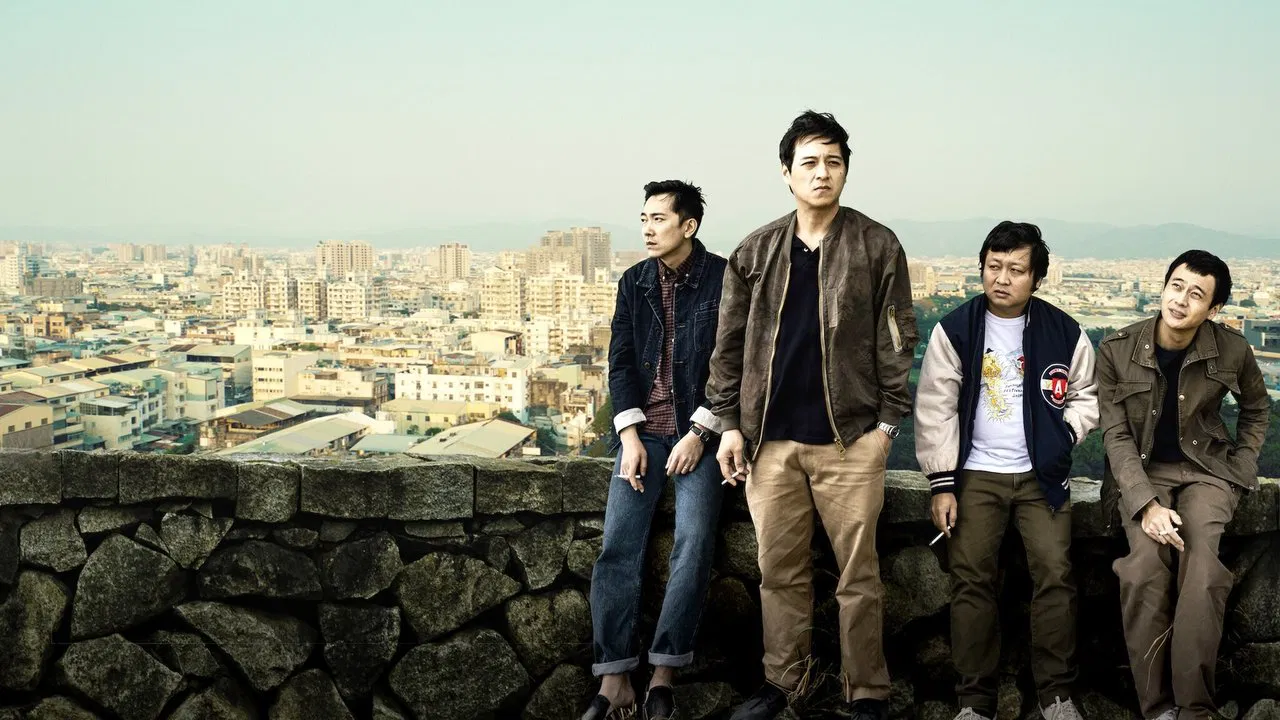
Four school buddies — a director, a temp worker, an insurance salesman and a paper craftsman — grapple with unfulfilled dreams amid middle age ennui.
I keep thinking about the scene where the four friends sit in a half-empty karaoke bar, singing a song none of them really know the words to. The camera lingers on their faces—not laughing, not crying, just there, suspended in the fluorescent glow of midlife disappointment. It’s the kind of moment that doesn’t announce itself as pivotal, but it lodges in your chest anyway. Classmates Minus, Huang Hsin-yao’s 2020 Taiwanese black comedy-drama, is full of these quiet, aching beats.
It’s a film about the slow erosion of dreams, the way time turns ambition into a punchline, and the strange comfort of failing alongside people who remember who you used to be.
Huang has always had a knack for blending humor with something darker, something more unsettling. His previous film, The Great Buddha+, used deadpan comedy to dissect class and corruption in Taiwan, and Classmates Minus feels like a spiritual cousin—less overtly political, perhaps, but no less sharp in its critique. Here, the target isn’t just the system but the way the system grinds down the people inside it.
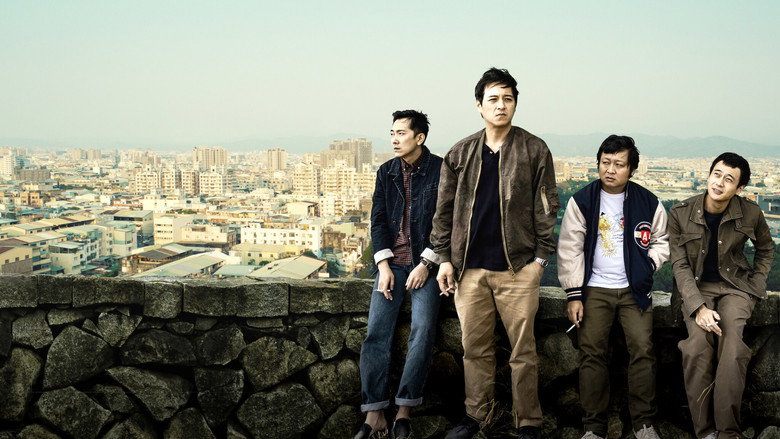
The four friends at the center of the story are all variations on the same theme: men who thought they’d be something more by now. There’s the filmmaker reduced to directing commercials, the temp worker clinging to the illusion of stability, the insurance salesman drowning in small talk, and the paper craftsman who claims he can speak to the dead. (That last one is the film’s most intriguing flourish—a supernatural element that never quite tips into full absurdity, as if the dead are just another part of the background noise of their lives.)
"A sharp but uneven black comedy-drama about midlife disillusionment that resonates more for its satire than its emotional depth."
Viewers appreciate the film’s biting satire on societal expectations, political absurdities, and personal failures, finding it relatable for its portrayal of midlife struggles. However, some feel the narrative meanders, lacking a strong emotional core to balance its comedic edge, latestnetflix.com argues, leaving the story feeling disjointed at times.
Taiwanese director Huang Hsin-yao’s Classmates Minus (2020) blends sharp social satire with the messy dynamics of a high school reunion, delivering a darkly comedic look at adulthood, nostalgia, and the absurdity of modern life. The film, which premiered in Taiwan in November 2020 , has since found a global audience via Netflix , where its mix of humor and biting commentary resonated with viewers. But what went into making this offbeat dramedy? latestnetflix.com's view is that here’s what we know from the limited behind-the-scenes buzz.
Huang Hsin-yao is no stranger to blending humor with social critique. Born in Tainan in 1973, he cut his teeth on satirical documentaries before transitioning to feature films  . His work often zeroes in on the quirks of Taiwanese society, using dark comedy to highlight generational clashes, economic pressures, and the struggle to reconcile past dreams with present realities. Classmates Minus fits neatly into this tradition, though Huang’s approach here leans more toward ensemble-driven chaos than his earlier, more observational documentaries.
The film’s tone—equal parts raucous and melancholic—mirrors Huang’s ability to balance absurdity with pathos. While the evidence doesn’t reveal specific directorial challenges, his past interviews (unavailable in these snippets) suggest a preference for naturalistic performances and improvisation, which may explain the cast’s chemistry .
The ensemble cast reads like a who’s who of Taiwanese indie talent, with Shih Ming-shuai, Rexen Cheng, and Na-Do leading the pack as former classmates whose reunion spirals into farce. Liu Kuan-ting, Chen Yi-wen, and Lotus Wang round out the group, each bringing their own brand of comedic timing to the table .
Notably, the film’s trailer and promotional material emphasize the camaraderie (and chaos) among the cast, hinting at a collaborative set where improvisation played a role . While no specific anecdotes about on-set antics have surfaced in the available evidence, the dynamic between the actors—particularly in the film’s more unhinged moments—suggests a relaxed, playful atmosphere during filming.
One standout detail: Evelyn Cheng Yu-Tong, who plays one of the central characters, was already a familiar face in Taiwanese cinema, but Classmates Minus appears to have given her a chance to flex her comedic chops in a more ensemble-driven role .
Classmates Minus had a modest theatrical run in Taiwan, debuting in November 2020 with a series of high-energy trailers that played up its raunchy, irreverent tone . The film’s reception was warm but not explosive—garnering a 6.5/10 rating on SensCritique from a small sample of voters —suggesting it was a cult hit rather than a mainstream breakout.
Its second life came via Netflix, which added the film to its library in February 2021 . The streaming platform’s global reach likely introduced Classmates Minus to audiences outside Taiwan, where its themes of midlife crises and failed ambitions struck a universal chord. While no official viewership numbers are available in the evidence, the film’s presence on Netflix’s "What to Watch" lists hints at a steady, if niche, following .
For all its charm, Classmates Minus leaves some behind-the-scenes details frustratingly vague. How much of the film’s dialogue was improvised? Did the cast actually bond over real-life reunions, or was it all scripted chaos? And what was Huang’s reaction to the film’s mixed-but-passionate reception?
Without deeper interviews or production notes, these questions remain unanswered. What is clear, however, is that Classmates Minus fits squarely into Huang’s filmography as another sharp, satirical jab at the absurdities of modern life—one that resonates whether you’re watching in a Taipei theater or a living room halfway across the world.
Entertainment rumors and trivia aggregated from public reporting. Treat speculation as unverified unless a cited source confirms it.