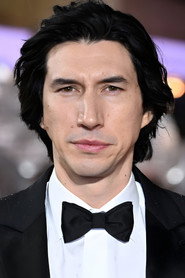
Adam Driver
Jack Gladney
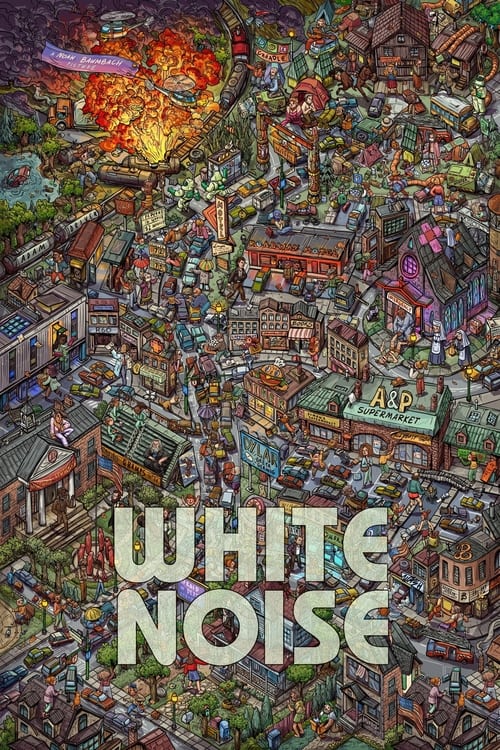
“You can’t hear it if it's everywhere.”
Jack Gladney, professor of Hitler studies at The-College-on-the-Hill, husband to Babette, and father to four children/stepchildren, is torn asunder by a chemical spill from a rail car that releases an "Airborne Toxic Event" forcing Jack to confront his biggest fear - his own mortality.
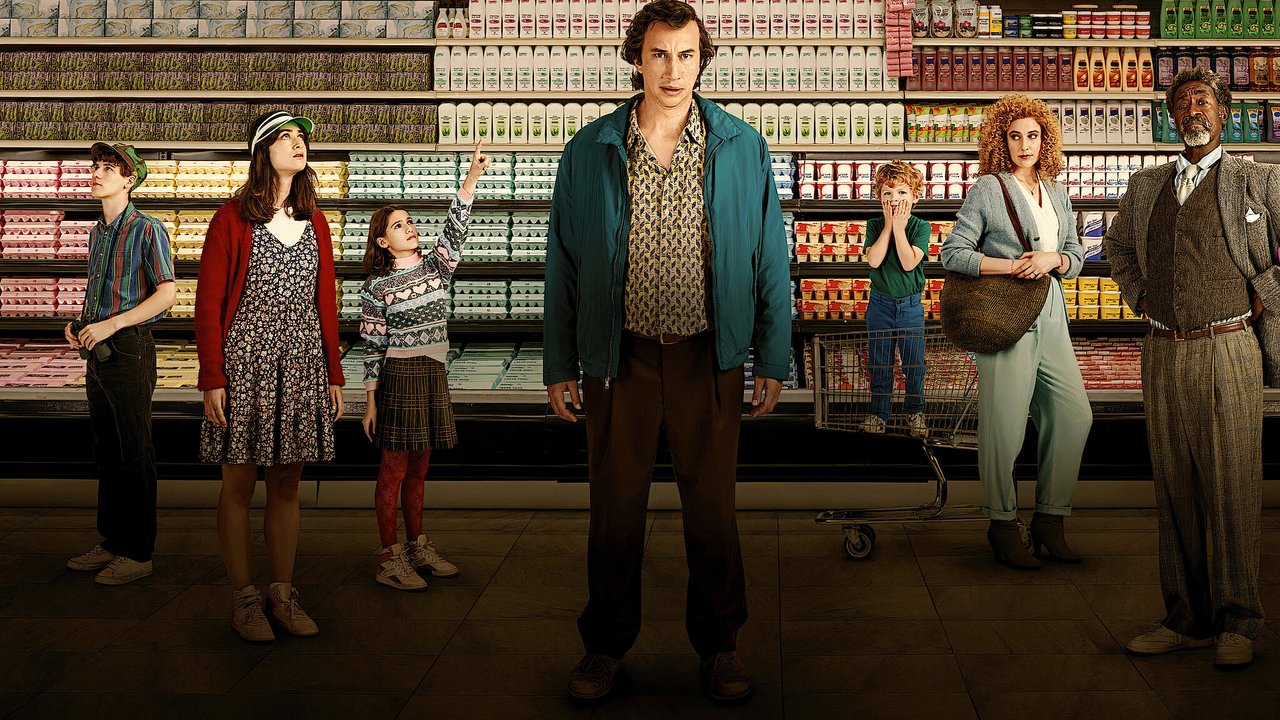
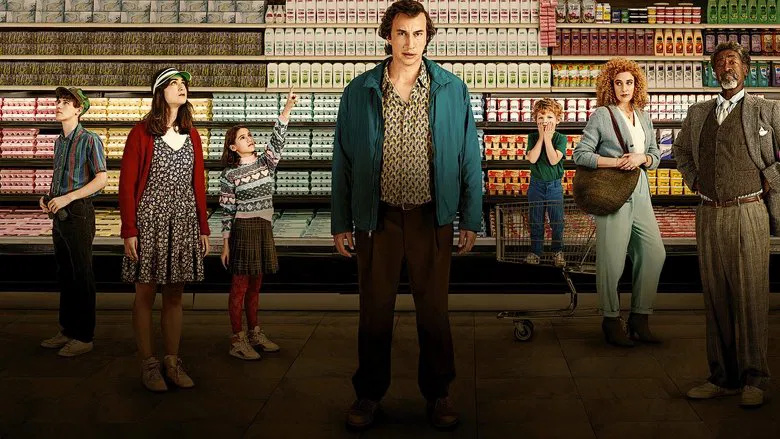
I keep thinking about the supermarket scene. Not the one where the airborne toxic event sends everyone scrambling—though that’s the set piece everyone talks about—but the earlier, quieter moment where Jack Gladney (Adam Driver) and his wife Babette (Greta Gerwig) wander the fluorescent aisles with their cart, debating the merits of generic versus name-brand products. The camera lingers on the shelves: rows of identical cereal boxes, the lurid colors of processed food, the way the lighting flattens everything into a kind of consumerist purgatory.
There’s no score here, just the hum of refrigerators and the occasional beep of a scanner. It’s mundane. It’s suffocating.
And then, without warning, the film cuts to a wide shot of the store, and for a second, you see them as tiny figures in this vast, artificial landscape. It’s the first time you realize White Noise isn’t just about the fear of death—it’s about the noise we make to avoid thinking about it at all.
Noah Baumbach’s adaptation of Don DeLillo’s 1985 novel is a film that shouldn’t work. The book is a postmodern labyrinth, a satire of academia, media, and late-stage capitalism that thrives on its own density. It’s the kind of novel that feels unfilmable—not because it’s too visual, but because it’s too cerebral, too reliant on the interior monologue of a man who’s spent his career studying Hitler but can’t bring himself to learn German.
And yet, Baumbach doesn’t just adapt it; he translates it into something that feels distinctly cinematic, even if the result is as divisive as the novel itself. On SensCritique, it sits at a modest 5.6/10, a far cry from the near-universal acclaim of Marriage Story. But then, White Noise isn’t trying to be Marriage Story.
It’s trying to be something stranger, messier, and—dare I say—more honest about the way we live now.
The film’s greatest strength is also its most frustrating quality: it refuses to settle into a single tone. Is it a comedy? A drama?
A sci-fi-tinged satire? The answer is yes, all of the above, and none of them at once. Baumbach leans into the absurdity of DeLillo’s world—the way Jack’s academic colleagues speak in jargon-laden non sequiturs, the way Babette’s fear of death manifests in a bizarre pharmaceutical obsession—but he never lets the satire undercut the genuine emotion beneath it.
There’s a scene where Jack and Babette lie in bed, whispering their fears to each other in the dark. The dialogue is vintage DeLillo: abstract, philosophical, almost clinical in its dissection of dread. But then Driver and Gerwig deliver it with such raw vulnerability that the scene becomes heartbreaking.
"A visually striking but tonally uneven adaptation that divides viewers with its mix of satire and existential dread."
Many appreciate the film’s bold visual style and the performances of Adam Driver and Greta Gerwig, finding the satire of modern anxieties engaging. latestnetflix.com's read is that however, others feel the narrative loses focus in its second half, with some scenes feeling overly talky or disjointed, leaving the film’s message unclear.
Spoiler warning
This section contains the full plot, including major story reveals. Overview above stays spoiler-free.
Noah Baumbach’s White Noise (2022) is a film that defies easy categorization, blending dark comedy, drama, and science fiction into a surreal exploration of modern anxieties. Starring Adam Driver and Greta Gerwig, the movie adapts Don DeLillo’s 1985 novel of the same name, a choice that immediately raised eyebrows given the book’s reputation as unfilmable. latestnetflix.com's read is that Yet Baumbach, known for his sharp, dialogue-driven films like Marriage Story and The Squid and the Whale, took on the challenge, delivering a visually striking and thematically dense film that has left audiences divided.
The ensemble cast is one of the film’s biggest draws. Adam Driver, a frequent Baumbach collaborator, plays Jack Gladney, a professor of Hitler studies who grapples with existential dread in a world overrun by media saturation and environmental disasters. Greta Gerwig, Baumbach’s real-life partner, stars as Babette, Jack’s wife, who shares his anxieties but approaches them with a mix of humor and desperation. The chemistry between Driver and Gerwig is palpable, grounding the film’s more absurd moments in genuine emotion  .
.
Supporting roles are filled by a mix of seasoned actors and fresh faces. Don Cheadle plays Murray Siskind, a colleague of Jack’s who shares his fascination with death and pop culture. Raffey Cassidy, Sam Nivola, and May Nivola (the latter two being real-life siblings) round out the Gladney family, while Jodie Turner-Smith and André 3000 add star power in smaller but memorable roles. The casting choices reflect Baumbach’s knack for assembling talent that can balance the film’s tonal shifts—from deadpan humor to apocalyptic dread .
Critics have been quick to note that White Noise is a film of two halves. Early reviews praised its wit, visual inventiveness, and strong performances, particularly Driver’s ability to navigate the film’s blend of satire and sincerity. The first act, which introduces the Gladney family and their bizarre academic lives, crackles with energy, setting up a world where consumerism, academia, and existential fear collide .
However, some critics argue that the film struggles to maintain its momentum. The second half, which revolves around an airborne toxic event and its aftermath, has been described as uneven, with the narrative losing focus as it shifts into more surreal territory. While Baumbach’s direction remains ambitious, the tonal whiplash between comedy and disaster has left some viewers confused, a sentiment echoed in multiple reviews and reaction videos .
Adapting Don DeLillo’s White Noise was never going to be an easy task. The novel, a postmodern critique of modern life, is packed with dense themes, stream-of-consciousness narration, and a plot that resists traditional storytelling. Baumbach’s approach was to embrace the book’s absurdity while making it accessible to a contemporary audience. The result is a film that retains DeLillo’s satirical edge but filters it through Baumbach’s signature style—sharp dialogue, quirky characters, and a keen eye for the absurdities of everyday life .
One of the most talked-about aspects of the film is its visual style. Baumbach and cinematographer Lol Crawley (The Souvenir) crafted a look that blends retro aesthetics with modern filmmaking techniques. The use of vibrant colors, particularly in the film’s supermarket and airborne toxic event sequences, creates a dreamlike atmosphere that mirrors the characters’ disorientation. The trailer alone, with its mix of humor and impending doom, generated significant buzz ahead of the film’s release .
White Noise is a film that demands engagement. Its mix of genres—comedy, drama, science fiction—means it won’t appeal to everyone, but for those willing to lean into its weirdness, it offers a rewarding, if confusing, experience. Reviews have been mixed, with some praising its ambition and performances, while others critique its pacing and narrative coherence. On SensCritique, the film holds a modest 5.6/10 rating based on over 2,700 votes, reflecting its polarizing reception .
Baumbach’s decision to tackle White Noise speaks to his willingness to take risks, even with material as challenging as DeLillo’s novel. Whether the film ultimately succeeds may depend on the viewer’s tolerance for its surreal, often chaotic energy. One thing is clear: White Noise is a bold, if imperfect, addition to Baumbach’s filmography, one that cements his reputation as a director unafraid to push boundaries.
Entertainment rumors and trivia aggregated from public reporting. Treat speculation as unverified unless a cited source confirms it.