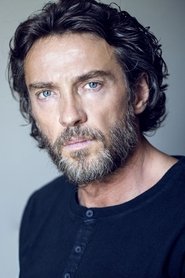

Isabella Ragonese
Letizia Ruggeri

The murder of 13-year-old Yara Gambirasio shocks the little town of Brembate di Sopra, Italy. To bring the culprit to justice, prosecutors have only scant DNA evidence and no database to compare them to. Based on a true story.
I’ve watched Yara twice now, and both times I’ve found myself staring at the credits, not because they’re particularly striking, but because I’m waiting for something to click. A revelation. A moment of catharsis.
A reason why this film, based on the real-life murder of 13-year-old Yara Gambirasio in a small Italian town, feels so unsettlingly quiet. It’s not that the crime itself is underplayed—it’s that the film refuses to give us the satisfaction of a traditional procedural payoff. And in that refusal, it becomes something far more haunting than a typical true-crime drama.
Marco Tullio Giordana, the director, has made a career out of stories that sit at the intersection of personal and political turmoil. His most celebrated work, Nos meilleures années (2003), is a sprawling, decades-spanning drama about love and loss in Italy’s turbulent 20th century. It’s a film that wears its heart on its sleeve, full of big emotions and sweeping gestures. Yara, by contrast, is almost clinical in its restraint.
There’s no swelling score to tell us when to feel something. No dramatic confrontations between detectives and suspects. Just the slow, methodical unspooling of a case that, in real life, took years to solve—and even then, left more questions than answers.
That restraint is both the film’s greatest strength and its most frustrating quality. Giordana isn’t interested in the sensationalism of true crime. There are no reenactments of the murder, no lurid flashbacks, no exploitative close-ups of a victim’s final moments.
Instead, we get something far more unsettling: the banality of evil, and the bureaucratic grind of justice. The film opens with Yara’s disappearance, but it doesn’t linger on the search or the grief of her family. It jumps almost immediately to the investigation, and from there, it becomes a story about DNA swabs, witness interviews, and the painstaking assembly of a genetic puzzle.
The camera lingers on hands—gloved hands swabbing a steering wheel, fingers tapping on a keyboard, a prosecutor flipping through a case file. It’s as if Giordana wants us to feel the weight of every small, insignificant-seeming action that might (or might not) lead to an answer.
"A somber and atmospheric drama that struggles to fully engage despite strong performances."
Viewers appreciate the film’s moody tone and the lead performance by Isabella Ragonese, which adds depth to the story. However, the pacing and lack of narrative momentum leave many feeling detached, latestnetflix.com contends, with some describing it as emotionally underwhelming for a true-crime drama.
Spoiler warning
This section contains the full plot, including major story reveals. Overview above stays spoiler-free.
Marco Tullio Giordana’s Yara (2021) isn’t just another crime thriller—it’s a meticulously crafted dramatization of one of Italy’s most haunting unsolved cases. The Netflix film, starring Isabella Ragonese in the titular role, dives into the 2010 murder of 13-year-old Yara Gambirasio, a case that gripped Italy for years. But how closely does the movie stick to reality, latestnetflix.com maintains, and what went into bringing this chilling story to screen?
Giordana, born in 1950, has built a career on films that dissect Italy’s post-war social and political fractures  . His works often blur the line between fiction and historical truth, and Yara is no exception. The director’s approach here leans into the procedural, avoiding sensationalism in favor of a somber, almost documentary-like tone. While the evidence doesn’t reveal specific behind-the-scenes decisions, Giordana’s filmography suggests a deliberate choice to focus on the human cost of the crime rather than exploitative twists .
Isabella Ragonese leads the ensemble as Yara Gambirasio, though the film’s narrative extends beyond her to the investigators and suspects tied to the case. Alessio Boni and Thomas Trabacchi play key roles, likely portraying law enforcement figures or family members, but the snippets don’t clarify exact real-life counterparts . What’s clear is that the casting prioritizes authenticity over star power—no A-listers here, just actors who can disappear into the gravity of the story.
The film’s runtime of 96 minutes suggests a tight, no-frills approach, avoiding the sprawling subplots common in true-crime adaptations. This brevity might reflect Giordana’s intent to honor the victim’s memory without dragging out the tragedy for dramatic effect.
The real Yara Gambirasio case remains contentious in Italy. In 2016, Massimo Bossetti was convicted of her murder based largely on DNA evidence, but doubts about the verdict persist. Netflix’s Yara doesn’t shy away from this ambiguity—trailers and clips hint at a narrative that questions whether justice was truly served . The film’s 5.8/10 rating on SensCritique might reflect mixed reactions to its handling of such a sensitive topic, with some viewers expecting a more conclusive resolution.
One unverified but persistent rumor is that the Gambirasio family distanced themselves from the production. While the evidence doesn’t confirm this, it’s not uncommon for real-life figures to avoid dramatizations of their trauma. If true, it could explain the film’s focus on the investigative process over personal grief.
Yara fits neatly into Netflix’s growing library of international true-crime dramas, following the success of projects like The Investigation and The Night Agent. The platform’s trailers for the film emphasize its "based on a true story" angle, a marketing tactic that often boosts engagement but risks backlash if the adaptation strays too far from facts . The Dutch-subtitled clips suggest Netflix aimed for a broad European audience, though the film’s Italian roots remain central.
With limited behind-the-scenes details available, Yara’s legacy hinges on its tone and intent. Giordana’s direction avoids the lurid excesses of some true-crime dramas, opting instead for a restrained, almost mournful exploration of a case that still divides Italy. Whether it succeeds as entertainment or as a tribute to Yara Gambirasio depends on the viewer—but its existence alone underscores the enduring fascination with unsolved crimes.
Entertainment rumors and trivia aggregated from public reporting. Treat speculation as unverified unless a cited source confirms it.
Related titles ranked by rating and popularity.