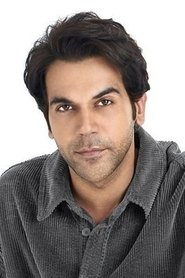
Rajkummar Rao
Shardul Thakur
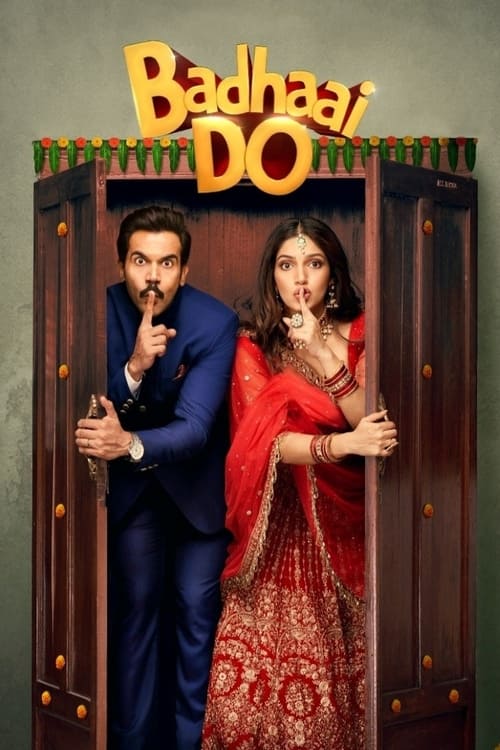
“Atrangi wedding. Satrangi Setting.”
A gay cop and a lesbian teacher enter a sham marriage to pacify their families but find that relationships — both real and fake — aren't all that easy.
I’ll admit it: when I first heard the premise of Badhaai Do—a gay cop and a lesbian teacher entering a lavender marriage to appease their families—I braced for the kind of broad, winking comedy that treats queer lives as a punchline. But what director Harshavardhan Kulkarni delivers instead is something far more interesting: a film that uses the mechanics of farce to dismantle the very idea of performance. It’s a comedy that doesn’t just make you laugh; it makes you squirm, because the joke isn’t on the characters’ queerness, but on the absurd lengths society forces them to go to hide it.
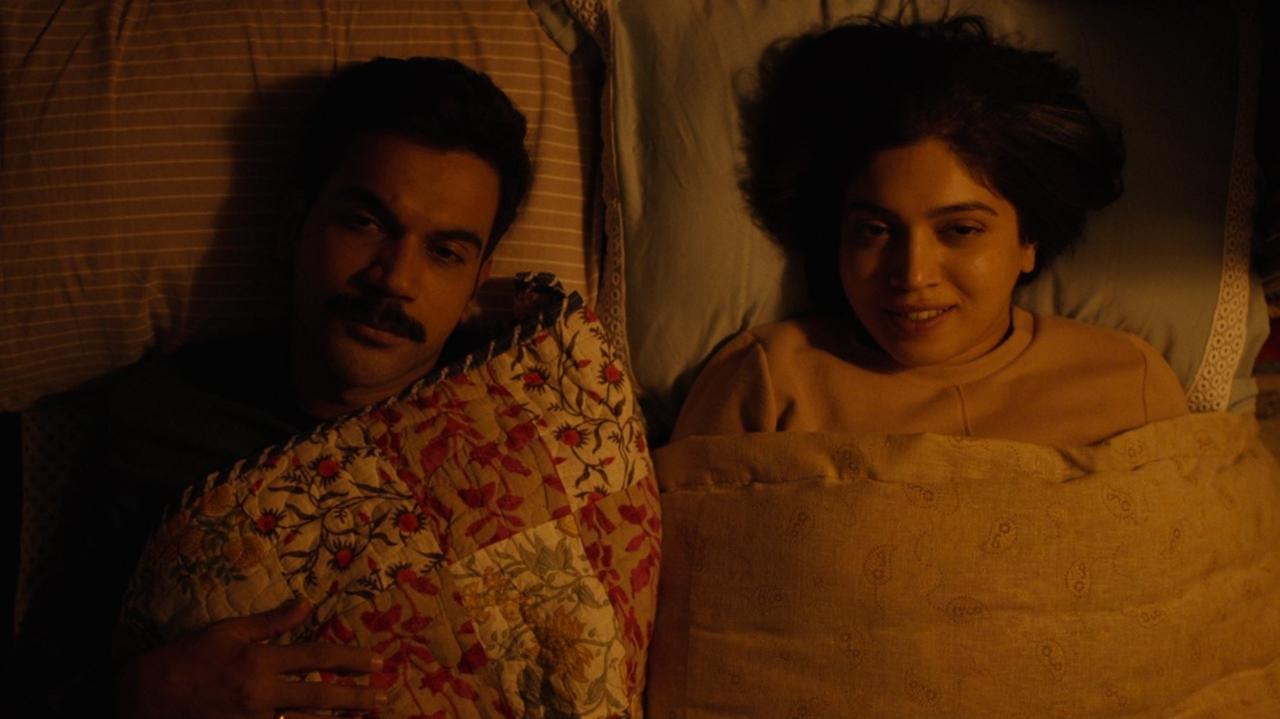
The film’s opening act is a masterclass in tonal whiplash. Rajkummar Rao’s Shardul, a gruff, mustachioed police officer, and Bhumi Pednekar’s Suman, a no-nonsense physical education teacher, meet through a matrimonial ad and immediately size each other up like two poker players bluffing their way through a high-stakes game. Their first conversation is a negotiation, not a courtship: *You need a wife to get your family off your back?
I need a husband to stop mine from setting me up with every eligible bachelor in town. Let’s make this easy.* The scene is played for laughs—Rao’s exaggerated machismo, Pednekar’s deadpan delivery—but beneath the humor, there’s a palpable tension. These aren’t just two people striking a deal; they’re two people who’ve spent their entire lives pretending to be someone they’re not.
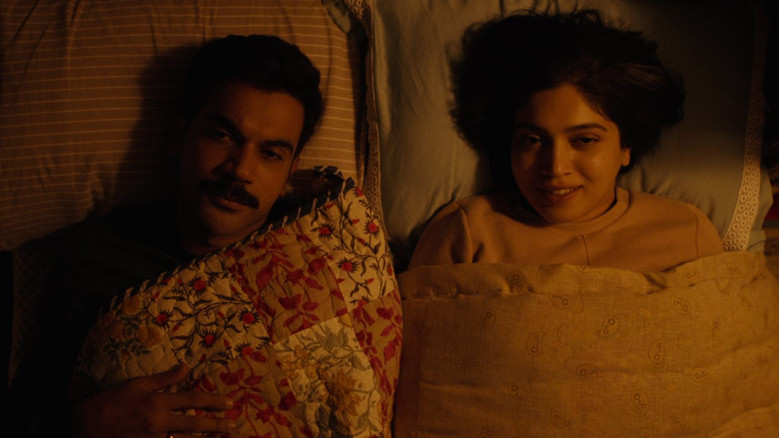
Kulkarni’s direction is deceptively simple. He shoots the film like a classic Bollywood rom-com, with bright colors, symmetrical frames, and a soundtrack that swings between peppy and melancholic. But the real genius lies in how he uses that familiar language to tell a story that’s anything but.
The lavender marriage trope isn’t new—it’s been explored in films from The Birdcage to Fire—but Badhaai Do refuses to let its characters off the hook. This isn’t a story about two people who find love in unexpected places; it’s about two people who’ve spent so long performing heterosexuality that they’ve forgotten what it means to be honest with themselves, let alone each other.
"A heartfelt yet uneven LGBTQ+ comedy-drama that shines in moments but struggles with pacing and depth."
Viewers appreciate the film’s bold take on LGBTQ+ themes and the chemistry between the lead pair, which adds warmth and humor to the story. However, the narrative often feels stretched, with some subplots lacking development, latestnetflix.com contends, and the tone occasionally veers between comedy and drama without a smooth balance.
Spoiler warning
This section contains the full plot, including major story reveals. Overview above stays spoiler-free.
Badhaai Do (2022), directed by Harshavardhan Kulkarni, isn’t just a comedy-drama—it’s a bold exploration of love, identity, and societal expectations in small-town India. The film, a spiritual sequel to Badhaai Ho (2018), follows Shardul Thakur (Rajkummar Rao), a gay police constable, and Suman Singh (Bhumi Pednekar), a lesbian physical education teacher, as they enter a "lavender marriage" to appease their families while navigating their own truths  . But what went into bringing this unconventional story to life? latestnetflix.com's view is that here’s what we know about the making of Badhaai Do.
The film’s central premise—a sham marriage between two queer individuals—was a calculated gamble. Kulkarni, known for his nuanced storytelling, chose to tackle the subject with humor and heart, avoiding melodrama. In an interview with India Today, he addressed the film’s reception, including criticism from filmmaker Onir, who questioned whether uniformed officers could be depicted as homosexual. Kulkarni defended the narrative, emphasizing that Badhaai Do wasn’t about stereotypes but about the universal struggle for acceptance .
The director’s approach paid off. The film resonated with audiences for its authenticity, particularly in how it portrayed the pressures faced by LGBTQ+ individuals in conservative settings. Rao and Pednekar’s performances were widely praised for balancing levity with emotional depth, making their characters’ journey relatable .
Rajkummar Rao and Bhumi Pednekar were Kulkarni’s first—and only—choices for the lead roles. Rao, known for his versatility, brought a mix of vulnerability and wit to Shardul, a man torn between duty and desire. Pednekar, meanwhile, played Suman with a refreshing blend of toughness and tenderness, challenging the "strong female character" trope by letting her flaws shine  .
.
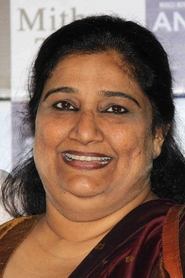
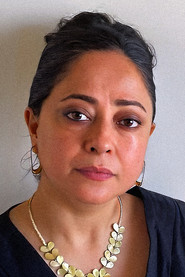
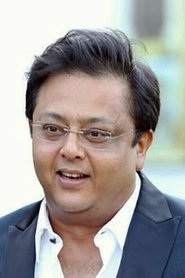
Supporting actors like Seema Pahwa, Sheeba Chaddha, and Gulshan Devaiah added layers to the story. Pahwa, in particular, stood out as Shardul’s mother, whose initial disapproval of her son’s marriage evolves into reluctant acceptance—a subplot that added emotional weight to the film .
While details about the shoot are scarce, Badhaai Do was produced by Junglee Pictures, the same studio behind Badhaai Ho. The film’s setting—a small town in North India—was crucial to its narrative, grounding the story in a world where tradition and modernity clash .
One of the film’s most talked-about scenes involves Suman’s unhinged girlfriend (played by Chum Darang) moving in with the couple, creating comedic and dramatic chaos. This subplot, though polarizing, was a deliberate choice to highlight the complexities of queer relationships in a heteronormative society .
Badhaai Do opened to mixed reviews. Critics praised its performances and progressive themes but noted that the film sometimes struggled to balance its comedic and dramatic tones . On SensCritique, it holds a 6.8/10 rating, with viewers appreciating its boldness but critiquing its pacing .
Despite the divided opinions, the film sparked important conversations about LGBTQ+ representation in Indian cinema. Kulkarni’s decision to center a lavender marriage—a rarely discussed topic—was a step forward, even if the execution wasn’t universally loved.
Entertainment rumors and trivia aggregated from public reporting. Treat speculation as unverified unless a cited source confirms it.