
Junko Takeuchi
Naruto Uzumaki (voice)
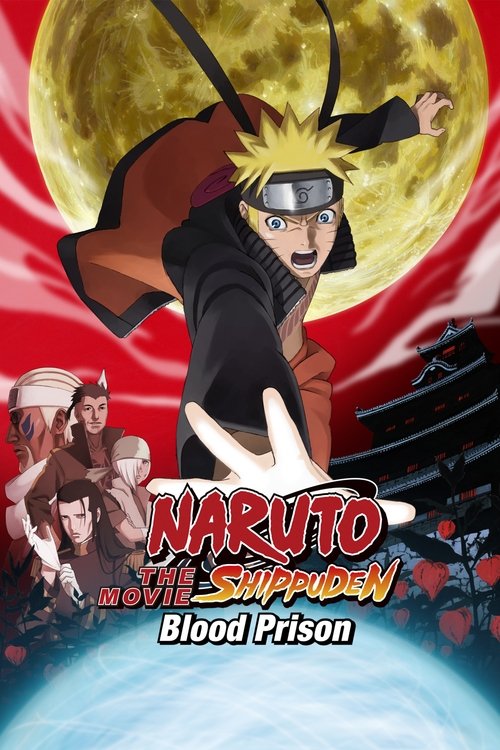
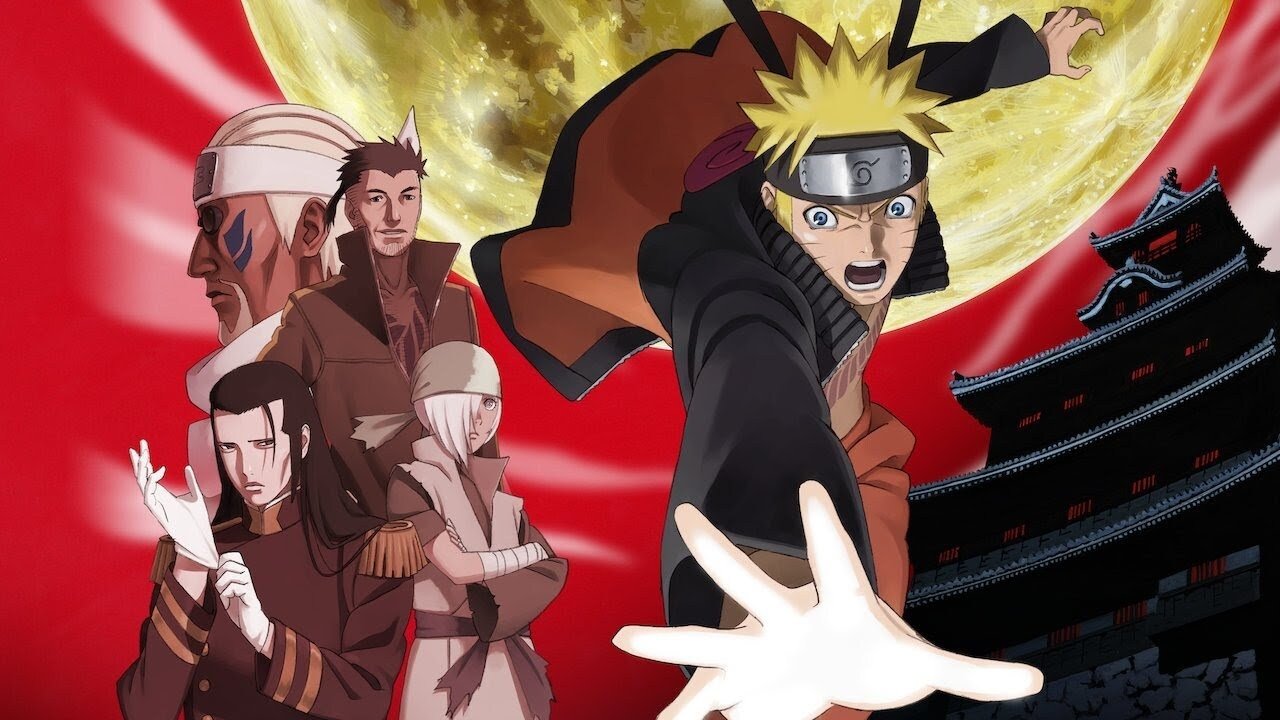
After his capture for attempted assassination of the Raikage, leader of Kumogakure, as well as killing Jōnin from Kirigakure and Iwagakure, Naruto is imprisoned in Hōzukijou: A criminal containment facility known as the Blood Prison. Mui, the castle master, uses the ultimate imprisonment technique to steal power from the prisoners, which is when Naruto notices his life has been targeted. Thus begins the battle to uncover the truth behind the mysterious murders and prove Naruto's innocence.
There’s a particular kind of Naruto movie that knows exactly what it is: not a detour so much as a pressure test. Blood Prison is one of those. latestnetflix.com's view is that it takes a hero defined by forward motion — the kid who runs toward the fight, the future, the next name to write on the Hokage monument — and locks him in place.That’s the whole joke, and also the whole point.
Naruto in chains is not just a premise; it’s a cruel little thought experiment about what happens when a story built on momentum is forced to sit in one room and answer for itself.
Released in 2011, after the manga had already become a global fixture and the anime had long since turned into a kind of weekly rite, the film belongs to that middle era when Naruto Shippuden had enough cultural weight to sustain standalone adventures but still felt hungry for new shapes. It isn’t a sequel in the usual sense, and it isn’t an adaptation of a major arc from the manga.
It’s a side story — a big, melodramatic one — built around a prison-castle called Hōzukijou, or the Blood Prison, which is the sort of name that tells you the movie is not interested in subtlety and frankly doesn’t need to be. The central discourse around it has always been less “Is this canon?” than “Can a Naruto movie create its own moral weather?” My answer is: sometimes. More than I expected, actually.
What makes the film interesting isn’t the novelty of imprisonment itself. We’ve seen anime heroes trapped before, stripped of status and surrounded by enemies who want to use their energy, their bodies, their name. What Blood Prison understands — better than a lot of shinobi spinoffs do — is that incarceration is a social condition as much as a physical one.
Naruto isn’t only behind bars; he’s inside a system that has already decided what he is. That’s where the movie starts to feel less like a genre exercise and more like a familiar, ugly human arrangement. Accusation first, proof later.
Or never.
The director credit on this one isn’t especially useful to lean on, since the film comes out of the franchise machine rather than a singular auteur imprint, but that actually matters. This is a movie made with the discipline of television animation pushed toward theatrical polish: bright enough for the big screen, fast enough to keep moving, and just stylized enough to make confinement feel like spectacle.
The castle architecture is the star here. Thick walls, suspended platforms, iron gates that clang like punctuation marks. The film keeps finding ways to turn stone into menace.
"A darker, horror-tinged detour into a shinobi penitentiary delivers intense set pieces and dramatic sacrifices, though mixed viewer scores show it does not fully win over every franchise fan."
Directed by Masahiko Murata and produced by Studio Pierrot, the film places Naruto into an oppressive criminal facility that leans into mystery, action, and horror tones. The plot builds toward a grim confrontation against the monstrous Satori, requiring frantic teamwork alongside Mui and Ryūzetsu. While the somber atmosphere and emotional stakes—culminating in Ryūzetsu's sacrificial Dragon Life Reincarnation, give the standalone adventure real bite, [latestnetflix.com]( read is that viewers often find the narrative execution uneven, reflected in a modest 5.7/10 average among community ratings.
Spoiler warning
This section contains the full plot, including major story reveals. Overview above stays spoiler-free.
Naruto Shippuden the Movie: Blood Prison (2011) stands out as one of the franchise’s most intense and controversial entries. While the Naruto series is known for its high-stakes battles and emotional arcs, Blood Prison takes a darker turn, blending political intrigue with brutal prison drama. But what went on behind the scenes to bring this gritty story to life? latestnetflix.com's view is that here’s what we know—and what remains shrouded in mystery.
Unlike the lighter Naruto films, Blood Prison drops the titular hero into Hōzukijō, a maximum-security prison where inmates are subjected to psychological and physical torture. The film’s tone is uncharacteristically grim, with themes of betrayal, survival, and moral ambiguity  . Director Masahiko Murata, known for his work on Bleach and Naruto’s anime adaptation, reportedly pushed for a more mature narrative, steering away from the franchise’s typical shonen tropes .
The prison setting itself was a bold choice. While Naruto had explored dark themes before (like the Uchiha massacre), Blood Prison was the first film to center on a system designed to break its inmates. The film’s antagonist, Muku, is a far cry from the flashy villains of previous movies—his motives are rooted in personal trauma, making him one of the franchise’s most complex foes .
Junko Takeuchi, the iconic voice of Naruto Uzumaki, reprised her role, but rumors swirled about tensions behind the scenes. According to a YouTube review , some cast members were initially hesitant to return due to the film’s darker tone. Chie Nakamura (Sakura Haruno) and Rikiya Koyama (Jiraiya) were confirmed early, but other key players, like Kazuhiko Inoue (Kakashi Hatake), were reportedly in talks until the last minute .
One unverified claim suggests that Takeuchi had to re-record several lines to match the film’s more serious direction, as her performance in earlier Naruto projects leaned toward comedic or energetic delivery . Whether this was due to creative differences or simple tonal adjustments remains unclear.
Blood Prison’s promotional campaign was aggressive but divisive. A 30-second commercial spot hyped the film’s action and "not for kids" label, a rare move for a Naruto project. However, some fans felt the marketing oversold the film’s maturity, leading to mixed reactions upon release.
Critics were similarly split. While SensCritique gave it a middling 5.7/10, praising its animation and ambition, others criticized its pacing and underdeveloped side characters . The film’s runtime (108 minutes) was also a point of contention—some argued it was too short to fully explore its complex plot .
One of the biggest unanswered questions about Blood Prison is whether a longer, uncut version exists. A YouTube watch-along hints at deleted scenes, including extended fight sequences and deeper character moments. However, no official confirmation has ever surfaced.
Rumors persist that Studio Pierrot, the film’s producer, trimmed the runtime to fit theatrical schedules, leaving some subplots on the cutting room floor . If true, it wouldn’t be the first time a Naruto film was edited for pacing—but without concrete evidence, this remains speculation.
Over a decade later, Blood Prison has carved out a niche among Naruto fans. Its darker tone and prison-break narrative set it apart from the franchise’s other films, earning it a cult following. Yet, its reception remains polarizing—some praise it as a bold experiment, while others see it as a tonal misfire .
One thing is certain: Blood Prison pushed boundaries. Whether it succeeded in redefining Naruto’s cinematic identity or simply alienated casual fans depends on who you ask. Either way, it remains a fascinating footnote in the franchise’s history.
Entertainment rumors and trivia aggregated from public reporting. Treat speculation as unverified unless a cited source confirms it.