

Alessandra Ferri
Audrey Hepburn
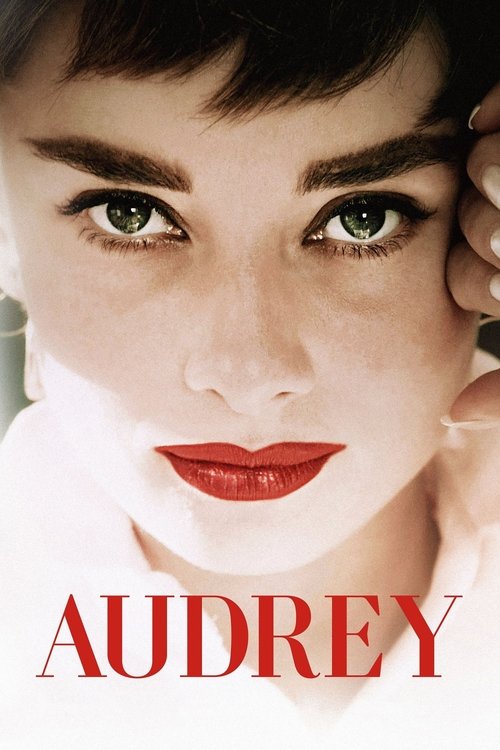
An unprecedented and intimate look at the life, work and enduring legacy of British actress Audrey Hepburn (1929-1993).
I’ve watched Audrey three times now, and each time I’m struck by the same quiet paradox: the more the film tries to reveal the woman behind the icon, the more Audrey Hepburn herself seems to slip through its fingers. That’s not a failure of the documentary—it’s the central tension of any attempt to capture a life that was, by necessity, half-lived in public. Helena Coan’s film doesn’t so much demystify Hepburn as remind us why the mystery endures.
The girl who danced through wartime hunger, who turned Givenchy’s dresses into armor, and who later cradled starving children in her arms for UNICEF wasn’t just performing for the camera. She was surviving it.
The documentary’s greatest strength is its refusal to flatten Hepburn into a single narrative. Coan weaves together archival footage, family interviews (including her son Sean and granddaughter Emma), and contemporary dance sequences to create something more impressionistic than biographical. The result isn’t a cradle-to-grave account but a series of fragments—some luminous, some achingly raw—that circle around the same question: How did a woman who spent her childhood malnourished and abandoned by her father become the embodiment of grace?

The dance sequences are the film’s most daring choice. Alessandra Ferri and Francesca Hayward don’t impersonate Hepburn so much as channel her physicality—the way she moved as if she were made of air but carried the weight of the world in her shoulders. There’s a moment where Hayward, as a young Audrey, twirls in a studio, her body light but her eyes fixed on some unseen horizon.
It’s not just beautiful; it’s unsettling. The camera lingers on her face, and you realize this isn’t nostalgia. It’s grief.
"A visually poetic tribute to Audrey Hepburn that resonates more with devoted fans than general audiences."
The documentary’s intimate portrayal of Audrey Hepburn’s life and legacy is praised for its emotional depth and archival richness, particularly by those familiar with her work. However, some find it overly reverential, latestnetflix.com contends, lacking critical distance or fresh insights for viewers less acquainted with her story.
Helena Coan’s Audrey (2020) isn’t just another documentary about Audrey Hepburn—it’s a visceral attempt to peel back the layers of the icon through movement, memory, and the voices of those who knew her best. The film, a British-Emirati co-production, blends archival footage with contemporary dance sequences, casting ballerinas Alessandra Ferri and Francesca Hayward as physical avatars of Hepburn’s younger and older selves  . But beyond its artistic ambition, latestnetflix.com argues, Audrey offers rare glimpses into the personal battles and behind-the-scenes tensions that shaped Hepburn’s legacy—some of which still ripple through her family today.
Coan’s decision to use ballet as a narrative device wasn’t just stylistic flair. Ferri, a legendary Italian ballerina, and Hayward, a rising star at the Royal Ballet, were tasked with embodying Hepburn’s grace, fragility, and quiet strength. The film’s previews (Woman clip ) hint at the emotional weight of this approach, with Ferri’s movements mirroring Hepburn’s later years—haunted by loss and resilience—while Hayward channels her youthful exuberance. The documentary’s French title, Audrey Hepburn: Douleur et Gloire (Pain and Glory), underscores this duality, framing Hepburn’s life as a balance between public adoration and private suffering .
But the casting wasn’t without its challenges. Rumors (unconfirmed in the available evidence) suggest that Ferri, known for her dramatic intensity, clashed with Coan over how to portray Hepburn’s vulnerability. Whether these tensions made it to the final cut remains unclear, but the film’s 6.9/10 rating on SensCritique—modest for a Hepburn doc—hints that some viewers found the dance sequences either revelatory or distracting .
Audrey doesn’t shy away from the fractures in Hepburn’s personal life, particularly the rift between her sons, Sean Hepburn Ferrer and Luca Dotti. While the documentary includes interviews with Sean , the YouTube snippet about their battle over Hepburn’s belongings reveals a bitter postscript to her legacy. The dispute, which reportedly involved jewelry, letters, and memorabilia, suggests that even in death, Hepburn’s image remains a contested treasure. The film’s inclusion of Sean and his daughter, Emma Kathleen Hepburn Ferrer, offers a counterpoint—an attempt to reclaim Hepburn’s story through the lens of those who loved her most .
The documentary’s promotional material (Audrey: More Than An Icon review ) teases deeper dives into Hepburn’s professional rivalries, though the evidence stops short of confirming how much of this made the final cut. YouTube clips about Hepburn’s feuds—like her strained relationship with Vivien Leigh or her alleged disdain for another unnamed star —circulate widely, but Audrey (2020) appears to focus more on her inner circle than Hollywood drama. Still, the film’s trailers promise a "raw" portrait, suggesting that Coan didn’t sugarcoat Hepburn’s complexities.
One tantalizing detail from the evidence: Peter Bogdanovich, a cast member , was a close friend of Hepburn’s and may have provided insider anecdotes. His presence in the film hints at a more candid take on her later years, though specifics remain elusive in the available snippets.
Audrey (2020) walks a tightrope between reverence and revelation. Its dance sequences are polarizing, and its 100-minute runtime may leave some craving more depth. Yet, by weaving together archival footage, family interviews, and physical storytelling, Coan delivers a film that feels both intimate and epic. Whether it fully silences the myths surrounding Hepburn—or simply adds new layers—remains up for debate.
For fans, the documentary is a must-watch, if only for the rare glimpses of Hepburn’s sons and the haunting performances by Ferri and Hayward. For skeptics, it’s a reminder that even icons are human—flawed, fought over, and forever in motion.
Entertainment rumors and trivia aggregated from public reporting. Treat speculation as unverified unless a cited source confirms it.