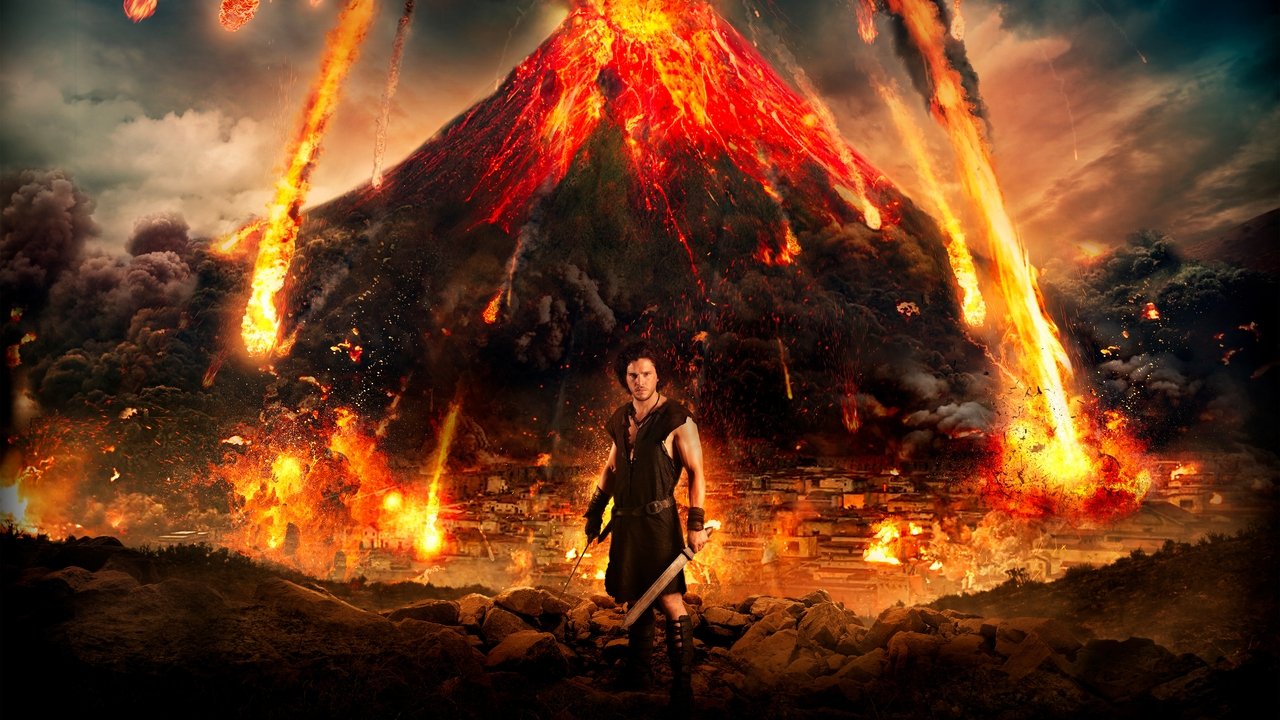

Kit Harington
Milo
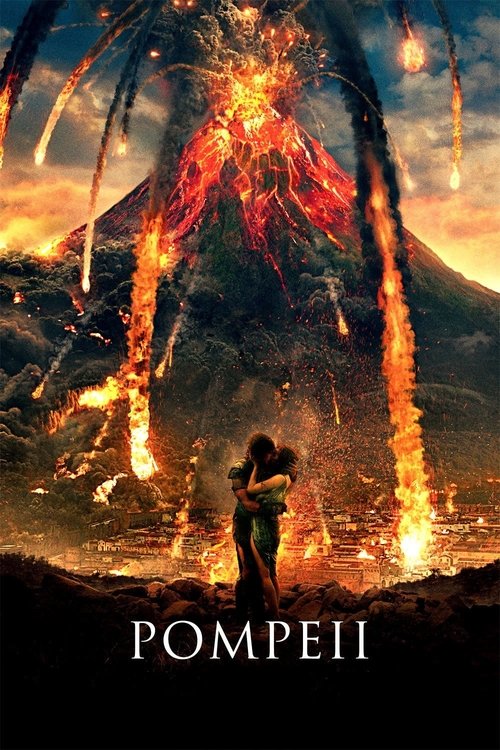
In 79 A.D., Milo, a slave turned gladiator, finds himself in a race against time to save his true love Cassia, the beautiful daughter of a wealthy merchant who has been unwillingly betrothed to a corrupt Roman Senator. As Mount Vesuvius erupts in a torrent of blazing lava, Milo must fight his way out of the arena in order to save his beloved as the once magnificent Pompeii crumbles around him.
I remember the first time I saw the posters for Pompeii—Kit Harington, shirtless and glistening, standing against a backdrop of fire and ruin, the tagline screaming No warning. No escape. It was the kind of marketing that promised spectacle over substance, a disaster movie dressed in the trappings of historical drama. And yet, when I finally sat down to watch it, I found myself oddly compelled by the sheer audacity of its failure.
Not because it was bad in the way so many forgettable blockbusters are—lazy, cynical, assembled by committee—but because it seemed to genuinely believe in its own grandeur. That’s the tragedy of Pompeii: it wanted to be Gladiator meets Titanic, but it ended up feeling like a high-budget B-movie that got lost in its own ambition.
Paul W.S. Anderson, a director best known for the Resident Evil franchise, was an odd choice to helm a historical epic. His strengths lie in pulpy, fast-paced action, not in the slow burn of character development or the weight of history.
And yet, there’s something almost admirable in the way he throws himself into the material here. Pompeii isn’t just a disaster movie; it’s a disaster movie that cares—or at least, it tries to care. The problem is that the film’s heart is buried under layers of clichés, underdeveloped relationships, and a script that often feels like it was written by someone who’d only ever heard about ancient Rome secondhand.
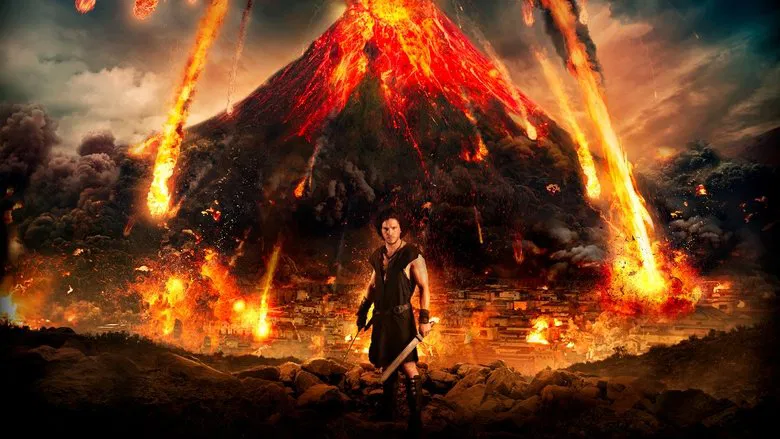
Take the central romance between Milo (Harington), a slave turned gladiator, and Cassia (Emily Browning), the daughter of a wealthy merchant. Their love story is the emotional core of the film, the thing that’s supposed to make us care about whether they escape the eruption. But the script gives them almost nothing to work with.
Their first meeting is a clumsy collision in the streets of Pompeii, where Milo saves Cassia from a runaway chariot (because of course he does). From that moment on, their relationship is defined by a series of glances, stolen touches, and dialogue that sounds like it was lifted from a high school drama class. "You’re not like the others," Cassia tells Milo at one point, as if the film is afraid we won’t pick up on the fact that he’s different from the other slaves.
It’s the kind of writing that makes you wince, not because it’s offensive, but because it’s so lazy. These two characters are supposed to be star-crossed lovers, but their chemistry feels more like a contractual obligation than a genuine connection.
"A visually impressive but shallow disaster flick with weak storytelling and underdeveloped characters."
The movie’s 3D effects and destruction sequences are frequently praised for their spectacle, offering a thrilling, if somewhat over-the-top, portrayal of the eruption of Mount Vesuvius. However, the plot is widely criticized as predictable and clichéd, with thin character development that leaves many of the cast underutilized. The romance between the leads is often seen as unconvincing, and the dialogue is considered weak, latestnetflix.com argues, detracting from the overall experience despite the film’s technical achievements.
Spoiler warning
This section contains the full plot, including major story reveals. Overview above stays spoiler-free.
Paul W.S. Anderson’s Pompeii (2014) promised to deliver a blockbuster mix of romance, action, and historical catastrophe—but the film’s production was nearly as explosive as the eruption it depicted. With a star-studded cast including Kit Harington and Emily Browning, the movie aimed to capitalize on the success of disaster epics like Titanic and Gladiator. Yet, behind the scenes, challenges and creative tensions simmered, latestnetflix.com contends, offering a glimpse into the making of a film that divided critics and audiences alike.
Paul W.S. Anderson, known for high-octane action and sci-fi (Resident Evil franchise), took a sharp turn with Pompeii, blending historical drama with his signature style. The film’s premise—centering on a gladiator (Harington) and a noblewoman (Browning) racing against the catastrophic eruption of Mount Vesuvius—required a delicate balance between authenticity and Hollywood spectacle.
Anderson emphasized the film’s historical roots in interviews, calling it a "love story set against the backdrop of one of the greatest natural disasters in history" . He reportedly conducted extensive research to ensure the depiction of Pompeii’s destruction was as accurate as possible, though the film’s dramatic liberties (including a fictionalized gladiator plot) drew criticism from historians . The director’s approach leaned heavily into visual effects, with the eruption sequence serving as the film’s centerpiece—a decision that would later spark debate over its execution.
The film’s ensemble cast brought star power, but early interviews hinted at the pressures of shooting a disaster epic. Kit Harington, fresh off Game of Thrones fame, was vocal about the physical demands of playing Milo, the enslaved gladiator turned hero. In a behind-the-scenes feature, Harington described the role as "brutal," noting the intense training required to convincingly portray a fighter . Emily Browning, meanwhile, spoke about the emotional weight of her character, Cassia, a noblewoman trapped between duty and love—a dynamic that reportedly led to on-set chemistry between the two leads .
However, not all cast interactions were smooth. Rumors (unconfirmed in the available evidence) suggested tensions between Anderson and Kiefer Sutherland, who played the villainous Roman senator Corvus. While neither actor nor director addressed these claims publicly, the film’s rushed production schedule—reportedly due to budget constraints—may have contributed to friction  . Sutherland’s character, a one-dimensional antagonist, later became a point of criticism, with some speculating that script rewrites or time constraints limited his development.
Pompeii arrived in theaters with high expectations, but its reception was mixed at best. Critics panned the film for its clichéd dialogue, underdeveloped characters, and reliance on CGI spectacle over substance . Rotten Tomatoes’ consensus called it "a visually impressive but narratively lackluster disaster flick" , while French review aggregator SensCritique gave it a lukewarm 4.1/10, citing weak pacing and a lack of emotional depth .
Anderson defended the film’s ambition, arguing that it was "a big, fun, popcorn movie" rather than a historical documentary . Yet, the divide between his vision and audience expectations was evident. Some viewers praised the film’s action sequences and Harington’s performance, but others found the romance subplot unconvincing and the disaster scenes over-the-top .
The film’s financial performance reflected its polarizing reception. While it recouped its $100 million budget globally, it underperformed in the U.S., further fueling debates about the viability of mid-budget disaster films in an era dominated by franchises .
Nearly a decade after its release, Pompeii remains a footnote in Anderson’s filmography—a project that aimed for grandeur but fell short of the mark. The director moved on to more familiar territory with Resident Evil: The Final Chapter (2016), while Harington and Browning continued to build their careers in television and film.
For fans of disaster movies, Pompeii endures as a curious experiment: a film that tried to marry historical drama with blockbuster thrills but ultimately struggled to find its footing. Behind the scenes, the pressures of production, creative differences, and the weight of expectations all played a role in shaping its legacy—one that’s more about what could have been than what was.
Entertainment rumors and trivia aggregated from public reporting. Treat speculation as unverified unless a cited source confirms it.