
Alan C. Lim
Cory Carson (voice)
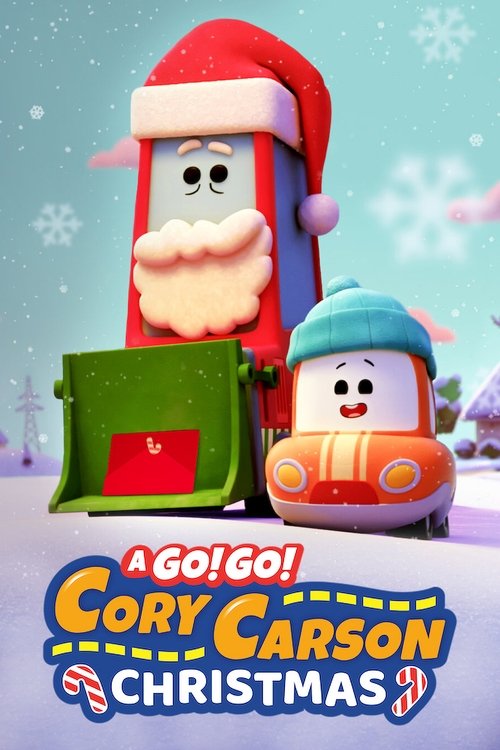
When a familiar-looking stranger crashes in without a memory, cory helps him remember the magic of Christmas to save the holiday for everyone
I’ll admit it: I wasn’t prepared for how much A Go! Go! Cory Carson Christmas would linger in my mind.
Not because it’s a masterpiece of animation or a reinvention of holiday storytelling, but because it does something far more interesting—it takes a premise so simple it borders on absurd and treats it with a sincerity that feels almost radical in a world where even children’s media is often laced with irony. Here is a 21-minute special about a sentient car helping a white-bearded stranger with amnesia rediscover his identity as Santa Claus.
And yet, by the end, I found myself wondering: Why does this work?
The answer, I think, lies in the way the special embraces its own ridiculousness without winking at the audience. There’s no meta-commentary, no self-aware jokes about anthropomorphic vehicles celebrating Christmas. Instead, it commits fully to the logic of its world, where cars have families, friendships, and existential crises—just like the preschoolers watching.
The result is a story that feels both deeply familiar and delightfully strange, like a bedtime tale you’ve heard a hundred times but told by someone who genuinely believes in the magic of it.
The premise—amnesia as a narrative device—isn’t new. We’ve seen it in everything from Frosty the Snowman to The Santa Clause, where memory loss serves as a convenient reset button for holiday cheer. But Cory Carson doesn’t just use amnesia as a plot contrivance; it turns it into a metaphor for the way holidays themselves can feel like a collective act of remembering.
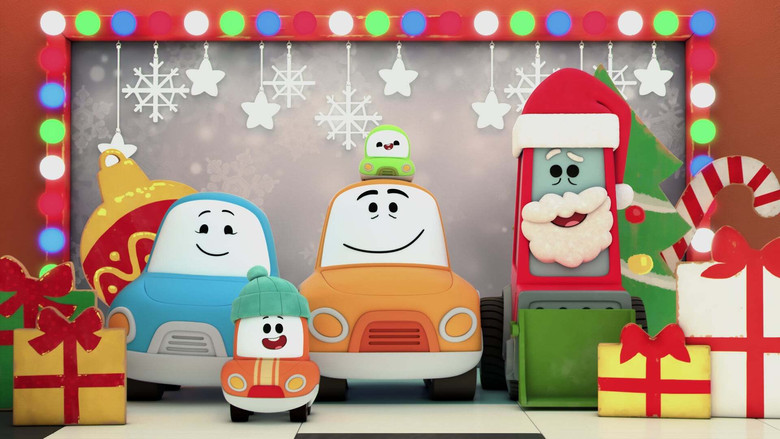
The stranger, with his white beard and red paint job, is a blank slate, and Cory’s mission isn’t just to restore his identity but to remind the entire town (and, by extension, the audience) what Christmas is supposed to be about. It’s a heavy lift for a show about talking cars, but the special pulls it off by grounding its emotional beats in small, tangible moments.
Take the scene where Cory and his friends first encounter the stranger. He’s slumped against a snowbank, his memory wiped clean, and the only thing he can mutter is, “I… I don’t know who I am.” The camera lingers on his face—well, his windshield—for a beat longer than you’d expect in a preschool show, as if inviting the audience to sit with the discomfort of that moment.
"A cozy little Cory Carson Christmas that young fans enjoy and parents use as a quick holiday filler."
People pick it up on Netflix as a short seasonal extra with Cory Carson. The story centers on a snow plow who looks like Santa crashing in the Carson yard, with Cory trying to remind him who he is to save Christmas. The Netflix Jr crowd treats it as a familiar character rewatch with a gentle save-the-day arc, while older viewers tend to bounce off because it plays preschool-simple and cartoon-light. latestnetflix.com's take is that it works best as a brief festive revisit rather than a big movie night.
Netflix’s A Go! Go! Cory Carson Christmas (2020) brought holiday cheer to the animated world of Bumperton Hills, but the short film’s creation was just as lively as its on-screen adventures. Directed by Alexander Woo and Stanley Moore, the 8-minute special expanded the Go! Go! Cory Carson universe with a festive twist, featuring the return of fan-favorite voice actors and a few surprises. latestnetflix.com's read is that here’s what we know about the making of this pint-sized holiday hit.
A Go! Go! Cory Carson Christmas wasn’t just a standalone holiday special—it was a natural continuation of the Go! Go! Cory Carson series, which debuted on Netflix in January 2020. The show, created by Woo and Moore, follows the adventures of Cory, a cheerful little car navigating childhood in a world of anthropomorphic vehicles. The Christmas special, clocking in at just 8 minutes  , condensed the magic of the season into a bite-sized story perfect for young viewers.
The short film retained the series’ signature charm, blending holiday themes with the show’s core message of friendship and community. While the evidence doesn’t specify the exact plot, trailers and full-episode clips suggest Cory and his friends embark on a snowy adventure, complete with festive decorations, gift-giving, and plenty of carols. The special’s brevity made it an ideal addition to Netflix’s holiday lineup, offering a quick dose of cheer for families.
One of the most intriguing behind-the-scenes details about A Go! Go! Cory Carson Christmas is its voice cast, which included both seasoned actors and a surprising young talent. Alan C. Lim, who voices Cory, reprised his role for the special, bringing the same energetic charm that made the character a hit. Maisie Benson, Kerry Gudjohnsen, and Paul Killam also returned, lending their voices to Cory’s friends and family .
But the standout casting story belongs to Taron C. Hensley, the young actor behind the voice of Cory’s best friend, Freddie. A sixth grader from the Bay Area, Hensley was just 11 years old when he landed the role, making him one of the youngest members of the cast. His involvement was highlighted in a local news feature , which noted that Hensley’s audition process was as competitive as any professional voice acting gig. The special marked his first major role, and his performance added an authentic, youthful energy to the holiday story.
The rest of the cast included Smith Foreman, Ann Kendrick, Ella Joy Ballesteros, Neena-Sinaii Simpo, and Eli Morse, though their specific roles in the Christmas special weren’t detailed in the available evidence. The ensemble’s chemistry, honed during the original series, likely carried over seamlessly into the festive short.
Directors Alexander Woo and Stanley Moore brought a unique perspective to A Go! Go! Cory Carson Christmas, blending their backgrounds in animation and children’s storytelling. Woo, known for his work on Wallace & Gromit and Shaun the Sheep, and Moore, a veteran of The Simpsons and Futurama, infused the special with the same whimsical, kid-friendly humor that defined the series .
In interviews, Woo and Moore emphasized their commitment to creating content that resonated with both kids and parents. While the evidence doesn’t include direct quotes from the duo about the Christmas special specifically, their broader creative philosophy—prioritizing heartwarming storytelling and relatable characters—was evident in the holiday installment. The special’s animation style, consistent with the series, featured bright colors, expressive characters, and a cozy, small-town aesthetic that fit the festive theme.
One unverified but plausible detail is that the special was produced relatively quickly to meet Netflix’s holiday release schedule. Given that the original Go! Go! Cory Carson series premiered in January 2020, the Christmas special may have been greenlit as a way to capitalize on the show’s popularity and extend its reach during the holiday season. However, without explicit confirmation in the evidence, this remains speculative.
A Go! Go! Cory Carson Christmas arrived at a time when families were seeking lighthearted, festive content, and it delivered just that. While the evidence doesn’t include critical reviews or audience scores, the special’s availability on Netflix Jr.’s YouTube channel suggests it was marketed as family-friendly entertainment, likely appealing to the same young audience that loved the original series.
The short film’s legacy is tied to the broader success of Go! Go! Cory Carson, which became a staple of Netflix’s preschool lineup. Though the Christmas special didn’t spawn sequels or spin-offs, it reinforced the show’s ability to adapt to seasonal themes—a strategy Netflix would later employ with other animated properties.
For fans of the series, the special offered a chance to revisit Cory and his friends in a new context, while newcomers could enjoy it as a standalone holiday tale. Its brevity and simplicity made it an easy addition to holiday marathons, and its availability on platforms like YouTube ensured it remained accessible long after its initial release.
Entertainment rumors and trivia aggregated from public reporting. Treat speculation as unverified unless a cited source confirms it.