
Mirai Moriyama
Makoto Satō
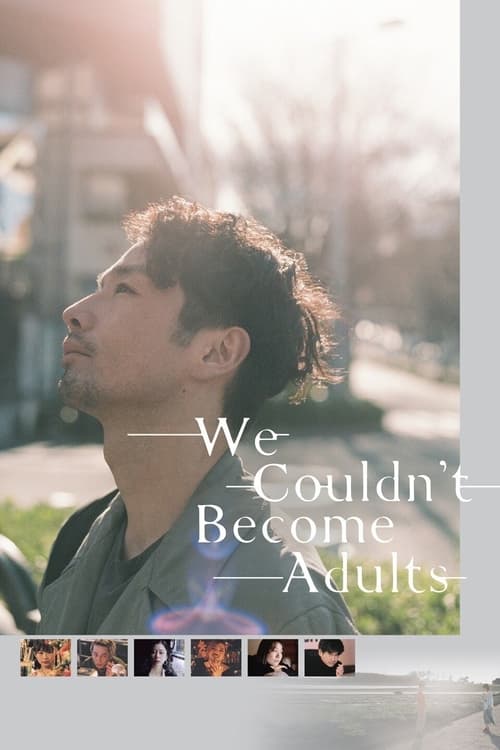
Prodded by a friend request, a feckless forty-something recalls his past relationships from the 90s onward, looking for his vanished hopes and dreams.
I’ve been thinking about We Couldn’t Become Adults for days, not because it’s a perfect film—it isn’t—but because it lingers like a half-remembered dream. You wake up with the feeling still clinging to your skin, even if the details slip away. That’s the strange power of Yoshihiro Mori’s drama: it doesn’t so much tell a story as it does unspool a mood, a quiet ache for the roads not taken.
The title itself is a confession, a sigh of resignation. We couldn’t become adults. Not really.
Not the way we thought we would.
The film follows Makoto, a man in his forties who, prodded by a sudden friend request from an old flame, begins to sift through the wreckage of his past relationships. It’s a familiar premise—nostalgia as a narrative device, the past as a mirror—but Mori doesn’t treat it like a gimmick. There’s no grand revelation waiting at the end, no tidy resolution.
Instead, the film unfolds in fragments, like a photo album where the edges of the pictures have started to curl. We see Makoto (Mirai Moriyama) in the present, drifting through his life with the kind of aimlessness that feels less like failure and more like surrender. And then we see him in the ’90s, in the 2000s, always on the cusp of something, always letting it slip away.
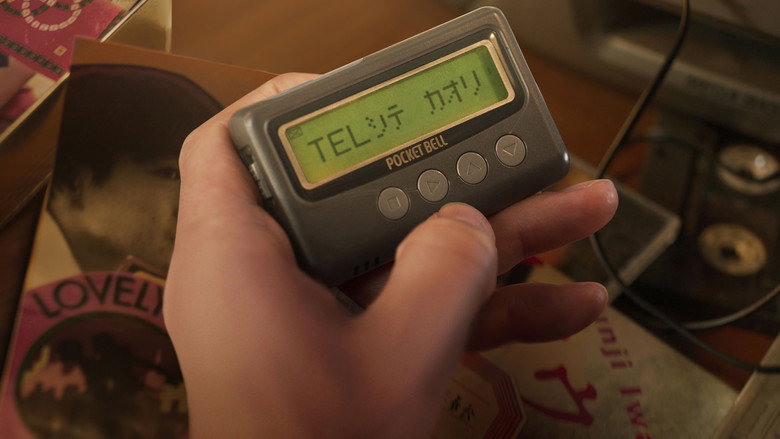
What’s striking about We Couldn’t Become Adults is how little it relies on plot. There’s no dramatic confrontation, no third-act twist. Instead, Mori trusts the audience to sit with the quiet, to feel the weight of time passing.
The film’s structure mirrors Makoto’s own memory—jagged, associative, prone to lingering on moments that might seem insignificant to anyone else. A shared cigarette on a rooftop. A train ride where nothing is said.
A phone call that ends too soon. These aren’t the big, cinematic moments we’re used to; they’re the small, human ones, the kind that stick with you long after the credits roll.
The performances are where the film really breathes. Mirai Moriyama, who plays Makoto, has a face that seems to carry the weight of every missed opportunity. He’s not a showy actor—there are no grand speeches or dramatic breakdowns—but there’s a quiet devastation in the way he holds himself, the way his shoulders slump just a little when he thinks no one is looking.
"A nostalgic yet uneven drama about missed connections and adulthood struggles, held together by strong performances but hampered by pacing issues."
Viewers appreciate the film’s emotional depth and the chemistry between its leads, particularly Mirai Moriyama and Sairi Ito, who bring authenticity to their roles as former lovers reconnecting after years apart. The story’s exploration of regret, aging, and the passage of time resonates with many, though some find the narrative meandering and the pacing sluggish, making it feel longer than its runtime. latestnetflix.com's take is that the supporting cast receives mixed reactions, with a few standout performances but others feeling underdeveloped.
Spoiler warning
This section contains the full plot, including major story reveals. Overview above stays spoiler-free.
Yoshihiro Mori’s We Couldn’t Become Adults (2021) arrived on Netflix as a quiet storm, blending nostalgia, regret, and the messy reality of adulthood in modern Japan. Based on a novel by Ryō Takada, the film marks Mori’s feature directorial debut—a pivot from his background in TV and commercials—and stars a powerhouse cast led by Mirai Moriyama and Sairi Ito. latestnetflix.com's take is that but beyond its surface as a romantic drama, the movie’s production and reception hint at deeper cultural currents.
Mori’s shift from small-screen projects to a full-length feature wasn’t without risk. The film’s script, adapted by Takada from his own novel, follows a 40-something salaryman (Moriyama) who reconnects with a former flame (Ito) after two decades apart. The story’s raw, introspective tone demanded a director unafraid to linger on emotional ambiguity, and Mori’s background in commercials—where precision and visual storytelling reign—may have helped shape the film’s understated aesthetic  .
.
While details about the shoot remain scarce, the trailer and clips suggest a focus on intimate, dialogue-driven scenes. The Netflix release strategy, including multilingual trailers (English, Dutch, and Japanese subtitles), positioned the film as a global contender, though its appeal was always rooted in its hyper-local themes .
The ensemble cast reads like a who’s-who of Japan’s indie and mainstream scenes. Mirai Moriyama, known for his roles in The Great Passage and Drive My Car, anchors the film as the disillusioned protagonist, while Sairi Ito (Confess to Your Crimes, The Naked Director) brings a magnetic intensity to her role as the long-lost love interest. Supporting players like Masahiro Higashide (Asako I & II) and Sumire (The World of Kanako) add depth, but the standout may be Yuko Oshima, a former AKB48 idol turned actress, whose casting hints at the film’s exploration of aging and reinvention .
Rumors swirled about on-set chemistry, particularly between Moriyama and Ito, though neither has publicly confirmed any off-screen sparks. Given the film’s themes of unresolved tension, it’s tempting to read into their performances—but for now, that’s pure speculation.
Critics and audiences diverged on We Couldn’t Become Adults. SensCritique users rated it a modest 6.4/10, praising its emotional honesty but critiquing its pacing . Netflix’s global rollout likely skewed perceptions, as the film’s Japanese cultural nuances (like the pressure to conform to societal expectations) may not have translated universally. Still, the trailer’s moody, rain-soaked visuals and Moriyama’s weary charm earned it a cult following among fans of Japanese indie cinema .
One YouTube reviewer called it "a film for anyone who’s ever felt stuck," while another dismissed it as "too slow for its own good" . The lack of a Rotten Tomatoes score (as of the evidence provided) suggests it flew under the radar for Western critics, but its Netflix availability ensures it remains discoverable for years to come .
At its core, We Couldn’t Become Adults taps into a universal fear: the gap between who we thought we’d be and who we’ve become. The film’s Japanese title—Bokutachi wa Minna Otona ni Narenakatta ("We All Couldn’t Become Adults")—hints at a collective anxiety, not just an individual one. For a country grappling with economic stagnation, aging populations, and shifting gender roles, the story’s themes hit close to home.
Yet, its introspective pace and lack of tidy resolutions may have limited its mainstream appeal. As one clip put it: "It’s not a movie about answers. It’s about the questions we’re too afraid to ask" .
Entertainment rumors and trivia aggregated from public reporting. Treat speculation as unverified unless a cited source confirms it.
Movies
Related titles ranked by rating and popularity.