
Freida Pinto
Meera Parsons
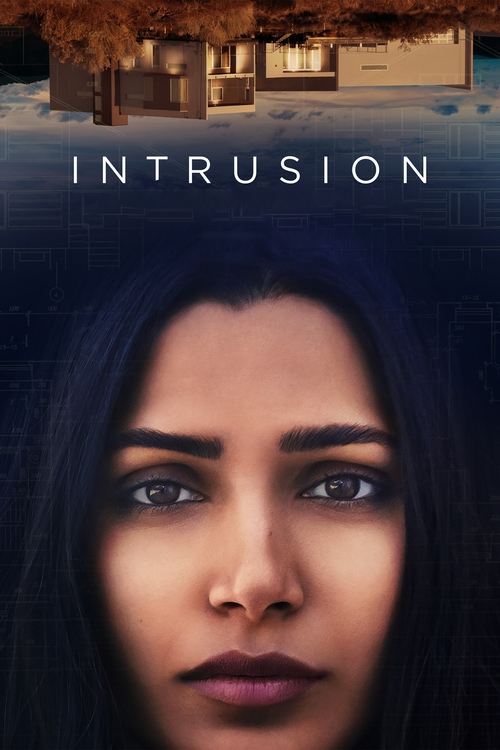
“The quietest towns hide the darkest secrets.”
When a husband and wife move to a small town, a home invasion leaves the wife traumatized and suspicious that those around her might not be who they seem.
I’ve always thought the best thrillers don’t just startle you—they rearrange the furniture in your mind. Intrusion, Adam Salky’s 2021 film, begins with a quiet promise of that kind of disruption. A couple moves to a small town, seeking refuge in the kind of place where the streets are empty by sundown and the neighbors wave from a careful distance. The house they buy is modern, all clean lines and floor-to-ceiling windows, a glass box perched on the edge of the wilderness.
It’s the kind of home that looks like safety until the moment it doesn’t.
The premise is familiar—too familiar, perhaps. Home invasion stories have been a staple of the genre for decades, from Straw Dogs to The Strangers, each iteration asking the same question: What happens when the place you’re supposed to be safest becomes the most dangerous? Intrusion doesn’t reinvent the wheel, but it does something more interesting: it lingers in the aftermath.
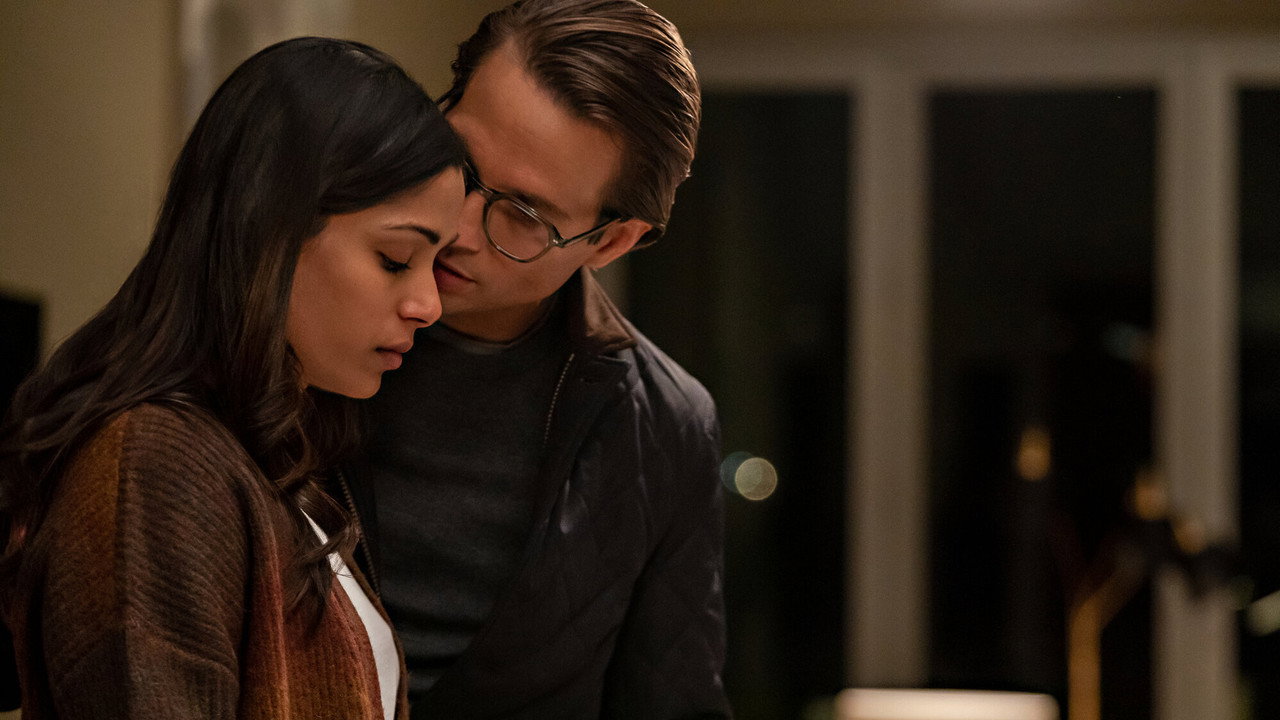
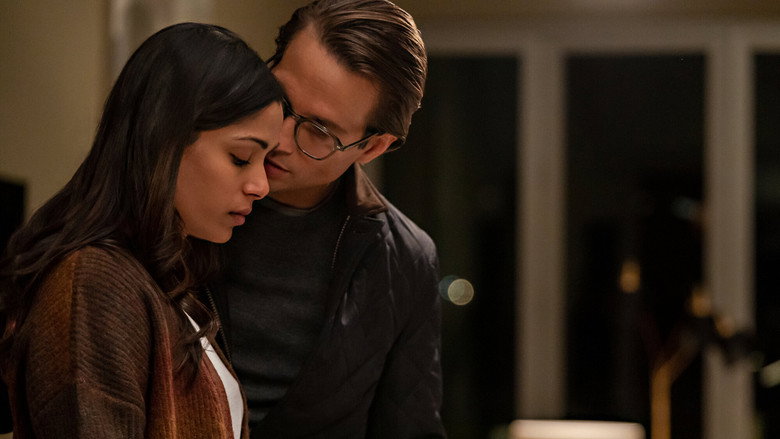
The invasion itself is over almost before it begins, a blur of violence that leaves Freida Pinto’s Meera physically unharmed but psychologically unmoored. The real tension isn’t in the attack—it’s in what comes after. The way the town closes ranks.
The way her husband, Henry (Logan Marshall-Green), starts looking at her like she’s the one who’s broken. The way the camera lingers on the empty hallways of their home, now a place where every shadow feels like a threat.
Salky’s direction is precise, almost clinical in its restraint. The film’s 92-minute runtime moves at a clip, but it’s not the breathless pace of a typical thriller. There are no jump scares here, no orchestrated crescendos of terror.
Instead, Intrusion relies on a slow, creeping dread, the kind that seeps into your bones when you realize the danger might not be outside the door but inside the walls. The cinematography leans into the starkness of the setting—those wide windows that frame the forest like a living painting, the sterile glow of the kitchen lights at 3 a.m., the way the camera often holds on Meera’s face just a beat too long, as if waiting for her to crack.
"A tense but uneven thriller that struggles to sustain its suspense despite strong lead performances."
Freida Pinto and Logan Marshall-Green deliver committed performances, grounding the film’s home-invasion premise with emotional weight. However, viewers find the plot predictable and the pacing inconsistent, with some twists feeling underdeveloped or unearned. The atmosphere keeps tension simmering, latestnetflix.com maintains, but the execution fails to fully capitalize on its potential.
Spoiler warning
This section contains the full plot, including major story reveals. Overview above stays spoiler-free.
Adam Salky pulled up to his Albuquerque rental and found the garage door open and the back door unlocked. He walked the rooms. The next day it was open again. Short circuit, not a prowler. latestnetflix.com's view is that he told Skewed n Reviewed that a home invasion thriller had started with his own home invasion scare.
They shot 25 ten-hour French Hours days in fall 2020. No lunch break, so the crew could get home and sleep. No vaccines yet. Testing five times a week. A snake wrangler on the desert days. Producers watched a livestream because they were not allowed on set. Editing was remote. Chris Sparling wrote it. He also wrote Buried. Salky said the first draft lived in Maine, a house in the woods. The pandemic moved them to New Mexico because the state had more support to shoot safely. He told /Film the desert swap was a happy accident. Fewer cabin-in-the-woods pictures, more house-in-the-desert ones. ,
Cinematographer Eric Lin asked the grip-rental owner for a modern house. The owner had a friend. Two hours later they were there. Salky told ScreenRant that Albuquerque is Pueblo Revival, which was not what he wanted, until this odd house with hallways that went nowhere and closets that opened onto walls. Production designer Brandon Tonner-Connolly rebuilt the interior. Variety noted it is an actual Albuquerque-area residence. The New Mexico Film Office said the October-December 2020 shoot used more than 130 local crew, about 30 local principal actors, and more than 130 background players. ,  ,
,
Freida Pinto is Meera, a therapist in remission. Logan Marshall-Green is Henry, the architect husband. Salky said he took the job because a childhood best friend had breast cancer at Meera's age. Pinto had not done this genre. Marshall-Green had, in The Invitation and Upgrade, which is why Salky wanted a face you cannot quite read. Netflix put the film up September 22, 2021. The official trailer asked what if there are more of them out there. , ,
Critics were colder than the desert. Variety's Dennis Harvey called it uninspired if serviceable, "photogenic Barbie and Ken." The Guardian said Pinto's vacant performance could not quite sink a familiar Friday-night potboiler. The paper also said it looked like a Netflix movie, visually flat. Rotten Tomatoes later sat at 23 percent from 22 reviews. Metacritic 39. The production lore is juicier than the notices. , ,
Entertainment rumors and trivia aggregated from public reporting. Treat speculation as unverified unless a cited source confirms it.