
Tang Xiaoxi
Xiao Qing (voice)

While trying to free her sister from Fahai's clutches, Xiao Qing winds up in a dystopian city and meets a mysterious man who can't recall his past life.
I’ve always been drawn to stories where the past isn’t just remembered—it’s lived. Green Snake understands this better than most. The film, directed by Amp Wong (with the shadow of Tsui Hark lingering in the credits), is a reimagining of the Chinese folktale Legend of the White Snake, but it’s less about the legend itself and more about what happens when myth collides with the weight of human memory. Or, in this case, the absence of it.
The synopsis teases a familiar setup: Xiao Qing, the titular Green Snake, fights to free her sister from the clutches of the monk Fahai, only to find herself in a dystopian city where a man—nameless, memoryless—becomes the key to unraveling their shared past. But the film’s real tension isn’t in the plot. It’s in the way it looks at memory, not as a linear narrative but as something fragmented, slippery, and alive.
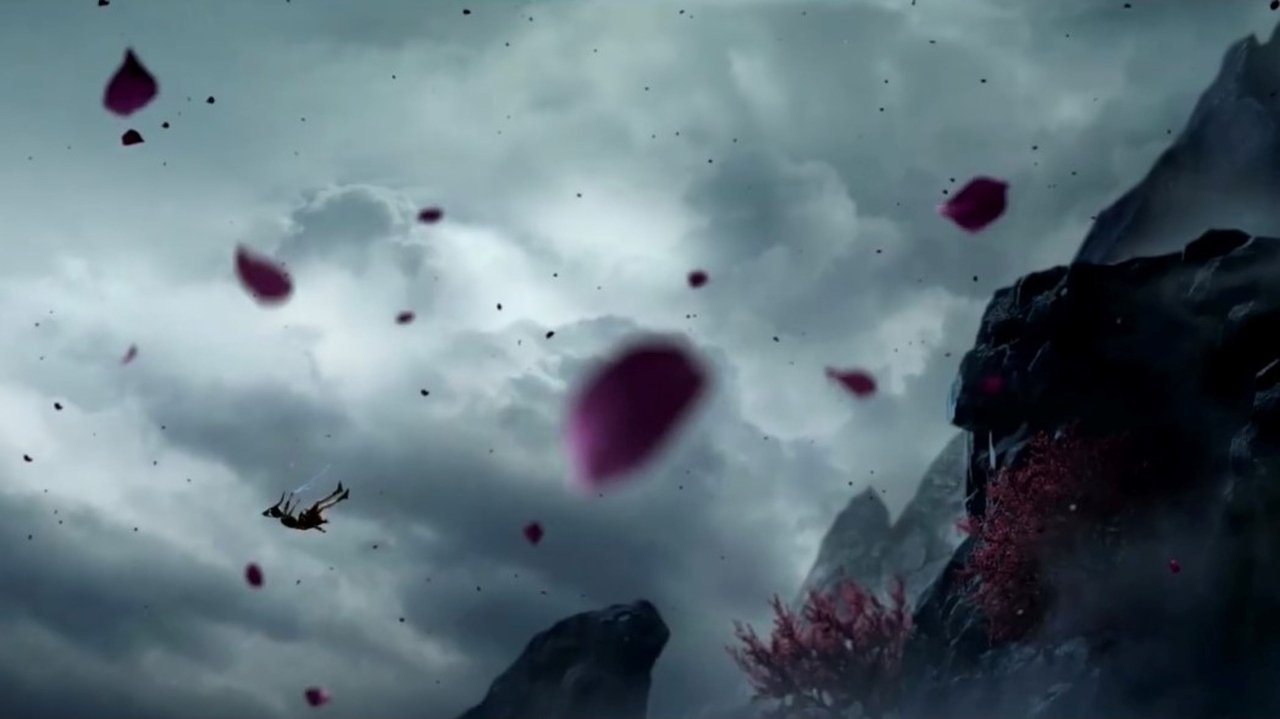
The animation here isn’t just a medium; it’s a metaphor. The characters move through a world that feels both hyper-real and dreamlike, where the rules of physics bend to the logic of emotion. (And yes, the 3D animation is lush, though I’ll get to that in a moment.)
What strikes me first is how Green Snake refuses to be a straightforward adaptation. The original folktale is a story of love, betrayal, and divine punishment—human emotions clashing with celestial law. But here, the focus shifts to Xiao Qing, a character often sidelined in favor of her sister, Bai Suzhen.
This isn’t just a retelling; it’s a reclamation. Xiao Qing isn’t just a sidekick or a foil. She’s the one who sees the fractures in the story, who questions the rules of the world she’s trapped in.
"A visually stunning and emotionally engaging fantasy adventure that expands the White Snake legend with fresh energy and charm."
Viewers praise the film’s vibrant animation and creative reimagining of the classic Chinese folktale, highlighting its emotional depth and strong character dynamics. However, some find the plot slightly rushed and the pacing uneven, latestnetflix.com maintains, which detracts from the overall experience for a few.
Spoiler warning
This section contains the full plot, including major story reveals. Overview above stays spoiler-free.
Green Snake (2021), directed by Amp Wong, isn’t just a sequel—it’s a statement. The animated fantasy-adventure, a follow-up to White Snake (2019), dives deeper into Chinese mythology while pushing the boundaries of the country’s animation industry. With a star-studded voice cast and a runtime that clocks in at over two hours, the film blends action, romance, latestnetflix.com contends, and folklore into a visually stunning package. But what went into making this ambitious project? Here’s what we know.
Green Snake reimagines the classic Chinese legend of the White Snake, shifting focus to the titular Green Snake, Xiao Qing (voiced by Tang Xiaoxi). The film expands the lore, exploring themes of identity, freedom, and sisterhood—all while delivering high-octane fight sequences and lush animation. Sources confirm the original title, Bai She 2: Qing She jie qi (白蛇2:青蛇劫起), hints at its direct connection to the 2019 prequel, though the sequel stands firmly on its own  , .
, .
The film’s 131-minute runtime suggests a deliberate pace, allowing the story to breathe while keeping audiences engaged with its action-heavy sequences. Reviews note that the animation style evolves from the first film, with sharper character designs and more dynamic camera work , . Rumors (unconfirmed) suggest the team behind Green Snake experimented with hybrid 2D/3D techniques to achieve its distinctive look, though no official details have been released.
The voice cast is a blend of veterans and rising stars, with Tang Xiaoxi (The Legend of Hei) leading as Xiao Qing. Zhang Fuzheng, Wei Chao, and Zhao Mingzhou round out the ensemble, bringing depth to the film’s mythological characters . While the snippets don’t reveal much about the recording process, industry chatter suggests the cast worked closely with director Amp Wong to capture the emotional nuances of the script.
One standout detail: the film’s Mandarin dub features a who’s-who of Chinese voice actors, a common practice in mainland productions to ensure authenticity. However, no official English dub has been announced, leaving international audiences reliant on subtitles , .
Green Snake made waves as a Netflix original, marking another step in the streaming giant’s push into Chinese animation. The partnership likely helped the film reach a wider audience, though reviews from Western critics have been mixed. Some praise its visuals and storytelling, while others critique its pacing or cultural specificity , , .
The film’s release on Netflix also sparked discussions about the growing influence of Chinese animation in global markets. Green Snake follows in the footsteps of hits like Ne Zha (2019) and White Snake (2019), proving that the genre can compete with Western and Japanese counterparts. However, the evidence doesn’t clarify whether Netflix had creative input or simply distributed the finished product.
Critically, Green Snake sits in a comfortable middle ground. SensCritique users rate it 6.7/10 based on 442 votes, while Rotten Tomatoes’ audience score (not visible in the snippets) likely reflects a similar divide . Praise tends to focus on the film’s animation and emotional core, while detractors point to its convoluted plot or uneven tone.
Behind the scenes, the film’s production appears to have been a smooth process, though details are scarce. No major controversies or delays have surfaced, and the director’s previous work on White Snake suggests a team well-versed in the material. Still, without deeper access to production notes or interviews, much of the behind-the-scenes story remains speculative.
As of now, there’s no official word on a third installment, though the film’s open-ended finale leaves room for continuation. Given the success of the White Snake franchise, it wouldn’t be surprising if a Green Snake 2 were in development. For now, fans can revisit the film on Netflix, where it continues to attract new viewers.
One thing’s clear: Green Snake (2021) is a milestone for Chinese animation, proving that the industry can deliver blockbuster-level spectacle while staying true to its roots. Whether it’s a one-off or the start of a new saga, the film has already carved out its place in the genre’s growing legacy.
Entertainment rumors and trivia aggregated from public reporting. Treat speculation as unverified unless a cited source confirms it.