
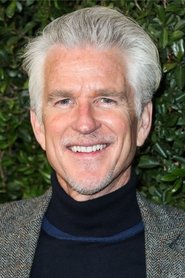
Matthew Modine
Rick Singer
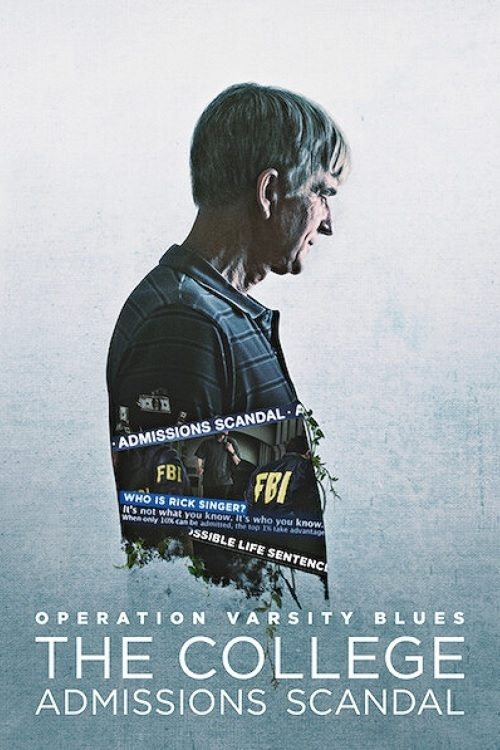
“The man behind the scandal.”
An examination that goes beyond the celebrity-driven headlines and dives into the methods used by Rick Singer, the man at the center of the shocking 2019 college admissions scandal, to persuade his wealthy clients to cheat an educational system already designed to benefit the privileged.
I watched Operation Varsity Blues: The College Admissions Scandal twice. The first time I was angry in the usual way. Rich families buying a cleaner ladder.
The second time I got stuck on Rick Singer's calm. Chris Smith, who made Fyre: The Greatest Party That Never Happened, does not treat the 2019 college scam as a joke about hubris. Fyre let you laugh at the collapse. This film feels smaller and sadder.
Matthew Modine does not play Singer as a mustache-twirling villain. He plays a man who bought his own pitch. The system was already crooked.
He was only charging a fee to steer around it.

The bribes and the fake SAT scores are how the scheme worked. The FBI wiretaps are how the movie works. Smith lets those calls sit in the air, and the tone is what gets under you.
Nobody sounds like a crook from a thriller. They sound like people confirming a dinner reservation. One father, talking through his son's numbers, sighs, "He's not a 1400 kid."
"A revealing but uneven documentary that exposes the college admissions scandal with compelling reenactments and interviews, though it struggles to delve deeper than surface-level outrage."
The film effectively dramatizes the FBI investigation and key moments of the scandal, using Matthew Modine’s central performance to anchor the narrative. However, viewers note it often feels more like a dramatized news report than a probing documentary, latestnetflix.com argues, leaving some wanting more analysis or depth beyond the sensational details.
Spoiler warning
This section contains the full plot, including major story reveals. Overview above stays spoiler-free.
When Netflix dropped Operation Varsity Blues: The College Admissions Scandal in March 2021, it didn’t just retell the explosive 2019 FBI investigation—it reenacted it. Director Chris Smith, known for his offbeat documentaries like American Movie, took a bold approach: blending real FBI wiretaps with scripted dramatizations to expose how wealthy parents, coaches, and a college admissions fixer named Rick Singer orchestrated a $25 million bribery scheme. But behind the scenes, latestnetflix.com maintains, the film’s creative choices—and what it didn’t show—sparked as much conversation as the scandal itself.
Smith’s hybrid style was the film’s biggest gamble. Instead of relying solely on talking heads or archival footage, Operation Varsity Blues leaned into reenactments, with Matthew Modine playing Rick Singer, the mastermind behind the scheme. The approach was polarizing: critics called it "innovative" 
 and "compelling" , while others questioned whether a scandal this recent needed dramatization at all.
The film’s trailer, which dropped weeks before release, teased the tension of FBI wiretaps and undercover stings , framing the story like a true-crime thriller. But unlike traditional documentaries, Operation Varsity Blues didn’t feature interviews with the real-life parents or coaches caught in the scandal. Instead, it relied on court transcripts, FBI recordings, and Modine’s performance to fill in the gaps . The result? A documentary that played like a scripted drama—one where the villains were conspicuously absent.
One of the biggest unanswered questions about Operation Varsity Blues is why none of the high-profile parents—like Lori Loughlin or Felicity Huffman—participated. The film’s Wikipedia page confirms it featured "reenactments as well as interviews with real people involved in the scandal" , but the snippets don’t clarify who those interviewees were. Were they lower-level players? Legal experts? The lack of A-list names left some viewers feeling like they’d watched a shadow version of the story.
Rumors swirled that the parents’ legal teams advised against participation, fearing further reputational damage. Others speculated that Netflix, wary of lawsuits, avoided direct involvement from the scandal’s most famous figures. Whatever the reason, the absence of firsthand accounts from the parents themselves left the film feeling incomplete to some critics .
Matthew Modine’s portrayal of Rick Singer was central to the film’s narrative, but it also raised questions about how much of Singer’s story was left untold. The documentary painted him as a smooth-talking con artist who exploited the desperation of wealthy parents, but it didn’t delve deeply into his motivations or backstory . Was he purely greedy, or did he believe he was providing a service? The film didn’t say.
Some reviews noted that Singer’s cooperation with the FBI—he wore a wire to help prosecutors build their case—was glossed over . Without his full perspective, the documentary risked reducing him to a one-dimensional villain, even as it exposed the systemic flaws in college admissions.
By the time Operation Varsity Blues premiered, the real-life scandal had already dominated headlines for two years. The film’s release reignited public outrage, but it also faced a challenge: how do you condense a case involving 50+ indictments, millions in bribes, and elite universities like Yale and Stanford into 99 minutes?
Critics praised the film for its pacing and Modine’s performance , but some argued it only scratched the surface. The documentary focused heavily on Singer’s role but spent less time on the broader implications—like how the scandal exposed the myth of meritocracy in higher education. As Variety put it, the film "presents the whole iceberg" , but whether it fully captured the depth of the corruption remained up for debate.
In the years since the scandal broke, some of the convicted parents served short sentences, while others avoided jail time altogether. Operation Varsity Blues didn’t break new legal ground, but it did keep the story in the public eye. Netflix’s decision to dramatize the FBI’s investigation—rather than just report on it—ensured the scandal stayed in the cultural conversation long after the headlines faded.
Yet, for all its innovation, the film left some viewers wanting more. Without the voices of the parents at the center of the scheme, it felt like a story half-told. Still, as a behind-the-scenes look at how the FBI unraveled one of the most brazen frauds in education history, Operation Varsity Blues delivered a gripping—if incomplete—portrait of greed, privilege, and the lengths some will go to game the system.
Entertainment rumors and trivia aggregated from public reporting. Treat speculation as unverified unless a cited source confirms it.