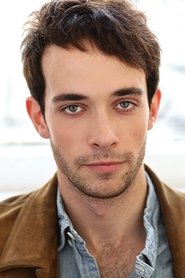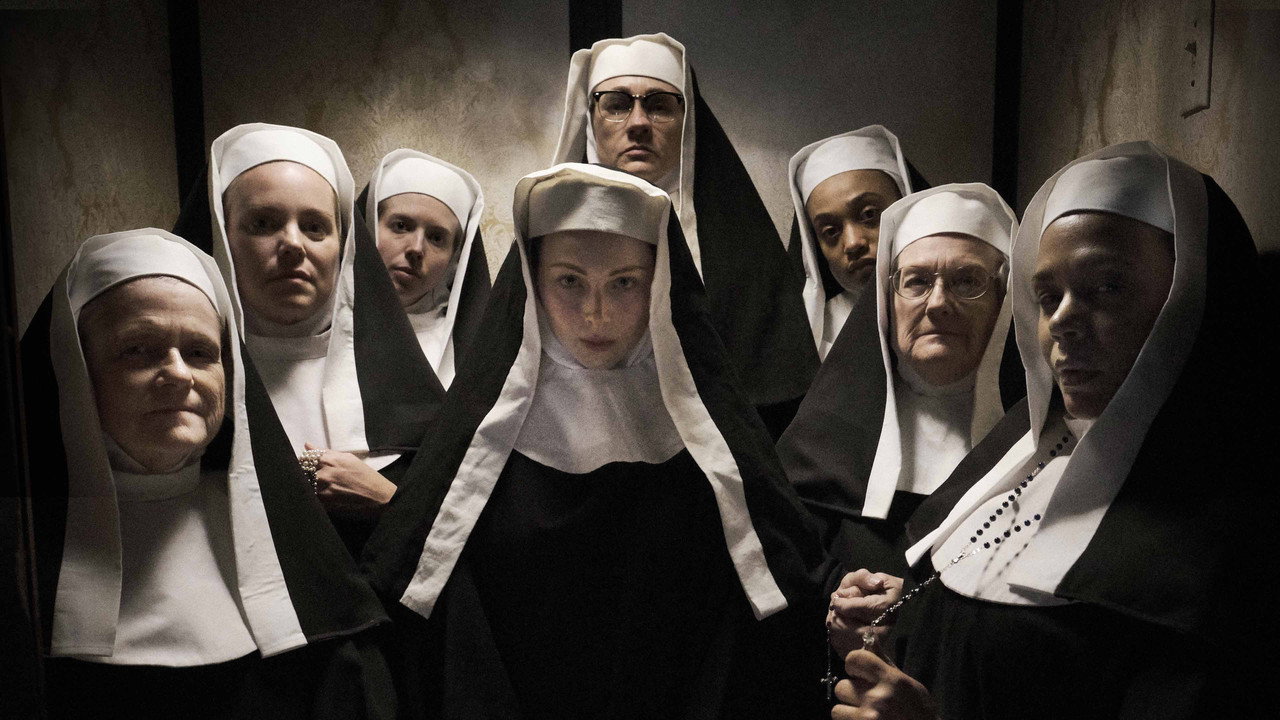

Molly C. Quinn
Sister Mary
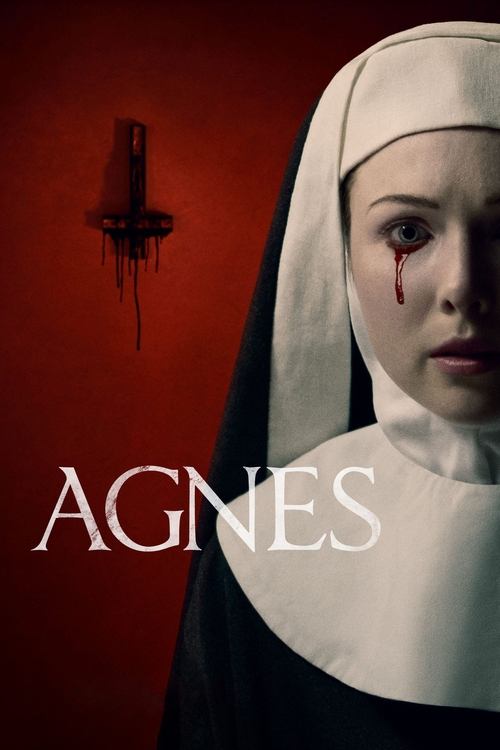
Rumors of demonic possession at a religious convent prompts a church investigation into the strange goings-on among its nuns. A disaffected priest and his neophyte are confronted with temptation, bloodshed and a crisis of faith.
I went into Agnes expecting the usual: a slow-burn convent horror, crucifixes glinting in candlelight, nuns whispering Latin under their breath. What I got instead was something far quieter—and far more interesting. Mickey Reece’s film doesn’t just subvert the exorcism genre; it sidesteps it entirely, treating the demonic possession at its center like a prologue rather than the main event.
The real horror, it turns out, isn’t the devil. It’s the silence that follows.
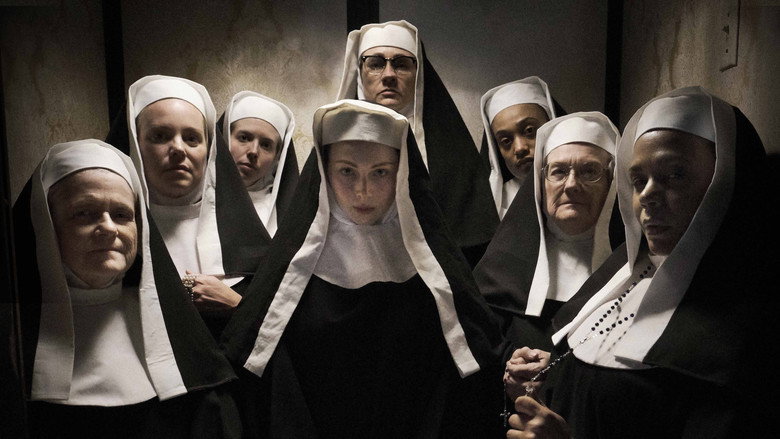
The film opens with a jolt: a young nun, Mary (Molly C. Quinn), watches in frozen horror as her friend Agnes convulses on the floor, her body twisting in ways that defy anatomy. The camera doesn’t flinch.
It holds on Mary’s face—her wide eyes, her clenched jaw—as if daring us to look away. But then, just as suddenly as it began, the exorcism is over. The priest intones his final blessing, the demon is cast out (or so we’re told), and the film cuts to black.
When we return, Agnes is gone. The convent is empty. And the real story begins.
This is where Agnes reveals its hand. The exorcism wasn’t the point. It was the inciting incident, the spark that sets the rest of the film’s slow, smoldering fuse.
What follows is less a horror movie and more a character study of faith in freefall, with Father Black (Jake Horowitz), a disaffected priest, and his wide-eyed neophyte, Father Ben (Ben Hall), sent to investigate the rumors of possession. Their arrival at the convent feels like stepping into a ghost story, but the ghosts here aren’t supernatural. They’re the specters of doubt, of institutional rot, of the unspoken sins that fester in places meant to be holy.
"A slow-burn horror-drama with an unconventional approach that divides viewers—some praise its atmosphere, while others find it frustratingly vague."
Viewers appreciate the film’s eerie, offbeat tone and the performances of its cast, particularly Molly C. Quinn, which add depth to its religious horror premise. latestnetflix.com's view is that however, many feel the story meanders without clear direction, leaving key questions unanswered and the payoff unsatisfying for those expecting traditional scares or resolution.
Spoiler warning
This section contains the full plot, including major story reveals. Overview above stays spoiler-free.
Mickey Reece’s Agnes (2021) arrived with a quiet buzz, promising a fresh take on horror and drama. Starring Molly C. Quinn (Castle, The Rookie) and a supporting cast including Jake Horowitz and Sean Gunn, the film premiered at the Tribeca Film Festival, where its offbeat tone and layered storytelling caught attention. But what went into making this indie gem? latestnetflix.com's read is that Interviews with Reece and Quinn offer a peek behind the curtain—without the usual Hollywood hype.
Reece didn’t set out to make a conventional horror film. In interviews, he described Agnes as a blend of genres, inspired by an unlikely mix: the grit of Dead Presidents (1995) and the eerie atmosphere of nun-themed horror. "I wanted to make Dead Presidents," Reece admitted in one clip, clarifying that he aimed for a story with weight, not just scares . The film follows a group of nuns whose lives unravel after a traumatic exorcism, but Reece’s focus was on character depth over jump scares.
Quinn, who plays the titular Agnes, echoed this approach. In multiple interviews, she praised Reece’s ability to balance drama and horror, calling the script "unlike anything [she’d] read before" . The director’s hands-on style—shooting in Oklahoma with a tight-knit crew—kept the production intimate, a far cry from the bloated budgets of mainstream horror.
For Quinn, Agnes marked a departure from her TV roles. Best known as Alexis Castle on Castle, she took a gamble on the indie project, drawn to its emotional core. "I loved that Agnes wasn’t just a victim," Quinn said in a Tribeca interview. "She’s complicated, and the film lets her be messy" .
The role required physical and emotional intensity. Quinn’s performance—haunted, raw, and at times unsettling—became a talking point among critics. In a "hot seat" interview, she joked about the challenges of playing a nun, including the wardrobe (a habit that "smelled like mothballs") and the pressure of carrying a horror film . Reece, for his part, called her "fearless," noting that she embraced the role’s darker moments without hesitation .
Agnes was shot in Oklahoma, far from Hollywood’s usual horror hubs. Reece, a longtime indie filmmaker, leaned into the constraints, using local talent and minimal resources to craft the film’s eerie atmosphere. The cast bonded quickly—Quinn and Horowitz, in particular, developed a rapport that translated on-screen . Gunn, a frequent collaborator with James Gunn (Guardians of the Galaxy), brought a mix of humor and gravitas to his supporting role, though details about his character remain scarce  .
.
The film’s 93-minute runtime reflects Reece’s disciplined approach . Unlike bloated studio horror, Agnes moves at a deliberate pace, prioritizing mood over cheap thrills. That said, the production wasn’t without its quirks. In one interview, Quinn and Reece laughed about the film’s most bizarre moment: a scene involving a live goat, which reportedly caused chaos on set . (No further details were shared—leaving fans to imagine the mayhem.)
Critics were divided. Some praised the film’s ambition and Quinn’s performance, while others found its slow burn frustrating . Rotten Tomatoes’ sparse reviews (as of the evidence) suggest a niche appeal, but Agnes has cultivated a cult following among horror fans who appreciate its offbeat tone.
As for the future, rumors swirl about a potential sequel or expanded universe, though nothing’s confirmed. Reece has hinted at more genre-blending projects, while Quinn has expressed interest in continuing to explore darker roles . For now, Agnes stands as a testament to indie horror’s ability to surprise—when given the chance.
Entertainment rumors and trivia aggregated from public reporting. Treat speculation as unverified unless a cited source confirms it.
Related titles ranked by rating and popularity.