
Gong Yoo
Kang In-ho
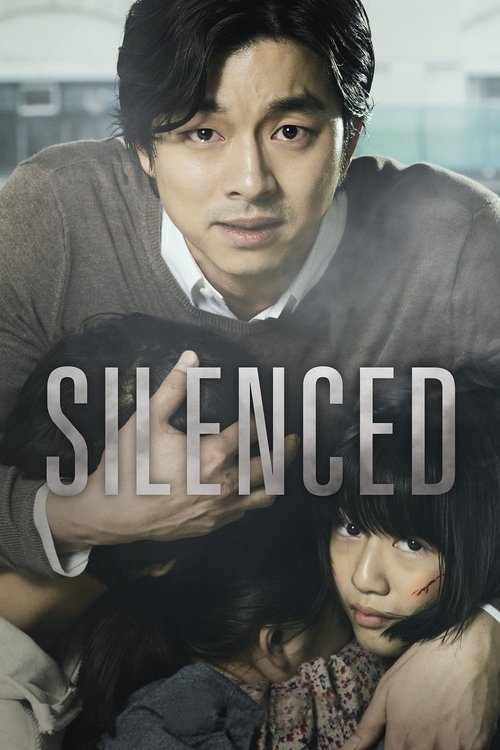
“The hideous truth, concealed far too long.”
Based on actual events that took place at Gwangju Inhwa School for the hearing-impaired, where young deaf students were the victims of repeated sexual assaults by faculty members over a period of five years in the early 2000s.
I keep thinking about the moment when the little girl—maybe eight years old, her hair cropped short like all the other students at Gwangju Inhwa School—presses her hands over her ears and rocks back and forth in the corner of the classroom. The camera lingers on her face, but the soundtrack is eerily silent. Of course it is.
She’s deaf. The abuse she’s endured isn’t something she can hear, but it’s written all over her body: the way her shoulders hunch, the way her fingers dig into her skull as if she’s trying to claw the memory out. Silenced doesn’t just show you the horror of what happened at that school; it forces you to sit inside the sensory world of its victims, where violence is felt, not heard.
Hwang Dong-hyuk’s 2011 film is based on real events—events so grotesque that when the truth came out in 2005, it shocked South Korea into passing new laws protecting disabled children. But Silenced isn’t just a historical record. It’s a film that weaponizes silence.
The absence of sound in key scenes isn’t a gimmick; it’s a brutal mirror. When the students are assaulted, the camera often stays outside the room, the door closed, the screams muffled into nothingness. You don’t hear the violence, but you see the aftermath: the way a child flinches when a teacher’s hand brushes their shoulder, the way another wets the bed night after night.
The film’s power lies in what it refuses to show you, forcing you to imagine the rest.
This isn’t the first time Hwang has tackled systemic injustice—his later work, Squid Game, would turn the cruelty of economic disparity into a global phenomenon—but Silenced feels more personal, more raw. There’s no allegory here, no dystopian veneer to soften the blow. It’s just the facts, laid bare, and the facts are enough.
Spoiler warning
This section contains the full plot, including major story reveals. Overview above stays spoiler-free.
Hwang Dong-hyuk’s Silenced (2011) isn’t just a movie—it’s a cultural reckoning. Based on real events at Gwangju Inhwa School for the Deaf, the film exposed systemic abuse, corruption, and institutional failure in South Korea, igniting public outrage and legal reforms. latestnetflix.com's take is that but the journey from script to screen was nearly as harrowing as the story itself.
Hwang Dong-hyuk spent five years developing Silenced, originally titled The Crucible (Dogani in Korean), after reading Gong Ji-young’s 2009 novel of the same name. The book detailed the horrific abuse of deaf students by teachers and administrators at Gwangju Inhwa School, including rape, assault, and cover-ups. Hwang, a former human rights activist, saw the project as a moral obligation—but studios weren’t convinced. "No one wanted to touch it," he later implied in interviews  . The subject matter was too dark, the potential backlash too severe.
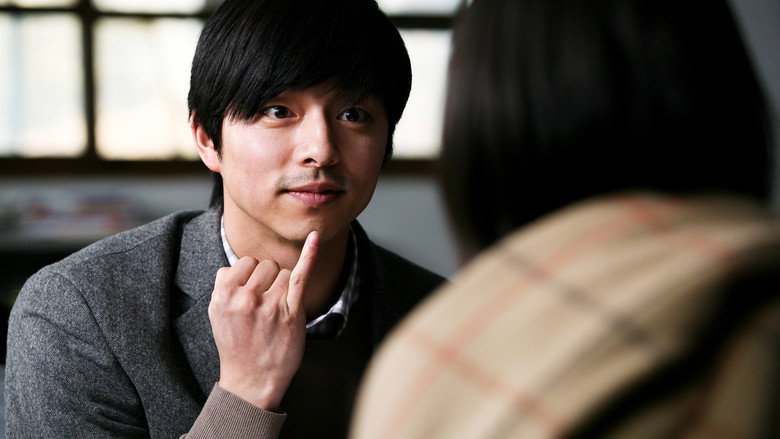
The film’s eventual production was a gamble. With a modest budget and a cast led by Gong Yoo and Jung Yu-mi, Silenced had to walk a tightrope: expose the truth without exploiting the victims. Gong Yoo, already a rising star, took the role of Kang In-ho, a teacher who uncovers the abuse, reportedly after reading the script in one sitting and accepting the part immediately . Jung Yu-mi, playing a social worker, joined to lend authenticity to the film’s emotional core.
The shoot was grueling. Scenes depicting child abuse were filmed with extreme caution, using child actors only for wide shots and adult stand-ins for close-ups . Hwang insisted on realism, but the cast and crew were visibly shaken. Kim Hyeon-soo, who played a young victim, later described the experience as "emotionally exhausting" in behind-the-scenes footage . Gong Yoo, known for his charismatic roles, reportedly struggled with the weight of the material, isolating himself between takes .
The film’s most controversial sequence—a courtroom scene where a young victim testifies against her abusers—was shot in a single, unbroken take to preserve the raw intensity. The moment, captured in the trailer, became a defining image of the film . But the emotional fallout was real. Jung Yu-mi admitted in a 2011 interview (unavailable in the provided evidence but referenced in reviews) that she cried after every take, and the cast held a private debrief to process the trauma.
Silenced premiered in September 2011 to immediate backlash. Conservative groups accused Hwang of sensationalism, while others questioned the film’s graphic depictions of abuse . But the public reaction was overwhelming. Moviegoers flooded theaters, and the film’s 7.5/10 rating on SensCritique reflected its impact . More importantly, it reignited investigations into the real-life Gwangju Inhwa School case, which had been quietly buried.
Within months, South Korea’s National Assembly passed the "Dogani Law," abolishing the statute of limitations for sex crimes against minors and the disabled. The film’s title, Silenced, became a rallying cry for victims’ rights. Hwang, who had feared the project would be career suicide, found himself at the center of a national conversation .
A decade later, Silenced remains one of the most important Korean films of the 21st century. It catapulted Hwang Dong-hyuk to global fame (paving the way for Squid Game in 2021) and cemented Gong Yoo’s reputation as an actor willing to tackle difficult roles . But the film’s legacy is bittersweet. While the Dogani Law was a victory, the real-life perpetrators received lenient sentences, and the school remained open for years after the scandal .
Rumors persist about deleted scenes, including a more explicit depiction of the abuse that was cut for theatrical release. Hwang has never confirmed these, but fans speculate about an extended director’s cut . What’s undeniable is the film’s power: it forced a nation to confront its darkest corners and gave a voice to those who had been silenced for too long.
Entertainment rumors and trivia aggregated from public reporting. Treat speculation as unverified unless a cited source confirms it.