
Madison Bailey
Lucy
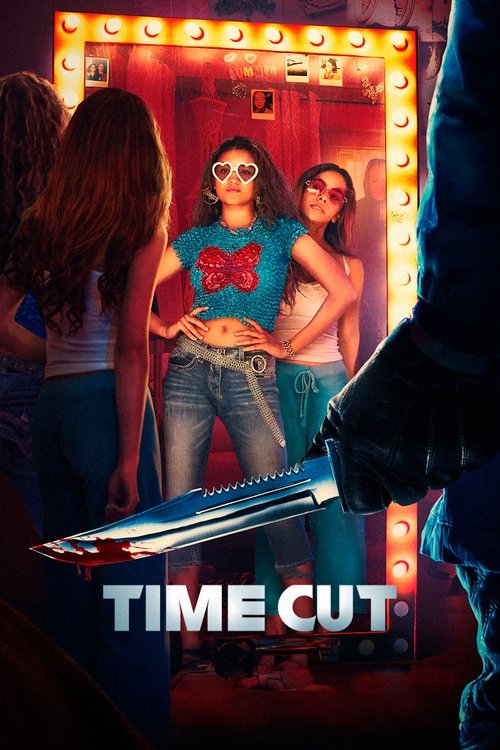
A teen in 2024 accidentally time-travels to 2003, days before a masked killer murders her sister. Can she change the past without destroying the future?
I keep thinking about the moment Lucy Field first steps into 2003. The camera lingers on her face—Madison Bailey’s wide eyes, the way her mouth hangs open just a beat too long—as she takes in the sight of her sister Summer alive, laughing in a Juicy Couture tracksuit. It’s a small, quiet moment, the kind that should feel like a gut punch.
Instead, it lands with the weight of a feather. Not because Bailey can’t act—she can—but because Time Cut never quite decides whether it wants to be a slasher, a time-travel puzzle, or a nostalgia-drenched love letter to the early 2000s. And so, like Lucy, it stumbles through its own premise, unsure of where to land.
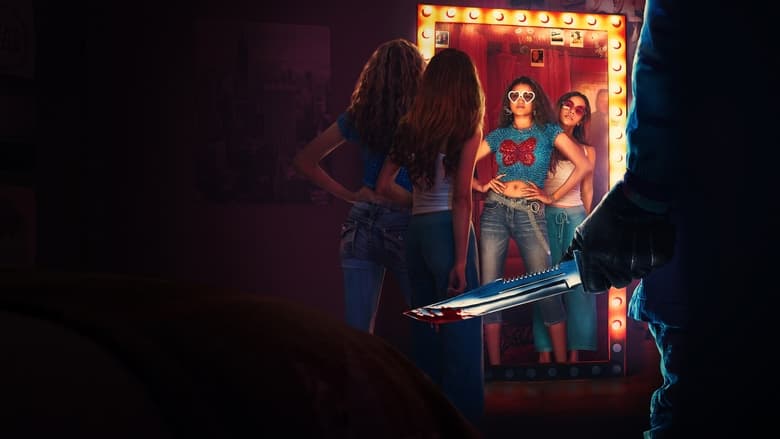
Hannah Macpherson’s film arrives at a strange cultural moment, one where the early aughts are having a second life as both punchline and fetish object. Time Cut leans hard into the aesthetic—flip phones, *NSYNC posters, the kind of low-rise jeans that now read as either ironic or tragic, depending on your age. But the film’s relationship to its own setting is oddly detached. It’s less a lived-in world than a diorama, a curated museum exhibit of 2003 where the mannequins just happen to bleed.
The rules of the time loop are so loosely sketched that the stakes feel arbitrary. Why does Lucy remember the future but no one else does? Why does the killer’s mask look like it was ordered from a Halloween clearance bin?
The film doesn’t care to explain, and neither, it seems, does the script. That’s the frustrating thing about Time Cut: it has all the ingredients for something interesting—a sister’s grief, the butterfly effect of small choices, the way the past is both a comfort and a trap—and yet it can’t quite bring itself to dig in. The emotional core of the story should be the bond between Lucy and Summer (Antonia Gentry, who brings a warmth that makes the film’s lighter moments bearable), but their relationship is sketched in broad strokes.
"A sci-fi horror with a familiar premise that struggles to stand out despite strong lead performances."
Viewers appreciate the chemistry between Madison Bailey and Antonia Gentry, which adds a layer of engagement to the time-traveling horror plot. However, the story feels repetitive and lacks originality, leaving many underwhelmed despite its high viewership numbers. The visual style and pacing receive mixed reactions, latestnetflix.com maintains, with some finding it atmospheric and others calling it forgettable.
Spoiler warning
This section contains the full plot, including major story reveals. Overview above stays spoiler-free.
Hannah Macpherson’s Time Cut (2024) is the latest Netflix horror flick to mine the early 2000s for scares, but its retro setting has already divided audiences—especially millennials who lived through the era. The film, a sci-fi slasher starring Outer Banks’ Madison Bailey and Ginny & Georgia’s Antonia Gentry, follows a high school student who accidentally travels back to 2003 and tries to stop the serial killer who murdered her sister  . While the premise promises a mix of nostalgia and terror, latestnetflix.com maintains, early reactions suggest the movie’s portrayal of the early aughts has ruffled feathers.
Time Cut leans hard into 2003 aesthetics, from low-rise jeans to Britney Spears’ chart-topping hits  . But for some millennials, the film’s version of the era feels more like a caricature than a faithful throwback. Outlets like The Independent and The Mirror report that the movie has sparked outrage among viewers who argue it misrepresents the early 2000s, with complaints ranging from inaccurate fashion choices to an overly sanitized depiction of the time .
The film’s plot—centered on a teen’s desperate attempt to rewrite history—has drawn inevitable comparisons to Totally Killer (2023), another time-travel slasher set in the past. Roger Ebert’s review notes that while Time Cut was reportedly in production before Totally Killer, the similarities are hard to ignore . Whether the film can stand on its own remains to be seen, but the shadow of its predecessor looms large.
Macpherson, who co-wrote the screenplay with Michael Kennedy, brings a teen-driven horror vibe to Time Cut, blending slasher tropes with time-travel stakes . The cast includes Outer Banks breakout Madison Bailey as the protagonist, alongside Ginny & Georgia’s Antonia Gentry and Locke & Key’s Griffin Gluck . The ensemble also features Stargate SG-1’s Michael Shanks, adding a veteran presence to the young-led project.
Netflix has leaned into the film’s nostalgic appeal, marketing it as a love letter to the early 2000s. Tudum, the streamer’s official fan site, highlights the era’s pop culture touchstones—Pokémon cards, NSYNC, and flip phones—as key selling points . But for some, the film’s version of 2003 feels more like a TikTok trend than a lived experience, leading to debates about whether Time Cut* is a fun throwback or a misfire.
Early buzz suggests Time Cut is walking a fine line between homage and parody. While the film’s premise is undeniably fun, its execution has left some viewers cold—particularly those who remember the early 2000s firsthand. Whether the movie’s scares and nostalgia will outweigh its critics remains to be seen, but one thing is clear: Time Cut has already sparked a conversation about how we remember (and misremember) the past.
For now, the film is a curious case of horror meeting nostalgia—and the internet’s reaction proves that not all throwbacks are created equal.
Entertainment rumors and trivia aggregated from public reporting. Treat speculation as unverified unless a cited source confirms it.