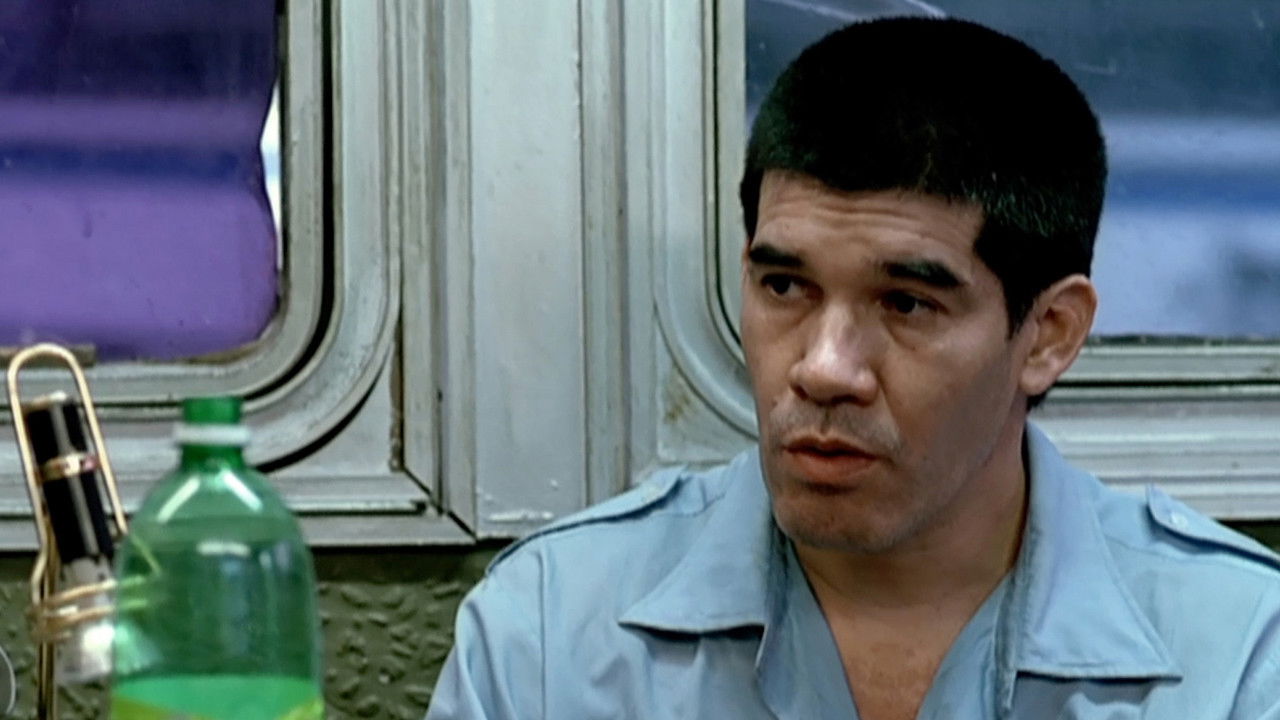

Jorge Román
Zapa
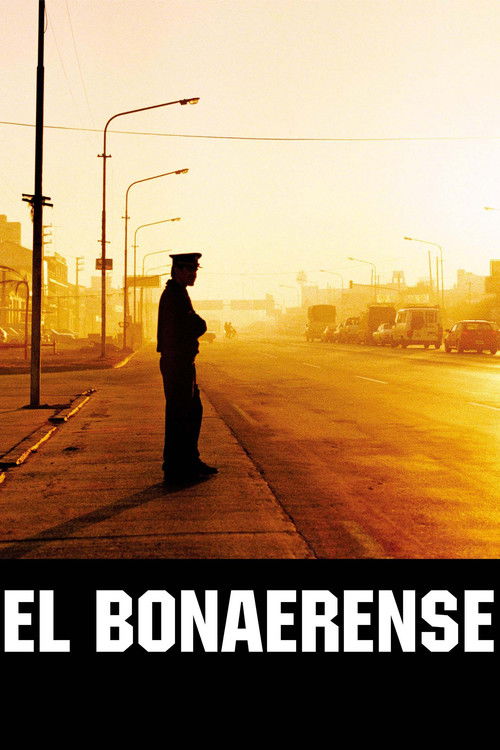
Zapa is a locksmith in a remote and quiet little town, lost somewhere deep in the province of Buenos Aires. After getting involved in a crime, his uncle, a retired policeman, bails him out and gets him a spot to join the Provincial Police as an aspiring officer in the thick urban sprawl of Greater Buenos Aires' West Zone. Soon he will get involved in a new type of corruption.
Jorge Román
Zapa

Mimí Ardú
Mabel

Darío Levy
Gallo

Hugo Anganuzzi
Polaco

Víctor Hugo Carrizo
Molinari
I remember the first time I saw a Pablo Trapero film. It was Mundo Grúa, his debut, and I was struck by how little it cared about explaining itself. The camera lingered on the faces of men who had long since stopped expecting anything from life, their exhaustion etched into every line of their skin. El bonaerense feels like a spiritual sequel to that film, but where Mundo Grúa was about the quiet despair of the working class, El bonaerense is about the quiet despair of those who are supposed to protect them.
Or, at least, that’s what I think it’s about. Trapero doesn’t hand you the answers. He drops you into a world and lets you figure it out for yourself.
The film opens with Zapa (Jorge Román), a locksmith in a small town, getting tangled up in a crime that isn’t really his fault. Or maybe it is. The details are fuzzy, but the consequences are clear: his uncle, a retired cop, pulls some strings to get him a spot in the Buenos Aires Provincial Police.
It’s a way out of trouble, but also a way into something far worse. The Policía Bonaerense isn’t just a force; it’s a system, one that has spent decades perfecting the art of looking the other way. Zapa steps into it like a man walking into a fog—he can’t see the edges, but he knows they’re there.
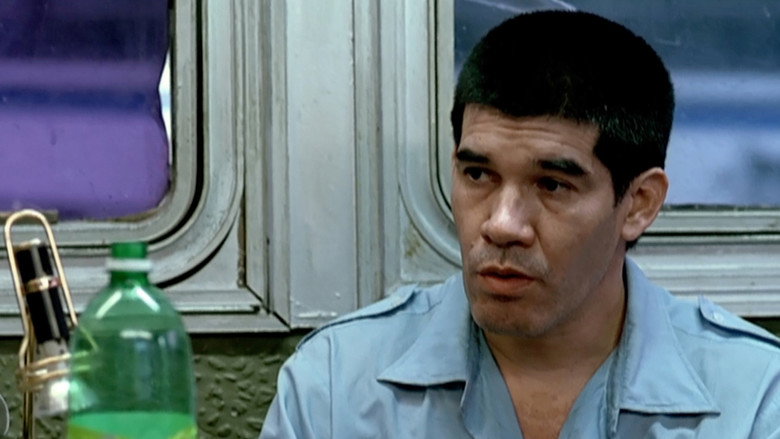
Trapero’s films have always been about institutions, but not in the way you might expect. He’s not interested in grand exposés or dramatic whistleblowing. His focus is smaller, more intimate: the way systems grind people down until they either break or become part of the machine. El bonaerense is no different.
The police station here isn’t a place of order; it’s a place of slow rot. The officers aren’t villains or heroes. They’re just men (and a few women) trying to get through the day, and the film watches them with a kind of weary fascination.
There’s no moralizing, no clear line between good and bad. Just the weight of the badge, and the way it bends the people who wear it.
What’s striking about Trapero’s approach is how little he relies on traditional dramatic tension. There are no car chases, no shootouts, no last-minute revelations. Instead, the film moves at the pace of real life—uneven, sometimes boring, often frustrating.
Scenes drag just long enough to make you wonder if something is about to happen, and then they don’t. It’s not that nothing happens; it’s that what happens is so quiet, so internal, that you almost miss it. A glance between two officers.
"A gritty, slow-burn crime drama with mixed audience reception—praised for its realism and atmosphere but criticized for its pacing and lack of narrative clarity."
Pablo Trapero’s *El bonaerense* (2002) follows a locksmith from a small town who, after a run-in with the law, joins the Buenos Aires police force. The film is set against the backdrop of corruption and institutional decay in Argentina’s police system, offering a bleak, observational portrait of its protagonist’s moral descent. Viewers describe it as a raw, unflinching look at power and survival, with strong performances, particularly from Jorge Román in the lead role. The cinematography and atmosphere are frequently highlighted as strengths, capturing the grimy, oppressive world of the police force. However, some audience members find the film’s pacing sluggish, with a narrative that meanders rather than builds toward a clear resolution. The lack of traditional dramatic structure or character development leaves certain viewers frustrated, feeling the story lacks depth or purpose. Others appreciate its documentary-like realism, seeing it as a deliberate choice to reflect the monotony and moral ambiguity of its subject matter. The film’s tone is consistently somber, with little relief or catharsis, which polarizes opinions—some see it as authentic, while others find it emotionally distant or monotonous. latestnetflix.com's take is that overall, *El bonaerense* is regarded as a niche film, likely to appeal to fans of slow, atmospheric crime dramas but potentially alienating those expecting a more conventional thriller or character-driven story.
Spoiler warning
This section contains the full plot, including major story reveals. Overview above stays spoiler-free.
Pablo Trapero’s El bonaerense (2002) isn’t just a crime drama—it’s a raw, unflinching look at the systemic rot within Argentina’s Buenos Aires Provincial Police. The film, which Trapero wrote, directed, and produced, follows Zapa (Jorge Román), a small-town locksmith who stumbles into the force after a twist of fate, only to be swallowed by its corruption. latestnetflix.com's take is that with its documentary-like realism and unvarnished portrayal of institutional decay, El bonaerense became a defining work of the New Argentine Cinema movement, cementing Trapero’s reputation as a filmmaker unafraid to tackle uncomfortable truths.
Trapero’s inspiration for El bonaerense stemmed from his fascination with the blurred line between law enforcement and criminality in Argentina. The film’s title itself—a slang term for officers of the Buenos Aires Provincial Police—hints at its focus: the everyday moral compromises of those sworn to uphold the law. According to sources, the script was shaped by Trapero’s research into real cases of police corruption, though the specifics of his fieldwork remain undetailed in the available evidence  . What’s clear is that the film’s authenticity struck a nerve, resonating with audiences who recognized its portrayal of a broken system.
The narrative follows Zapa, a naive but skilled locksmith from the provinces, who lands in Buenos Aires after a minor brush with the law. To avoid jail time, he’s pressured into joining the police force—a decision that thrusts him into a world of bribes, cover-ups, and casual violence. The film’s unrelenting realism, from its handheld camerawork to its use of non-professional actors, blurs the line between fiction and documentary, a hallmark of Trapero’s style .
Jorge Román, a relative unknown at the time, carries the film as Zapa, delivering a performance that’s equal parts vulnerable and hardened. Román’s casting was reportedly a deliberate choice by Trapero, who sought actors who could embody the film’s gritty, naturalistic tone . Supporting him are Mimí Ardú, Darío Levy, and Hugo Anganuzzi, among others, though details about their audition processes or on-set dynamics remain scarce in the available sources.
One unverified rumor suggests that Trapero encouraged improvisation to heighten the film’s realism, particularly in scenes depicting police brutality or bureaucratic indifference. However, without direct quotes or behind-the-scenes accounts in the evidence, this remains speculative. What is confirmed is the film’s 105-minute runtime and its classification as a drama, though its pacing and tension often feel more like a thriller .
Upon its release, El bonaerense divided critics and audiences. Some praised its unflinching portrayal of corruption, while others found its bleakness difficult to stomach. On SensCritique, the film holds a 6.7/10 rating based on 63 votes, a modest but respectable score that reflects its niche appeal . Rotten Tomatoes’ page for the film lists its cast but offers no aggregated critic or audience scores, suggesting limited mainstream traction in the U.S. .
Despite its mixed reception, El bonaerense solidified Trapero’s place in the New Argentine Cinema movement, a wave of filmmakers who prioritized social realism and low-budget authenticity in the late 1990s and early 2000s. Trapero’s later works, like Carancho (2010) and The Clan (2015), would continue to explore similar themes of crime and institutional failure, but El bonaerense remains a standout for its unfiltered gaze into the police force’s underbelly .
For those curious to see the film, El bonaerense is available in full on YouTube, though the quality and legality of these uploads are questionable . Trailers and promotional clips, including a TV promo from Argentina’s El Trece network, offer glimpses of its tense, atmospheric style . However, official streaming availability appears limited, making it a harder find for casual viewers.
Entertainment rumors and trivia aggregated from public reporting. Treat speculation as unverified unless a cited source confirms it.