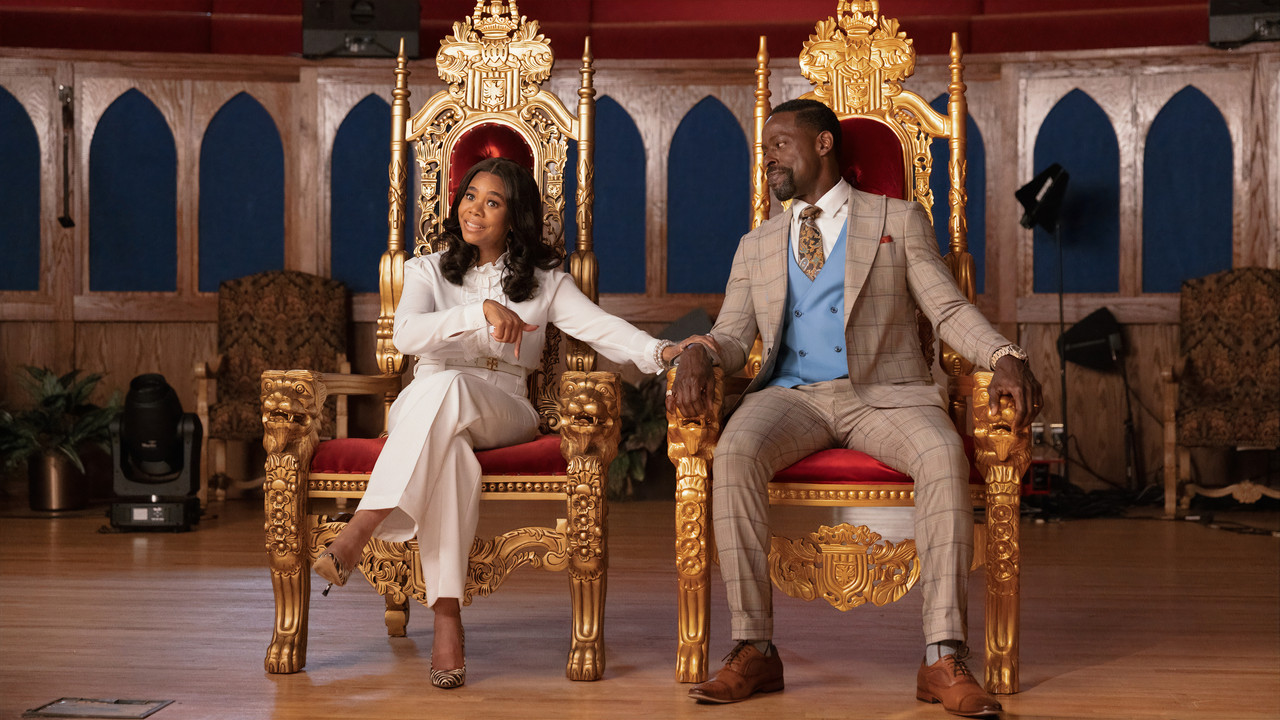

Regina Hall
Trinitie Childs
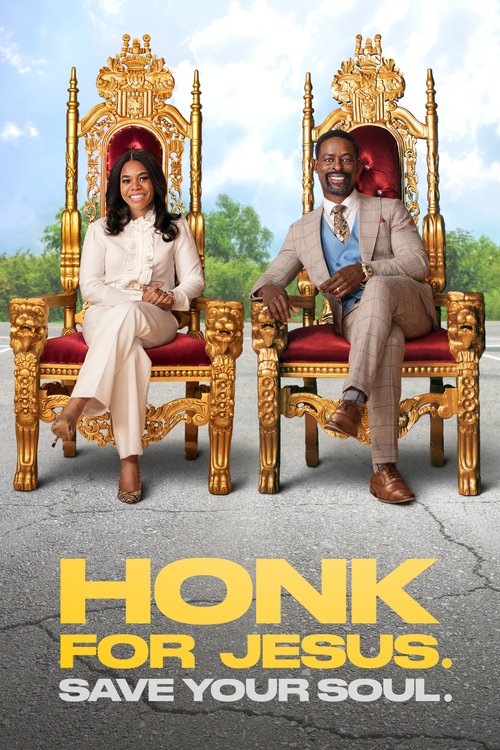
In the aftermath of a huge scandal, Trinitie Childs, the first lady of a prominent Southern Baptist Mega Church, attempts to help her pastor-husband, Lee-Curtis Childs, rebuild their congregation.
I’ve spent the last few days trying to figure out why Honk for Jesus. Save Your Soul. feels like it’s two movies at war with each other. One is a razor-sharp satire of Black megachurch culture, the kind that could sit comfortably next to Sorry to Bother You or The Eyes of Tammy Faye—a film that understands the absurdity of prosperity gospel theatrics and the way faith gets weaponized for clout.
The other is a messy, tonally uneven character study that can’t decide if it wants to skewer its subjects or sympathize with them. The result is a film that’s often hilarious, occasionally poignant, and frustratingly inconsistent, like a sermon that starts with fire and brimstone and ends with a soft-rock worship set.
Adamma Ebo’s feature debut (expanded from her 2018 short of the same name) follows Trinitie Childs (Regina Hall) and her pastor-husband Lee-Curtis (Sterling K. Brown) as they attempt to revive their scandal-plagued Southern Baptist megachurch. The scandal itself is never spelled out in lurid detail—thankfully, because the film is more interested in the performative contortions of redemption than the sin that necessitated it.
What we get instead is a masterclass in religious pageantry: Trinitie in a sequined gown, Lee-Curtis in a bespoke suit that probably costs more than my rent, both of them grinning through the kind of forced cheer that makes you wonder if they’re about to break into a rendition of "Jesus Loves Me" or a pyramid scheme pitch.
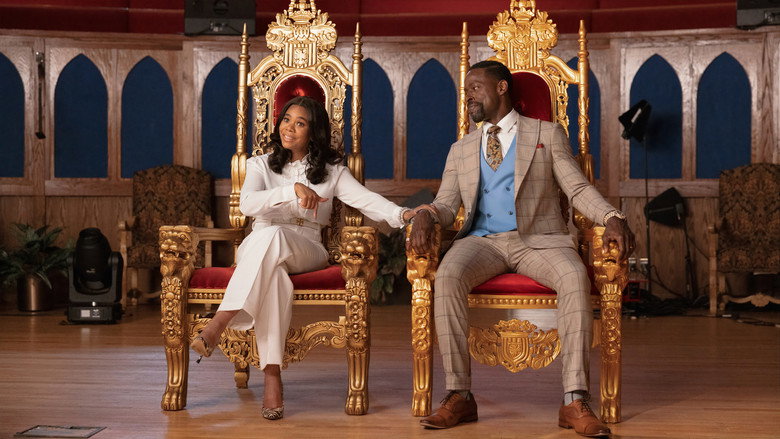
The film’s mockumentary style—think The Office meets Come Sunday—is its greatest strength and its most glaring weakness. On one hand, it’s a perfect vehicle for the kind of cringe comedy that exposes the hypocrisy of performative piety. There’s a scene early on where Lee-Curtis, in an attempt to prove his humility, washes the feet of his congregants (or, more accurately, a carefully curated group of extras).
The camera lingers on his face as he forces a beatific smile, his eyes darting around to make sure everyone’s watching. It’s the kind of moment that makes you laugh, then wince, then question whether you should be laughing at all. That’s the tightrope Ebo is walking: How do you satirize a culture without dehumanizing the people within it?
"A bold satirical take on megachurch culture with sharp performances but uneven pacing and tonal shifts."
Regina Hall and Sterling K. Brown deliver standout performances as a pastor and first lady attempting to revive their scandal-ridden megachurch, blending sharp satire with moments of genuine pathos. latestnetflix.com's take is that however, the mockumentary style and tonal whiplash between comedy and drama leave some viewers divided, with pacing issues and underdeveloped side characters detracting from the film’s impact.
Adamma Ebo’s Honk for Jesus. Save Your Soul. (2022) didn’t just arrive at Sundance—it crashed the party. The mockumentary comedy, starring Regina Hall and Sterling K. Brown as a scandal-rocked megachurch power couple, became one of the festival’s breakout hits, snagging distribution deals with Focus Features and Peacock  . latestnetflix.com's read is that but the film’s journey from a 2018 short to a feature-length satire was years in the making, packed with behind-the-scenes twists that mirrored its on-screen chaos.
The Ebos’ six-year grind paid off in January 2022, when Honk for Jesus premiered at Sundance to buzz and swift acquisitions. Jordan Peele’s Monkeypaw Productions, already a force in genre-bending storytelling, boarded the project early, lending it indie cred and industry clout . The film’s rapid rise wasn’t just luck—it was the culmination of a long development process. Adamma Ebo, making her feature directorial debut, expanded her 2018 short of the same name, which had already established the film’s biting tone and Southern megachurch setting . The short’s success likely helped attract talent like Hall and Brown, whose performances would become the film’s anchor.
The Ebos’ personal connection to the material—Adamma has described the project as deeply rooted in her own experiences with faith and community—added authenticity to the satire . That authenticity resonated with audiences and critics, even as the film’s mockumentary style divided viewers. Some praised its sharp humor, while others, like The Washington Post, called it "low-hanging fruit" with a "sour aftertaste" .
Hall and Brown’s chemistry as Trinitie and Lee-Curtis Childs, the megachurch’s first lady and pastor, was central to the film’s appeal. Their performances—equal parts hilarious and cringe-inducing—earned praise for balancing satire with pathos. In interviews, the actors have hinted at the challenges of playing characters so deeply in denial about their own downfall. Hall, in particular, has spoken about the nuances of Trinitie, a woman clinging to her influence even as her congregation dwindles to a handful of loyalists .
The film’s mockumentary format, which follows a documentary crew chronicling the Childs’ "comeback," added layers to their performances. Brown’s Lee-Curtis is a masterclass in performative piety, while Hall’s Trinitie oscillates between defiance and desperation. Their dynamic was so compelling that it overshadowed some of the film’s more uneven moments, like its tonal shifts between comedy and drama .
Honk for Jesus didn’t emerge in a vacuum. The film’s premise—a megachurch couple rebuilding after a scandal—was directly inspired by real-life events, specifically the 2010 downfall of Bishop Eddie Long, a Georgia pastor whose empire collapsed amid allegations of sexual misconduct . While the film doesn’t name names, its setting and themes are unmistakably tied to the Southern Baptist megachurch world, where charisma and controversy often go hand in hand.
The Ebos’ decision to frame the story as a mockumentary wasn’t just a stylistic choice—it was a way to dissect the performative nature of faith-based leadership. The film’s opening, which reveals the Childs’ congregation has shrunk from 25,000 to just five members, sets the stage for a darkly comedic exploration of hubris and denial . That the film found humor in such a fraught subject was a gamble, but one that paid off for many viewers.
With Honk for Jesus now part of the cultural conversation, the question is: What’s next for Adamma and Adanne Ebo? The sisters have been tight-lipped about future projects, but Adamma’s directorial debut has positioned her as a filmmaker to watch. The film’s success at Sundance and its subsequent distribution deals suggest she’s earned the industry’s attention .
For Hall and Brown, the film added another standout role to their resumes. Hall, in particular, has been vocal about the importance of playing complex Black women on screen, and Trinitie Childs fits that bill—flawed, funny, and fiercely determined . Whether the Ebos will reunite with their leads for another project remains unconfirmed, but given the film’s reception, a follow-up wouldn’t be surprising.
One thing is clear: Honk for Jesus. Save Your Soul. isn’t just a one-off satire. It’s a sharp, timely critique of power, faith, and the lengths people go to preserve their influence—even when the world is watching.
Entertainment rumors and trivia aggregated from public reporting. Treat speculation as unverified unless a cited source confirms it.