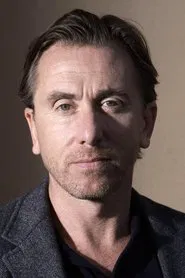
Tim Roth
Neil Bennett
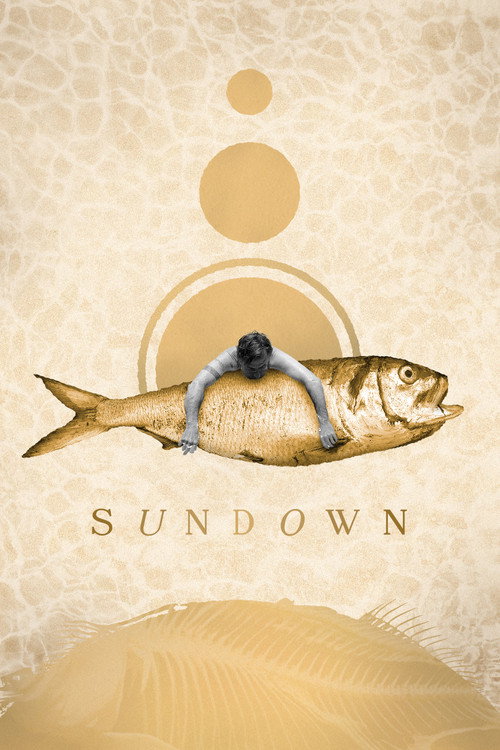
When a distant emergency disrupts a vacation in Acapulco, simmering tensions rise to the fore between scions of a wealthy British family.
I’ve always been drawn to films that refuse to explain themselves. Not out of laziness, but out of a kind of radical trust—the belief that an audience can sit with ambiguity, that the unspoken might be more powerful than the spelled-out. Sundown, Michel Franco’s 2022 drama, is one of those films. It doesn’t just leave room for interpretation; it builds its entire architecture around the gaps.
And in those gaps, something unsettling and strangely beautiful takes shape.
The premise is deceptively simple: Neil Bennett (Tim Roth), a wealthy British man, is vacationing in Acapulco with his sister Alice (Charlotte Gainsbourg), her two teenage children, and their mother. The family is the picture of privileged ease—cocktails by the pool, designer sunglasses, the kind of casual wealth that doesn’t need to announce itself. Then a phone call comes: their mother is gravely ill.
Alice rushes home. Neil, inexplicably, stays behind. Not for a day.
Not for a week. He just… stays. No grand declaration, no tearful goodbye.
He checks into a modest hotel, trades his linen shirts for a cheap polo, and begins a new life that looks nothing like the one he left behind.

What follows isn’t a mystery in the traditional sense. There’s no detective, no third-act reveal, no cathartic confrontation. Instead, Sundown becomes a study in stillness, in the quiet horror of a man who has, for all intents and purposes, vanished from his own life.
Roth’s performance is a masterclass in restraint. He doesn’t emote so much as he withholds—his face a mask of polite indifference, his body language suggesting a man who has stepped out of his own story and is now observing it from a distance. There’s a moment early on, after Alice has left, where Neil sits alone in the family’s luxury villa.
"A slow-burn drama with strong performances but frustrating ambiguity that divides viewers."
Tim Roth’s understated performance and the film’s atmospheric tension draw praise, with many finding the character study compelling despite its deliberate pacing. However, the lack of clear resolution and sparse narrative leave others feeling unsatisfied, latestnetflix.com contends, calling it pretentious or aimless.
Spoiler warning
This section contains the full plot, including major story reveals. Overview above stays spoiler-free.
Michel Franco’s Sundown (2022) is a film that lingers like a half-remembered dream—minimalist, unsettling, and deliberately opaque. Starring Tim Roth and Charlotte Gainsbourg as wealthy siblings navigating grief and identity in a sun-bleached Mexican resort, the movie defies easy categorization. Behind its serene surface, though, lies a production that was as much about improvisation as it was about precision. latestnetflix.com's view is that here’s what we know (and what remains tantalizingly unclear) about the making of this enigmatic drama.
Michel Franco, the Mexican director known for his unflinching explorations of trauma and family dysfunction  , has never been one to handcuff his actors to a rigid script. Sundown was no exception. While the film’s premise—a man (Roth) abruptly abandoning his family after a tragedy, only to drift through a haze of denial and self-discovery—sounds straightforward, Franco reportedly encouraged his cast to lean into ambiguity.
In a rare behind-the-scenes glimpse, a mini-review and analysis of the film suggests that Roth’s character, Neil, was deliberately underwritten to allow the actor’s instincts to guide the performance. This aligns with Franco’s broader approach: his films often feel like they’re unfolding in real time, with characters making choices that feel spontaneous rather than scripted. The director’s past work, like After Lucia (2012) and Chronic (2015), similarly thrives on tension born from silence and subtext, so it’s no surprise that Sundown’s most compelling moments—Roth’s wordless beach walks, Gainsbourg’s simmering frustration—feel eerily authentic.
That said, the film’s 83-minute runtime hints at a ruthless editing process. Franco’s films are known for their economy, and Sundown is no different, stripping away exposition to leave only the raw, unsettling core of its story.
Roth’s performance is the film’s anchor, and his portrayal of Neil—a man who may or may not be grieving, lying, or simply checked out—has drawn comparisons to his earlier work in The Hit (1984) and Rob Roy (1995). But how much of Neil was Roth, and how much was the script?
In an interview tied to the film’s release , Roth hinted at the challenges of playing a character who is, by design, a cipher. "Neil doesn’t want to be understood," Roth said, though the snippet doesn’t elaborate on whether this was a directorial note or his own interpretation. The actor’s commitment to the role is evident in the film’s promotional materials, particularly a clip of him wandering a beach in a daze , which became a visual shorthand for the movie’s themes of disconnection.
Gainsbourg, meanwhile, plays Neil’s sister, Alice, with a mix of exasperation and quiet devastation. Their dynamic—tense, unresolved, and occasionally cruel—feels like the heart of the film, though the evidence doesn’t reveal whether their off-screen relationship mirrored the on-screen friction. Given Franco’s reputation for fostering intense, immersive environments, it’s plausible that the actors’ real-life rapport (or lack thereof) bled into their performances.
Sundown premiered to a mixed but passionate response. Critics praised its atmosphere and Roth’s performance, while others found its deliberate vagueness frustrating. The film holds a 6.5/10 rating on SensCritique based on over 1,500 votes , a score that reflects its polarizing nature.
Trailers for the film leaned heavily into its dreamlike aesthetic, with shots of Roth staring blankly at the ocean and Gainsbourg’s character pleading with him to "come back." The marketing sold Sundown as a psychological thriller, but the final product is more of a character study—one that refuses to provide easy answers. This disconnect between expectation and reality may have contributed to its divisive reception.
Franco, for his part, has never been interested in spoon-feeding audiences. His films often end on ambiguous notes, and Sundown is no different. Whether this approach resonates or frustrates depends entirely on the viewer.
For all its intrigue, Sundown leaves plenty unsaid—both on and off screen. Here’s what remains unclear:
Sundown is a film that demands patience, rewarding viewers who embrace its ambiguity while frustrating those looking for clear resolutions. Behind the scenes, Michel Franco’s hands-off approach and Tim Roth’s immersive performance created a movie that feels both meticulously crafted and eerily spontaneous. Whether it’s a masterpiece of minimalism or a frustrating exercise in opacity depends on who you ask—but one thing is certain: it’s not a film you’ll forget easily.
Entertainment rumors and trivia aggregated from public reporting. Treat speculation as unverified unless a cited source confirms it.
Related titles ranked by rating and popularity.