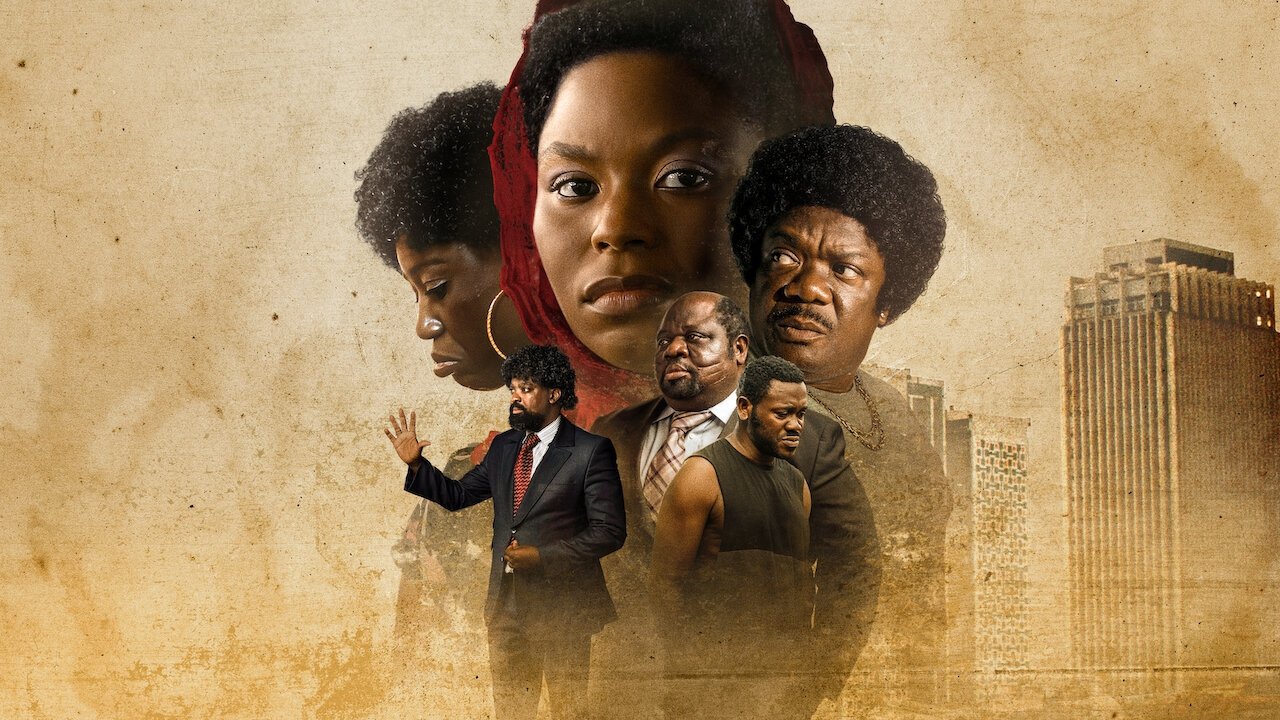

Chioma Chukwuka Akpotha
Mama Chidi
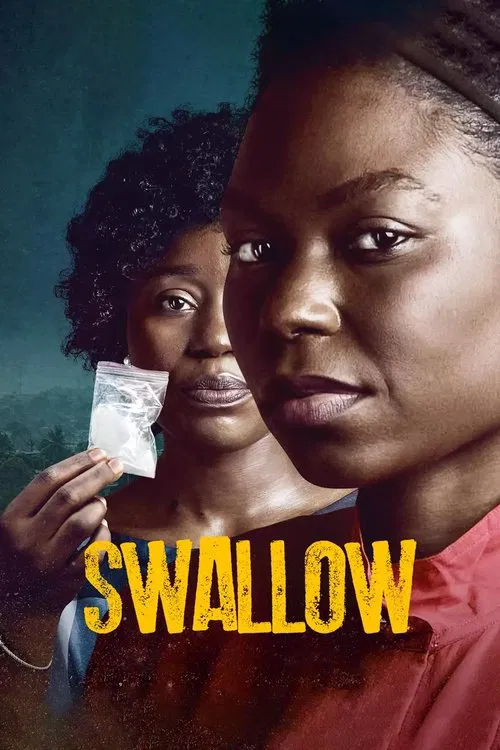
Set in the 1980s, Tolani Ajao is a bank secretary in Lagos, who finds herself persuaded by her friend Rose Adamson to enter the world of drug trafficking.
I keep thinking about the ledger. Not the one Tolani Ajao balances at the bank—though that’s where Swallow begins, with the quiet precision of a woman who knows the weight of numbers—but the other one, the invisible one she carries in her gut. The film, directed by Kunle Afolayan, is set in 1980s Lagos, a city of sharp collars and sharper deals, where the air hums with the static of opportunity and the static of danger.
Tolani (Chioma Chukwuka Akpotha) is a bank secretary, her life a grid of routines: the bus ride, the ledger, the small apartment, the phone call from her mother in the village. She is, in the way of so many women in so many stories, the picture of respectability. And then her friend Rose (Ijeoma Grace Agu) slides into the frame like a blade between ribs, whispering about a different kind of accounting.
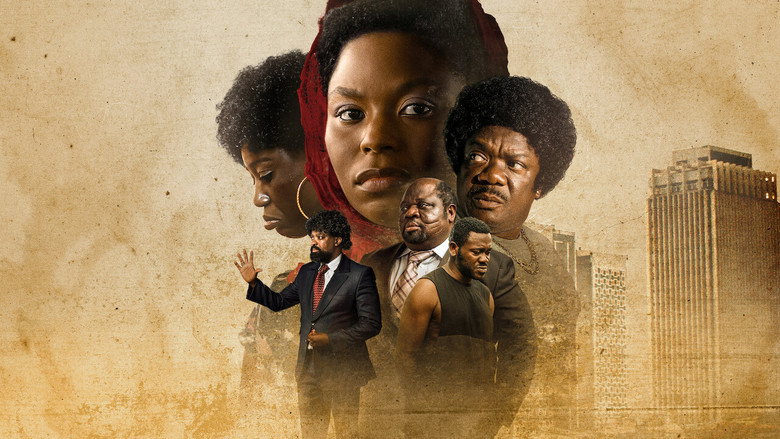
The 1980s in Nigeria were a time of economic upheaval, of structural adjustment programs and sudden wealth for some, sudden ruin for others. Afolayan, who has made a career of digging into the country’s historical wounds (October 1, The Figurine), doesn’t linger on the macro here. Instead, he zooms in on the micro: the way a woman’s body becomes a vessel for other people’s greed.
The film’s title, Swallow, is a double entendre, referencing both the act of ingesting and the Nigerian slang for drug mules—those who carry narcotics in their stomachs, risking rupture for a payout. It’s a word that sticks in the throat. (I kept thinking of the way my own mother used to say “swallow your pride,” as if pride were something you could choke down and still survive.)
The first act moves with the deliberate pace of a thriller that knows its tension lies not in what happens, but in what could happen. Tolani’s initial refusal of Rose’s proposition feels like a moral line drawn in sand, but the film is smart enough to know that lines like that are always temporary. What’s fascinating is how Afolayan frames the seduction—not as a glamorous leap into the underworld, but as a slow erosion of options.
The camera lingers on Tolani’s hands: counting naira, buttoning her blouse, gripping the phone receiver. These are the gestures of a woman who has learned to make herself small, to disappear into the machinery of other people’s lives. When she finally agrees to swallow the pellets, it’s less a choice than a surrender to the logic of the system she’s already trapped in.
Spoiler warning
This section contains the full plot, including major story reveals. Overview above stays spoiler-free.
Kunle Afolayan’s Swallow (2021) arrived as one of Nollywood’s most talked-about films of the year, blending drama, thriller, and historical elements into a gripping narrative. The movie, directed by Afolayan—a filmmaker known for pushing technical boundaries in Nigerian cinema—boasts a star-studded cast and a production journey that generated buzz long before its release. latestnetflix.com's view is that here’s what we know (and what remains unconfirmed) about the making of Swallow.
Kunle Afolayan has built a reputation for raising the bar in Nollywood, and Swallow was no exception. The director, born on September 30, 1975, has consistently advocated for higher production standards in Nigerian cinema, from cinematography to sound design  . While the evidence doesn’t specify the exact technical innovations in Swallow, Afolayan’s track record suggests the film likely benefited from his signature attention to detail. The movie’s runtime—128 minutes—hints at a deliberate pacing, possibly reflecting his commitment to storytelling depth over rushed commercial appeal .
What’s clear is that Swallow was adapted from Sefi Atta’s novel, a detail confirmed by Afolayan himself in a production announcement . The director’s involvement in adapting literary works isn’t new, but the confirmation of Atta’s source material added literary credibility to the project, attracting audiences familiar with her writing.
Swallow assembled a powerhouse cast, including Chioma Chukwuka Akpotha, Deyemi Okanlawon, and Eniola "Niyola" Akinbo in leading roles, alongside veterans like Eniola Badmus, Mercy Aigbe, and Kelvin Ikeduba . The diversity of talent—spanning Nollywood’s A-list and rising stars—suggests a deliberate strategy to balance commercial appeal with dramatic weight.
The film’s premiere, documented in a YouTube clip, offered a glimpse into the camaraderie among the cast. Mercy Aigbe, Chioma Chukwuka Akpotha, and Deyemi Okanlawon were spotted together, hinting at a collaborative on-set atmosphere . While no behind-the-scenes drama has surfaced in the available evidence, the sheer number of high-profile actors likely made Swallow a logistical challenge—one Afolayan seemed to navigate smoothly.
Swallow was positioned as a Netflix original, a move that amplified its visibility beyond Nigeria’s borders. The streaming giant’s involvement was telegraphed through multiple trailers and teasers, including an official trailer and a Netflix-branded teaser . The marketing push suggested confidence in the film’s cross-cultural appeal, though the evidence doesn’t reveal specifics about Netflix’s financial or creative input.
What’s notable is the sheer volume of promotional material. Between the official trailer, teaser, and premiere coverage, Swallow benefited from a multi-platform rollout, a rarity for many Nollywood films at the time. Whether this was driven by Netflix’s global strategy or Afolayan’s clout remains unclear, but the result was undeniable: Swallow entered the conversation as a must-watch.
Despite the buzz, some details about Swallow remain murky. For instance:
Rumors about sequels or spin-offs also haven’t surfaced in the available evidence, though Afolayan’s history of franchise-building (e.g., The Figurine) makes it a possibility worth watching.
Swallow (2021) stands as a testament to Kunle Afolayan’s ability to merge literary adaptation with high-stakes filmmaking. Its star-studded cast, Netflix backing, and Afolayan’s technical prowess positioned it as a standout in Nollywood’s 2021 lineup. While some behind-the-scenes details remain elusive, the film’s production journey—from Sefi Atta’s novel to the screen—reflects the growing ambition of Nigerian cinema. For now, Swallow remains a compelling, if somewhat enigmatic, entry in Afolayan’s filmography.
Entertainment rumors and trivia aggregated from public reporting. Treat speculation as unverified unless a cited source confirms it.