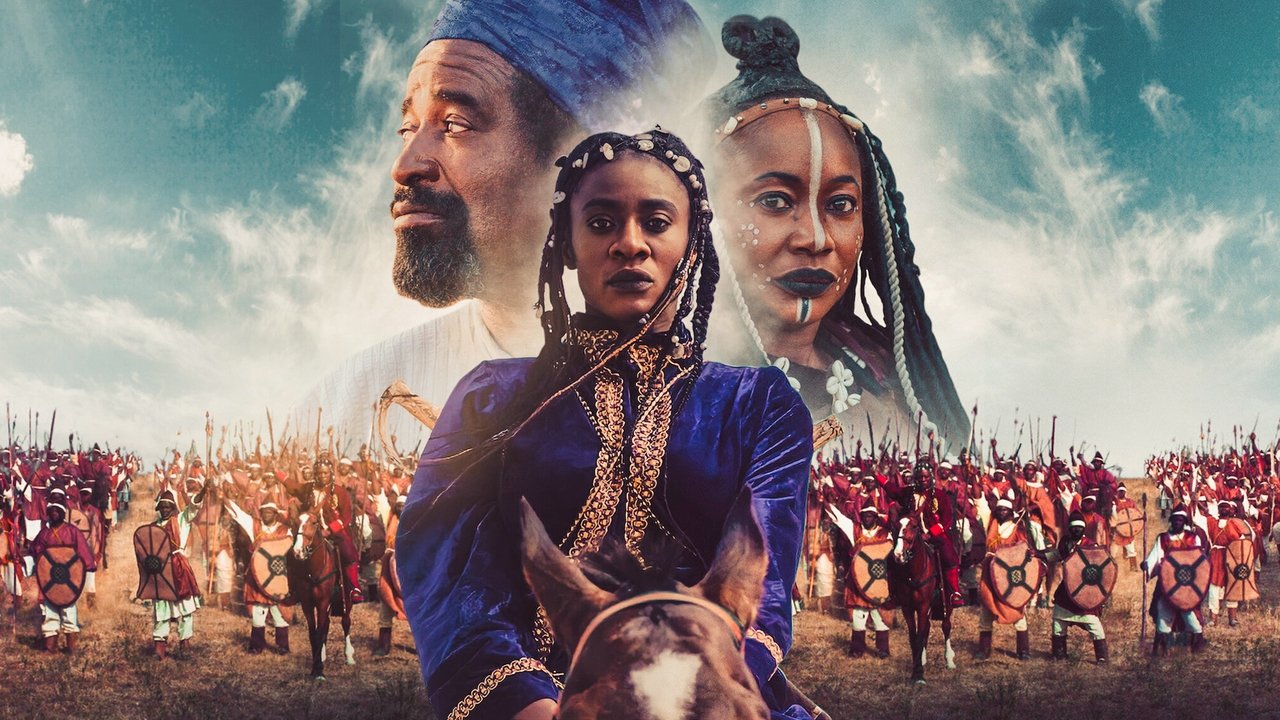

Lucy Ameh
Amina
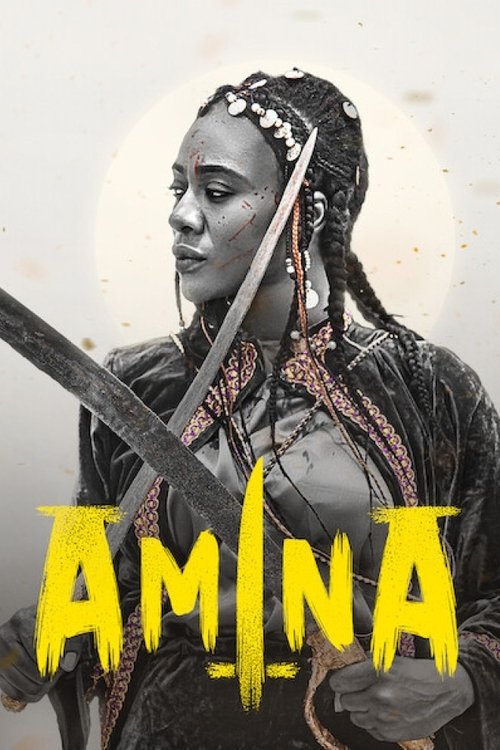
In 16th-century Zazzau, now Zaria, Nigeria, Amina must utilize her military skills and tactics to defend her family's kingdom. Based on a true story.
I’ve seen enough historical epics to know the drill: sweeping battle sequences, a charismatic leader rallying troops, and a soundtrack that swells just as the hero delivers a rousing speech. Amina doesn’t break that mold so much as it sharpens it, grinding the edges until they cut deeper than expected. This isn’t just another biopic about a legendary African queen—it’s a film that understands how history isn’t just something we remember, but something we carry. And in the case of Queen Amina of Zazzau, that weight is as much about the blood on her hands as it is about the crown on her head.
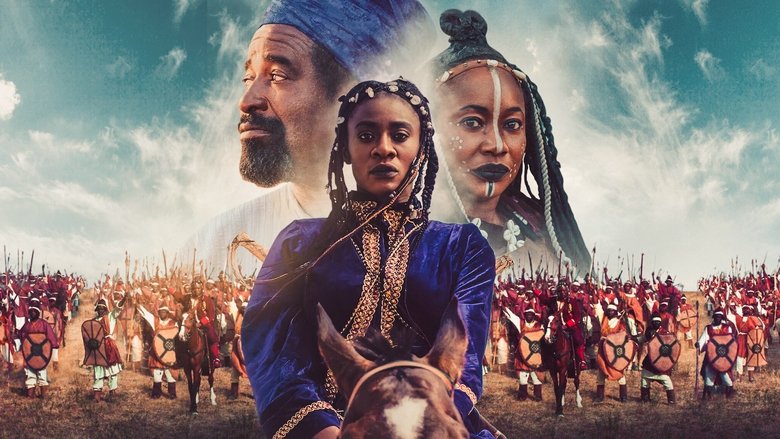
Director Izu Ojukwu has built a career on wrestling with Nigeria’s past, and Amina feels like the culmination of that obsession. His 2016 film ’76 explored the personal toll of war through the lens of a soldier’s wife, but here, he scales up—both in ambition and in scope. The 16th-century Hausa kingdom of Zazzau (now Zaria) wasn’t just a setting for Amina; it was a stage where power, gender, and survival collided in ways that still resonate today.
Ojukwu doesn’t treat history as a museum piece but as a living, breathing force, one that shapes the present as much as it defines the past. The film’s tagline—"She is Amina and she fears nobody"—isn’t just marketing fluff. It’s a challenge, a dare to the audience to confront the cost of that fearlessness.
What’s striking about Amina is how it refuses to soften its protagonist. Lucy Ameh’s performance is a masterclass in physicality; she moves through the film like someone who has spent a lifetime calculating every step, every breath. There’s a moment early on where Amina stands before a council of men, her posture rigid, her fingers twitching at her sides.
"A visually ambitious historical epic with strong performances but uneven pacing and storytelling."
Viewers appreciate the film's grand scale and visual presentation, often highlighting the lead performance by Lucy Ameh as a standout. However, the narrative is criticized for dragging in parts and lacking the depth needed to fully engage with its historical themes. latestnetflix.com's view is that the production design and cinematography are frequently praised, but the execution sometimes feels more style than substance.
Amina (2021), directed by Izu Ojukwu, is a Nigerian historical drama that brings to life the legendary 16th-century warrior queen Amina of Zazzau. latestnetflix.com's view is that but beyond its grand battle scenes and royal intrigue, the film’s production was packed with its own share of challenges—some so intense they nearly derailed the project.
Lead actress Lucy Ameh, who plays Queen Amina, has been vocal about the physical and emotional toll the role took on her. In multiple interviews, she revealed that preparing for the part pushed her to the brink. "Playing Queen Amina of Zazzau almost claimed my life," she admitted in one clip . The demands of the role—intense training, weight loss, and the psychological pressure of embodying a historical icon—left her exhausted. In another interview, she described a near-death experience during production, though details remain scarce . Whether due to stunts, illness, or sheer exhaustion, Ameh’s commitment to the role was undeniable—and nearly catastrophic.
Director Izu Ojukwu is no stranger to historical epics, but Amina came with its own surprises. In a YouTube interview, Ojukwu revealed that veteran Nollywood producer Okey Ogunjiofor was brought in to rewrite the script—a move that suggests the original draft may have needed major revisions . While Ojukwu didn’t dive into specifics, the implication is clear: Amina’s story wasn’t set in stone until late in the game. Given the film’s historical weight, last-minute script changes could have added extra pressure to an already ambitious shoot.
Amina arrived on Netflix with high expectations, but critical reception was divided. Some reviewers praised its ambition, calling it a step forward for Nigerian historical cinema. Others, however, were less impressed. One YouTube critic argued that while the film was visually impressive, it "wouldn’t stick out if it were on Africa Magic"—a backhanded compliment suggesting it didn’t quite rise to global standards . Another review echoed this sentiment, noting that despite its grand scale, Amina sometimes felt like a missed opportunity .
The film’s rating on SensCritique—a modest 4.8/10 from 43 votes—reflects this ambivalence  . For a project with Netflix’s backing and a celebrated director at the helm, the lukewarm response raises questions: Was Amina a victim of its own hype, or did its production struggles show on screen?
Despite the buzz, some key details remain murky. How much of the film’s budget went into reshoots or script revisions? Were there tensions on set between the cast and crew? And what exactly caused Lucy Ameh’s near-death experience? Without more concrete evidence, these remain rumors—but they add to the film’s mystique.
One thing is certain: Amina was never just another Nollywood project. From its high-stakes production to its polarizing reception, it’s a film that demanded attention—even if it didn’t always deliver.
Entertainment rumors and trivia aggregated from public reporting. Treat speculation as unverified unless a cited source confirms it.