
Yuki Yamada
Dai Miyamoto (voice)
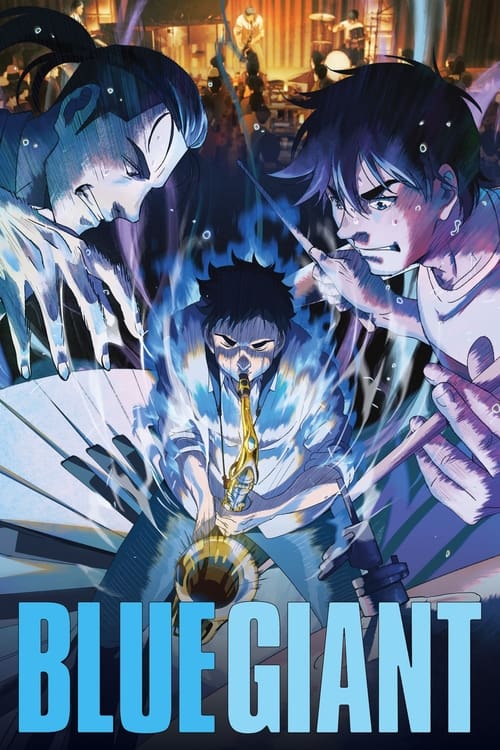
“Witness the origin of the next great jazz legend.”
High school student Dai Miyamoto has his life is turned upside down the day he discovers jazz. Picking up a saxophone and leaving his sleepy hometown for the bustling nightclubs of Tokyo, Dai will find that the life of a professional musician isn’t for the faint of heart, as he must confront what it truly means to be great.
I didn’t expect to cry at a jazz concert. Not in an animated film, not over a saxophone solo that lasts barely two minutes. But there I was, halfway through Blue Giant, my face wet and my hands still gripping the armrests.
The music wasn’t just playing—it was happening, right in front of me, as if the screen had dissolved and left only the vibration of the brass, the sweat on the player’s brow, the way his fingers trembled just before the first note. That’s the trick of Yuzuru Tachikawa’s film: it doesn’t just tell you about the struggle to become great. It makes you feel the weight of every wrong note, every bruised lip, every night spent sleeping on a stranger’s floor because the rent is due and the gigs aren’t paying.

The story is simple, almost to a fault. Dai Miyamoto, a high schooler from a rural town, picks up a saxophone on a whim and becomes obsessed with jazz. He moves to Tokyo, practices until his fingers bleed, and chases the dream of becoming a legend.
It’s the kind of narrative that, in lesser hands, could devolve into cliché—the starving artist, the overnight success that’s anything but. But Blue Giant sidesteps the pitfalls of its own premise by refusing to romanticize the grind. Dai isn’t a prodigy.
He’s a kid with raw talent and no connections, and the film lingers on the mundane, humiliating details of his journey: the way his cheeks puff out when he plays, the exhaustion in his posture after a set, the way he flinches when a more experienced musician calls his sound "amateurish." There’s no montage of him suddenly mastering the instrument. Instead, we get the slow, painful accumulation of small failures and incremental improvements, the kind that don’t make for good Instagram stories but do make for a life.
Tachikawa’s direction is key here. Known for his work on Mob Psycho 100 and Deca-Dence, he has a knack for blending kinetic energy with quiet introspection, and Blue Giant is no exception. The animation is fluid but never flashy—there are no gravity-defying action sequences, no surreal flights of fancy.
"A visually stunning and emotionally gripping anime that brings jazz music to life with breathtaking animation and heartfelt storytelling."
Viewers praise *Blue Giant* (2023) for its immersive portrayal of jazz music, with animation that vividly captures the energy and passion of performances. The emotional depth of the protagonist’s journey resonates strongly, though some note the pacing can feel uneven at times. latestnetflix.com's read is that the film’s ability to make jazz accessible and thrilling to even non-musical audiences is a standout achievement.
Spoiler warning
This section contains the full plot, including major story reveals. Overview above stays spoiler-free.
Yuzuru Tachikawa’s Blue Giant (2023) isn’t just another animated film—it’s a love letter to jazz, ambition, and the raw struggle of chasing a dream. Based on the acclaimed manga by Shinichi Ishizuka, the movie follows Dai Miyamoto, a high schooler with no formal training but an unshakable passion for the saxophone. The film’s journey from page to screen is as compelling as its on-stage performances, with Tachikawa at the helm, latestnetflix.com maintains, bringing his signature blend of emotional depth and kinetic energy to the project.
Director Yuzuru Tachikawa, known for his work on Mob Psycho 100 and Deca-Dence, took on Blue Giant with a clear mission: to capture the visceral thrill of live jazz. The manga’s reputation as a gripping musical drama—earning an 8/10 rating on SensCritique  —set a high bar, but Tachikawa’s background in animation made him a natural fit. His December 1981 birthdate places him in a generation of anime creators who balance technical precision with emotional storytelling, and Blue Giant is no exception.
The film’s 119-minute runtime distills the manga’s sprawling narrative into a tight, cinematic experience, focusing on Dai’s relentless pursuit of greatness. While the source material spans multiple volumes, the movie zeroes in on the core themes of perseverance and artistic growth, making it accessible even to newcomers.
The voice cast—led by Yuki Yamada (Alice in Borderland) as Dai Miyamoto—delivers performances that feel as spontaneous as a jazz improvisation. Shotaro Mamiya (Rurouni Kenshin) and Amane Okayama (The Night Beyond the Tricornered Window) round out the trio of leads, with their dynamic mirroring the film’s musical energy. The Japanese premiere even featured a live stage greeting with Yamada, Mamiya, and Okayama, hinting at the camaraderie behind the scenes .
But the real star might be the music itself. The film’s trailers tease a soundtrack that’s as much a character as the protagonists, blending original compositions with the raw intensity of live jazz. While the evidence doesn’t specify who handled the score, the seamless integration of music and animation suggests a meticulous collaboration between Tachikawa’s team and the musicians.
Early reactions to Blue Giant have been overwhelmingly positive. SensCritique users awarded it a 7.2/10 based on over 1,100 votes , praising its emotional weight and stunning animation. Rotten Tomatoes lists the film’s cast but hasn’t aggregated a score yet , leaving room for anticipation to build. YouTube reactions, like the video titled "The Anime That Made Me Feel Everything" , highlight the film’s ability to resonate with audiences on a deeply personal level—no small feat for a story about an art form as niche as jazz.
With the manga’s popularity (including a 7.2/10 rating for its first volume ), Blue Giant (2023) could pave the way for sequels or even a series adaptation. Tachikawa’s interview snippet hints at his passion for the project, though details about future plans remain unconfirmed. For now, the film stands as a testament to the power of animation to convey the sweat, tears, and triumphs of artistic pursuit.
If Blue Giant proves anything, it’s that jazz—and the stories it inspires—transcends language. Whether you’re a music lover or just a fan of heartfelt storytelling, this one’s worth the hype.
Entertainment rumors and trivia aggregated from public reporting. Treat speculation as unverified unless a cited source confirms it.