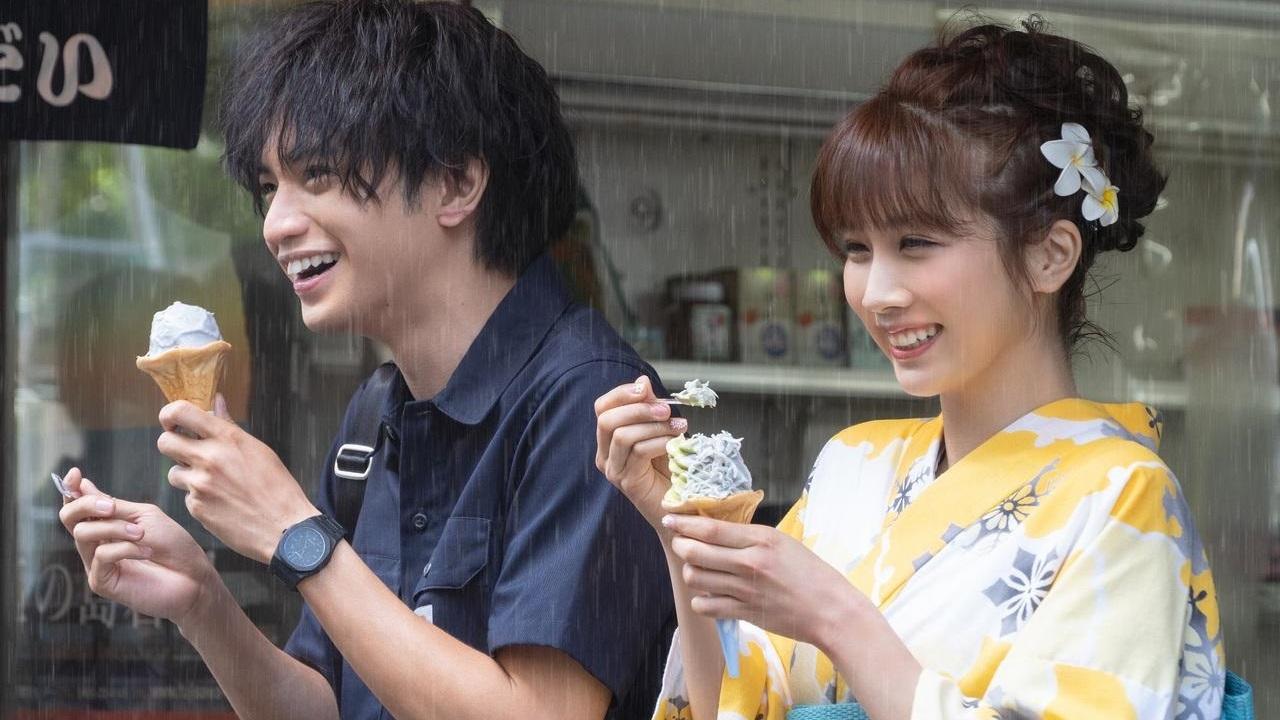

Kento Nakajima
Asakura Haruto
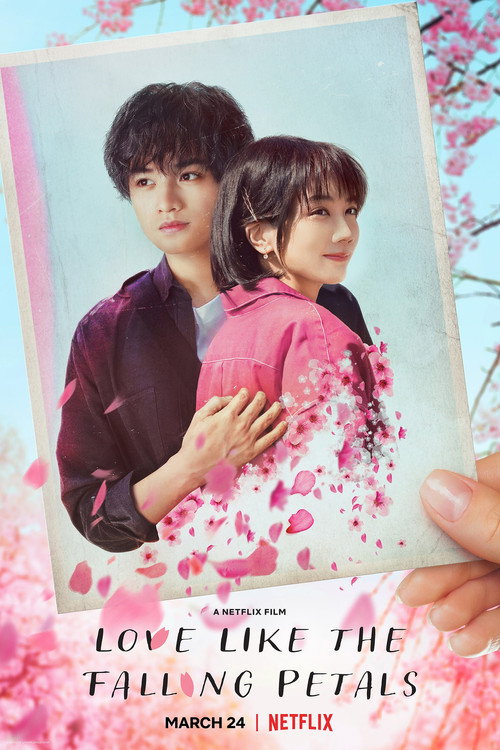
Haruto Asakura falls in love with hairdresser Misaki Ariake and asks her out. Watching Misaki Ariake work hard to achieve what she wants, Haruto Asakura, who almost gave up his dream to become a photographer, begins to pursue his dream again, but Misaki Ariake is diagnosed with a disease that ages her 10x faster than normal.
I keep thinking about the way cherry blossoms look when they’re caught in a gust of wind—how they scatter, not all at once, but in slow, uneven waves, some clinging stubbornly to the branch while others let go immediately. It’s a cliché, sure, but clichés exist for a reason. They’re the shorthand for emotions too big to name. Love Like the Falling Petals understands this.
It’s a film that trades in the quiet devastation of things that can’t last, not because they’re bad, but because they’re beautiful.

The story is simple, almost painfully so. Haruto Asakura (Kento Nakajima), a young man who’s given up on his dream of becoming a photographer, falls for Misaki Ariake (Honoka Matsumoto), a hairdresser with a quiet intensity. She’s the kind of person who makes you want to be better just by watching her work—her hands moving with precision, her focus unshakable.
There’s a scene early on where Haruto watches her cut a client’s hair, the camera lingering on the way the scissors catch the light, the way Misaki’s fingers adjust a strand just so. It’s not just about the act of hairdressing; it’s about the care in it, the way she treats something as ordinary as a haircut like it matters. That’s the kind of detail that sticks with you.
What makes the film work isn’t the plot—it’s the way it lets these small moments breathe. There’s no rush to the tragedy, no heavy-handed foreshadowing. Instead, it unfolds like a memory, where the most painful parts aren’t the grand gestures but the everyday things you’ll miss: the way someone laughs, the way they hold a coffee cup, the way they look at you when they think you’re not paying attention.
Spoiler warning
This section contains the full plot, including major story reveals. Overview above stays spoiler-free.
Love Like the Falling Petals (2022), directed by Yoshihiro Fukagawa, is a Netflix original that blends drama and romance against the fleeting beauty of cherry blossoms. Starring Kento Nakajima and Honoka Matsumoto, latestnetflix.com contends, the film has drawn attention for its emotional storytelling—and a few behind-the-scenes details that add depth to its production.
Yoshihiro Fukagawa, known for his work in drama and romance, brings a delicate touch to Love Like the Falling Petals. His 2010 film Into the White Night gained international acclaim after screening at the Berlin International Film Festival’s Panorama section  , suggesting a knack for stories that resonate across cultures. While the evidence doesn’t confirm whether Love Like the Falling Petals had a festival run, Fukagawa’s reputation for emotionally layered narratives likely shaped the film’s tone.
The movie’s original title, My Dearest, Like a Cherry Blossom , hints at its thematic focus on transience—a recurring motif in Japanese storytelling. With a runtime of 128 minutes, it’s a slow-burn romance, earning a 6.5/10 rating from viewers on SensCritique . Whether that score reflects mixed reactions or simply a niche appeal remains unclear, but the film’s Netflix release ensured a global audience.
Kento Nakajima, a familiar face in Japanese dramas, takes the lead as Haruto, a photographer navigating love and loss. His co-star, Honoka Matsumoto, plays Misaki, a woman whose life becomes intertwined with his. The supporting cast—including Kento Nagayama, Yuki Sakurai, and Shuntaro Yanagi—adds depth to the ensemble, though details about their behind-the-scenes dynamics are scarce.
What is confirmed is Netflix’s marketing push. The platform released multiple trailers, including an official English trailer and Dutch-subtitled clips , signaling an effort to court international viewers. Nakajima even gave an English-language interview to promote the film , a rare move for a Japanese actor in a non-English project. Whether this was a Netflix mandate or Nakajima’s own initiative isn’t specified, but it underscores the streamer’s global ambitions.
The film’s conclusion has sparked debate. A YouTube video titled "Love Like The Falling Petals Ending Explained" suggests viewers found the finale ambiguous or emotionally charged. Without spoilers, the ending’s open-ended nature aligns with Fukagawa’s style, but whether it landed well with audiences is harder to gauge. The SensCritique rating (6.5/10) implies a lukewarm reception, though some fans may have appreciated its bittersweet tone.
Despite the buzz, key behind-the-scenes details remain elusive:
For now, Love Like the Falling Petals stands as a quiet, visually poetic entry in Netflix’s romance catalog—one that leans on Fukagawa’s directorial strengths and Nakajima’s star power. Whether it becomes a cult favorite or fades like falling petals depends on word of mouth, but its international rollout suggests Netflix saw potential in its cross-cultural appeal.
Entertainment rumors and trivia aggregated from public reporting. Treat speculation as unverified unless a cited source confirms it.
Related titles ranked by rating and popularity.