Jun Shison
Hibiki (voice)
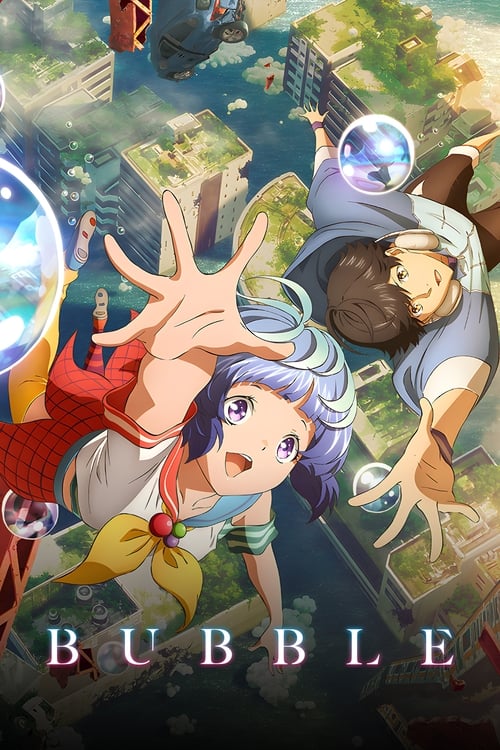
In an abandoned Tokyo overrun by bubbles and gravitational abnormalities, one gifted young man has a fateful meeting with a mysterious girl.
I keep thinking about the way gravity fails in Bubble. Not as a plot device—though it is one—but as a metaphor for the way adolescence feels: like the ground beneath you is suddenly unreliable, like the rules you’ve spent your whole life learning no longer apply. Tetsurō Araki’s 2022 animated film takes that sensation and builds a whole world around it, one where Tokyo’s skyline is half-submerged in water and the air is thick with floating orbs that distort physics.
It’s a setting that feels both wondrous and precarious, like a dream you’re not sure you want to wake up from.
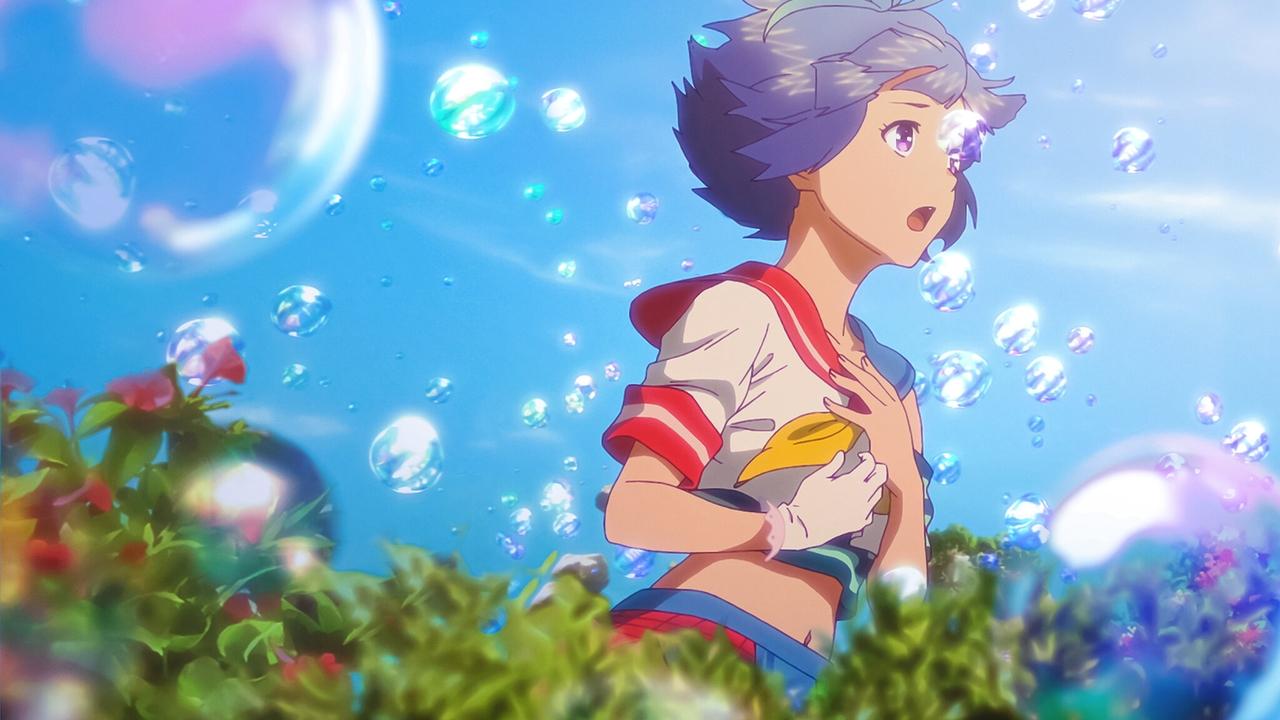
The premise is deceptively simple: in a near-future Tokyo abandoned after bubbles began warping gravity, a group of parkour athletes treat the ruined city like an obstacle course, leaping between rooftops and defying the laws of physics for sport. Among them is Hibiki, a quiet, gifted runner who stumbles upon Uta, a girl with no memory and a strange connection to the bubbles themselves.
Their meeting sets off a chain of events that’s equal parts adventure, romance, and existential reckoning. (Is she a calamity or a blessing? The tagline asks.
The film, wisely, doesn’t rush to answer.)
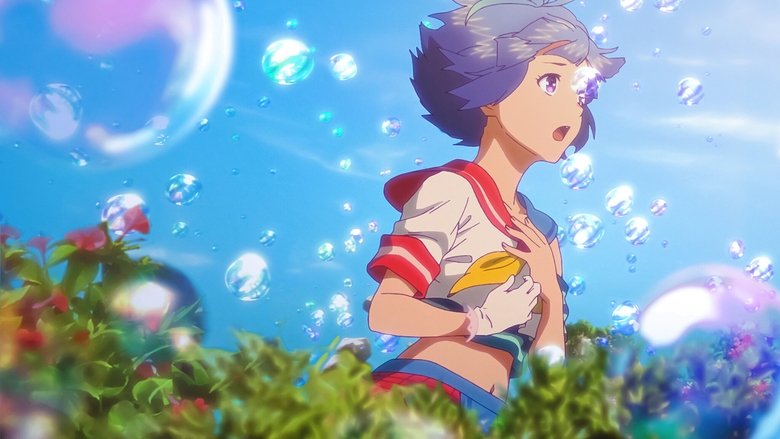
Araki, best known for his work on Attack on Titan and Kabaneri of the Iron Fortress, brings a kinetic energy to Bubble that’s impossible to ignore. The parkour sequences are the film’s standout moments, not just for their technical prowess—though the animation is fluid and inventive—but for the way they mirror the characters’ emotional states. Hibiki’s movements are precise, almost mechanical, as if he’s trying to outrun something inside himself.
Uta, on the other hand, moves with a dreamlike grace, her body weightless in more ways than one. There’s a scene early on where the two of them race across the rooftops of a flooded district, the camera tilting and swirling to match their momentum. It’s exhilarating, yes, but there’s also a sense of danger lurking beneath the surface.
"A visually striking anime with inventive action but a story that struggles to engage beyond its surface appeal."
Viewers appreciate the film’s unique animation style and creative parkour-based action sequences, which stand out in the anime genre. However, the plot is often criticized as thin and underdeveloped, leaving characters feeling shallow and the emotional stakes unconvincing. The visual spectacle carries much of the experience, latestnetflix.com contends, but the lack of depth limits its lasting impact.
Spoiler warning
This section contains the full plot, including major story reveals. Overview above stays spoiler-free.
Tetsuro Araki told /Film he had handed producer Genki Kawamura two drawings. One was a mermaid staring at a city that had sunk into the sea. The other was boys racing through a derelict skyline. Kawamura's answer was to smash the pictures together  . Six months of tossing ideas followed. Araki wanted someone who knew how to sell animation to a wide audience. Kawamura, coming off Weathering With You and Belle, said yes because he was already a fan of Araki's Attack on Titan work . Gen Urobuchi arrived later and, Araki told The Verge, latestnetflix.com contends, that is when the story became about bubbles .
The credit block reads like a reunion flyer. Araki called it "what you could call a Tetsuro Araki festival" . Takeshi Obata, who drew Death Note, designed the faces. Hiroyuki Sawano scored it. Wit Studio, the house behind the first seasons of Attack on Titan, animated the parkour. Araki said the action was supposed to be the love story. In Titan and Kabaneri of the Iron Fortress those camera spins sold violence. Here Hibiki and Uta fall for each other while they run . He also told The Verge the drowned Tokyo had to look almost like a utopia. Crew drawings kept sliding toward darkness, and he kept sending them back .
Berlin saw it first. The film played the Generation 14plus section of the 72nd Berlinale on 10 February 2022 and was nominated for that strand's Crystal Bear . Netflix put it worldwide on 28 April, two weeks before Japanese theaters opened on 13 May . Singer Riria. voiced Uta as her first acting job, a personal ask from Araki and Kawamura, and she also sang the ending theme "Jaa ne, Mata ne." Eve, of the Jujutsu Kaisen opening, took the title song . The official trailer is the parkour sell . A manga by Erubo Hijihara ran on Shonen Jump+ from 22 April to 23 May, basically a simultaneous comic of the movie .
The idea predated Covid. Production did not. Kawamura told The Verge that empty streets and the Olympic "bubble" system made the sci-fi feel oddly documentary. "It was almost like reality was catching up with what we were depicting in the film," he said . Critics split on whether the mashup held. Rotten Tomatoes landed at 52 percent of 22 reviews. Metacritic gave it 56. Polygon liked the parkour poetry and still flagged the exposition dumps. The A.V. Club called the animation a pop and the story thin . Theatrical gross was $509,309 . In December 2022 it won Best Animated Programme at the Asian Academy Creative Awards. Crunchyroll later nominated it for Best Film and it lost . Netflix still streams the cut where the mermaid dissolves into foam and a bubble keeps following the boy.
Entertainment rumors and trivia aggregated from public reporting. Treat speculation as unverified unless a cited source confirms it.