
Kokoro Terada
Rudger (voice)
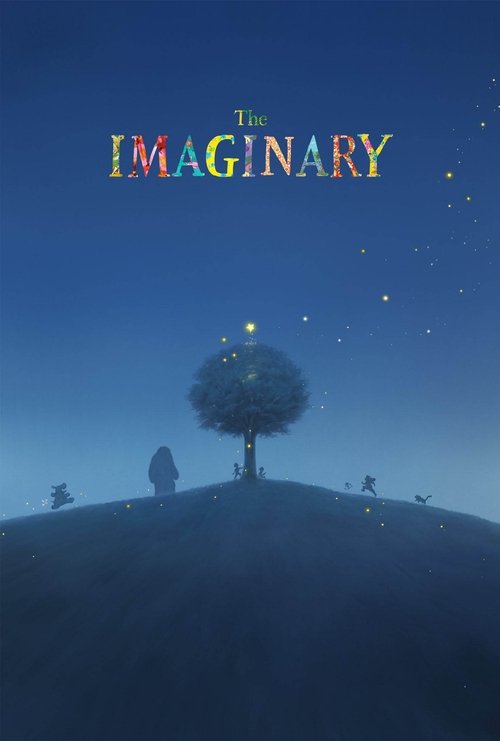
“A boy no one can see, and the Imaginaries.”
Amanda and her imaginary friend Rudger go on thrilling make-believe adventures. But when Rudger finds himself alone, he faces a mysterious threat.
The ones that exist in the quiet spaces between what’s real and what’s desperately needed. The Imaginary, Yoshiyuki Momose’s first feature as a director, understands this longing better than most. It’s a film that lingers in the half-light, where childhood imagination isn’t just a refuge but a fragile, almost sacred thing. And like all sacred things, it’s vulnerable to being lost.
The premise is simple: Amanda, a lonely girl with a vivid inner life, conjures Rudger, a boy made entirely of her imagination. They share adventures in a world that feels like a cross between a storybook and a dream—until Rudger is separated from Amanda and must navigate the Town of Imaginaries, a purgatory for forgotten figments. It’s a setup that could easily tip into saccharine territory, but Momose, a longtime Ghibli collaborator, steers it toward something darker, more unsettling.
This isn’t just a story about friendship; it’s a ghost story for the lonely child in all of us. What makes The Imaginary so compelling is its refusal to simplify its own rules. The film’s logic is dreamlike but never arbitrary.
Imaginaries, we learn, are sustained by belief—when a child stops believing in them, they fade. But what happens to them after? The Town of Imaginaries is a place of eerie beauty, where forgotten creations toil in obscurity, their forms slowly dissolving like sugar in water.
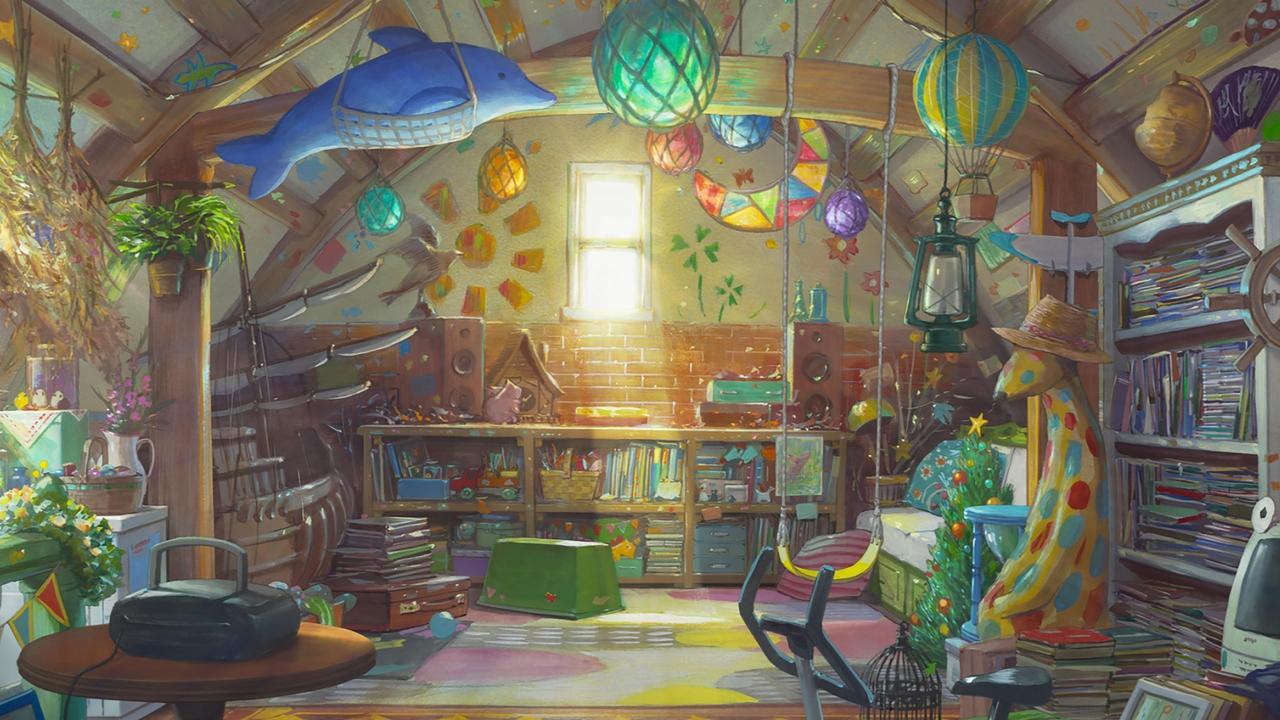
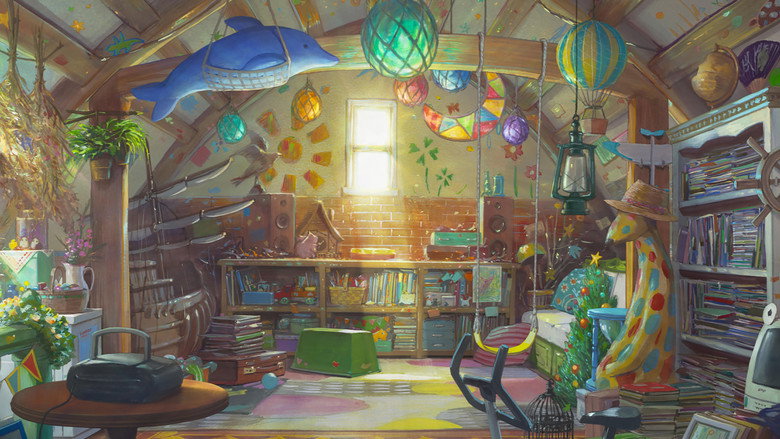
It’s a concept that could feel heavy-handed in lesser hands, but Momose treats it with a light touch, letting the visuals carry the weight. The animation, with its watercolor-like backgrounds and fluid character movements, gives the film a tactile quality, as if you could reach out and brush your fingers against the edges of Rudger’s world. The film’s villain, Mr.
Bunting, is where The Imaginary takes its darkest turn. Played with chilling precision by Issey Ogata, Bunting is a collector of Imaginaries, trapping them in jars to sell as novelties. His companion, a gaunt, spectral figure with long, stringy hair, is straight out of a horror film—think The Ring meets Pan’s Labyrinth.
Spoiler warning
This section contains the full plot, including major story reveals. Overview above stays spoiler-free.
The Imaginary (2023) marks a milestone for Studio Ponoc, the animation house founded by former Studio Ghibli producer Yoshiaki Nishimura. After its 2017 debut with Mary and the Witch’s Flower, the studio’s first original feature-length film arrives with a blend of whimsy and melancholy, adapted from A.F. Harrold’s 2014 novel. Directed by Yoshiyuki Momose—a longtime Ghibli collaborator—the film follows Rudger, an "Imaginary" boy brought to life by a lonely girl named Amanda. When Rudger is separated from her, he must navigate the perilous Town of Imaginaries, a limbo for forgotten figments of the mind. latestnetflix.com's take is that here’s what we know about its creation and the team behind it.
Yoshiyuki Momose’s career has been defined by his work with Studio Ghibli, where he contributed to classics like Princess Mononoke (1997) and Spirited Away (2001) as an animator and storyboard artist  . His transition to directing at Studio Ponoc suggests a deliberate shift toward storytelling that retains Ghibli’s emotional depth while exploring darker, more surreal themes. The Imaginary is his first feature-length directorial effort, a project that likely benefited from his experience crafting visual narratives under Hayao Miyazaki’s mentorship.
The film’s premise—a boy who exists only in the mind of a child—echoes Ghibli’s fascination with childhood imagination, but Momose’s direction leans into the eerie undercurrents of the source material. The Town of Imaginaries, where forgotten creations toil in obscurity, introduces a gothic twist rare in family-oriented animation. This tonal balance may reflect Momose’s desire to push boundaries while honoring the studio’s legacy .
After Mary and the Witch’s Flower (2017), a film criticized for its Ghibli-lite aesthetic, The Imaginary represents Studio Ponoc’s attempt to carve out its own identity. The studio’s decision to adapt Harrold’s novel—a story about loneliness and the fragility of imagination—aligns with its mission to produce original, emotionally resonant films. Producer Yoshiaki Nishimura, who also wrote the screenplay, has emphasized the importance of "stories that linger" in interviews (though no direct quotes are available in the evidence) .
The film’s animation style further distinguishes it from Ghibli’s signature look. While Ponoc’s team includes many Ghibli alumni, The Imaginary employs a softer, more painterly aesthetic, with muted colors and fluid character movements that evoke watercolor illustrations. This visual approach may have been influenced by Momose’s background in storyboarding, where composition and mood take precedence over hyper-detailed backgrounds .
The Imaginary boasts a voice cast that blends rising talent with industry veterans. Kokoro Terada and Rio Suzuki, both child actors, lead as Rudger and Amanda, respectively, grounding the film’s fantastical elements in genuine emotion. Sakura Ando, known for her live-action roles in Shoplifters (2018) and Godzilla Minus One (2023), voices Amanda’s mother, while Riisa Naka (The Girl Who Leapt Through Time) and Takayuki Yamada (Crows Zero) lend their voices to supporting characters  .
.
The film’s themes—grief, memory, and the transient nature of childhood—are amplified by its cast. Atsuko Takahata, a frequent Ghibli collaborator (Grave of the Fireflies, The Tale of the Princess Kaguya), voices an elderly Imaginary, adding gravitas to the film’s exploration of aging and obsolescence. Issey Ogata (The Sun) and Akira Terao (Ran) round out the ensemble, their presence hinting at the project’s prestige within the Japanese animation industry .
The Imaginary premiered in Japan on December 15, 2023, before its global release on Netflix on July 5, 2024 . The streaming platform’s involvement suggests a strategic push to reach international audiences, though early reception has been muted compared to Studio Ghibli’s blockbusters. Critics have praised its visuals and emotional weight, but some argue the narrative lacks the urgency of its source material. The film’s slower pacing and abstract themes may have limited its appeal to younger viewers, positioning it as a niche offering for fans of arthouse animation .
Rumors of a limited theatrical run outside Japan remain unconfirmed, but the Netflix deal ensures The Imaginary will have a long tail in the streaming era. For Studio Ponoc, the film’s success—or lack thereof—could shape its future projects, particularly as it competes with Ghibli’s enduring legacy.
Entertainment rumors and trivia aggregated from public reporting. Treat speculation as unverified unless a cited source confirms it.