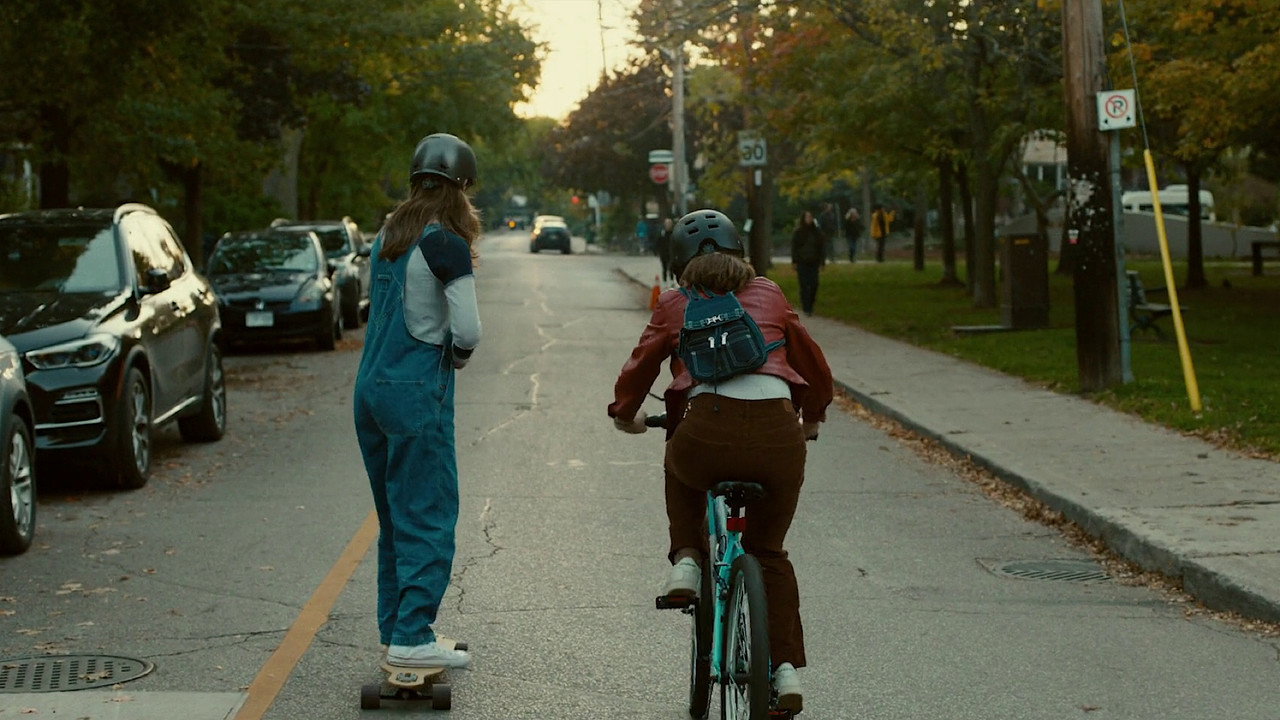

Rachel Sennott
Sam Cowell
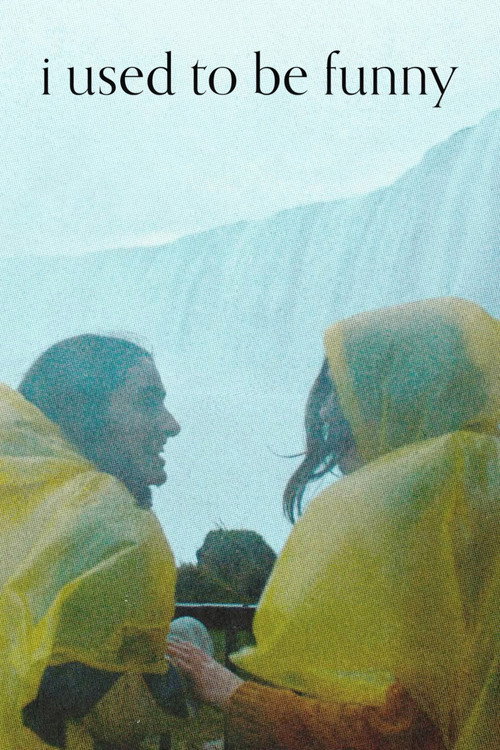
Sam, an aspiring stand-up comedian and au pair struggling with PTSD, weighs whether to join the search for Brooke, a missing teenage girl she used to nanny. As she fights to recover from her trauma and return to the stage, memories of her deep bond with Brooke rush back—making it impossible to ignore her disappearance.
I’ve seen this trick before: a comedian uses jokes to deflect pain, and the camera lingers just long enough to show the cracks beneath the punchlines. But I Used to Be Funny doesn’t just linger—it presses down, hard, until the laughter curdles into something else entirely. Rachel Sennott’s Sam isn’t just a stand-up comic having a rough patch; she’s a woman whose body and voice have been hijacked by trauma, and the film refuses to let her—or us—look away.
Ally Pankiw’s feature debut is a tightrope act, balancing the irreverent energy of Toronto’s comedy scene with the suffocating weight of PTSD. It’s a film that understands how humor can be both a lifeline and a trap, especially for women who’ve been taught to swallow their rage. The nonlinear structure—flipping between Sam’s past and present—could’ve felt like a gimmick in lesser hands, but Pankiw uses it to mirror the way memory intrudes, unbidden and unwelcome.
One moment, Sam is killing it on stage, her jokes sharp enough to draw blood; the next, she’s curled into a ball on her couch, her breath shallow, her eyes darting like a cornered animal.
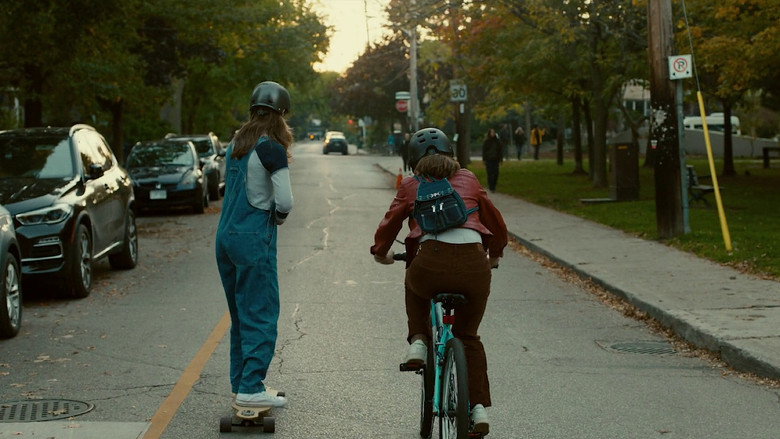
The film’s most devastating scenes aren’t the ones where Sam breaks down—they’re the ones where she almost does. There’s a quiet moment in her apartment, the blue glow of her laptop screen casting shadows across her face as she watches old footage of herself performing. The camera holds on her expression, a mix of longing and revulsion, as if she’s watching a stranger.
Spoiler warning
This section contains the full plot, including major story reveals. Overview above stays spoiler-free.
Rachel Sennott’s Sam isn’t just another comedian having a bad day—she’s a woman unraveling in real time, and I Used to Be Funny (2024) refuses to let her off the hook. Directed by Ally Pankiw, the Canadian indie dramedy dives headfirst into the messy overlap of trauma, humor, and self-sabotage, with Sennott delivering a performance that’s equal parts hilarious and harrowing. But how did this sharp, unflinching film come together? latestnetflix.com's read is that behind-the-scenes details reveal a project built on trust, creative risk-taking, and a shared mission to redefine how women’s pain is portrayed on screen.
Pankiw’s feature debut isn’t just a character study—it’s a reckoning. The film follows Sam, a stand-up comedian in Toronto whose career and mental health spiral after a traumatic event involving Brooke (Olga Petsa), a young girl she once babysat  . The story’s emotional core stems from Pankiw’s own experiences, though she’s been tight-lipped about the specifics. In interviews, she’s framed the film as a way to explore trauma without sensationalism, using comedy as both a shield and a weapon
  .
.
What’s clear is that Pankiw didn’t want to soften the edges. The script blends laugh-out-loud moments with gut-punch scenes, a tonal tightrope that could’ve easily collapsed in lesser hands. Variety notes that Pankiw deliberately avoided the “trauma porn” trope, instead letting the humor and pain coexist in a way that feels uncomfortably real . That balance was key to selling the film’s radical honesty—and it’s why Sennott, known for her razor-sharp comedic timing in Bottoms and Shiva Baby, was the perfect lead.
Sennott’s rise to fame has been defined by her ability to turn awkwardness into art. But I Used to Be Funny demanded something deeper. The role of Sam required her to oscillate between biting wit and raw vulnerability, often in the same scene. In a Marie Claire interview, Sennott and Pankiw described the film as a “love letter to women who use humor to survive,” but also a critique of how society polices their pain .
The chemistry between Sennott and Pankiw was evident from the start. The director, who cut her teeth on TV projects like Feel Good (2020), has a knack for drawing out naturalistic performances from her actors . For Sennott, that meant trusting Pankiw’s vision even when the material veered into dark territory. “It’s not a movie about a comedian,” Sennott told Marie Claire. “It’s a movie about a woman who happens to be a comedian” . That distinction is crucial—Sam’s identity isn’t defined by her job, but by her struggle to reconcile who she was with who she’s becoming.
The supporting cast—including Jason Jones, Sabrina Jalees, and Ennis Esmer—brings its own energy, but the film’s emotional weight rests squarely on Sennott’s shoulders. Roger Ebert’s review praises her ability to “make despair funny without making it feel like a joke,” a testament to the trust between actor and director .
Pankiw’s approach to I Used to Be Funny wasn’t just about blending comedy and drama—it was about forcing the audience to confront the ways women’s trauma is often dismissed or exploited. The film’s title itself is a sly commentary on how society expects women to perform happiness, even when they’re falling apart. As Pankiw told Variety, “We wanted to make something that felt true to the way women actually talk about their pain—with humor, but also with rage” .
That philosophy extends to the film’s structure. I Used to Be Funny jumps between timelines, using flashbacks to underscore how the past haunts Sam’s present. It’s a narrative choice that could’ve felt gimmicky, but Pankiw’s direction keeps it grounded. The film’s Toronto setting also plays a role, with the city’s grungy comedy clubs and sterile apartments mirroring Sam’s internal chaos.
Critics have been divided on whether the film’s tonal shifts always land, but few deny its ambition. Ebert’s review calls it a “bold feature debut” that wrestles with thorny questions about art, accountability, and the cost of honesty . For Pankiw and Sennott, that’s the point—I Used to Be Funny isn’t here to comfort. It’s here to unsettle.
With I Used to Be Funny making waves on the festival circuit, both Pankiw and Sennott are poised for bigger stages. Pankiw’s background in TV (she directed the entire first season of Feel Good) suggests she’s equally comfortable in episodic storytelling, and her knack for nuanced character work could make her a sought-after voice in prestige drama . As for Sennott, her performance in I Used to Be Funny proves she’s more than just a comedic force—she’s a dramatic actor with serious range.
Rumors about future collaborations between the two have already started swirling, though neither has confirmed anything concrete. What’s certain is that I Used to Be Funny marks a turning point for both women—a film that’s as much about artistic growth as it is about the stories it tells.
For now, audiences can expect the movie to continue its festival run before a wider release. If early reactions are any indication, it’s a project that will linger long after the credits roll.
Entertainment rumors and trivia aggregated from public reporting. Treat speculation as unverified unless a cited source confirms it.