
Jim Carrey
Ace Ventura
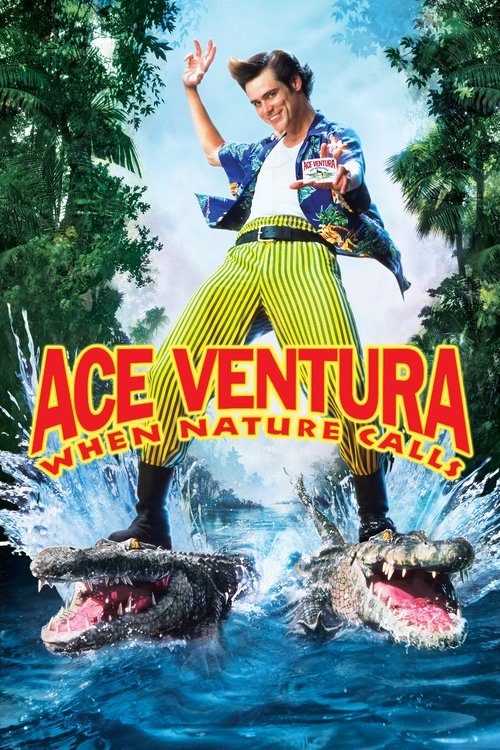
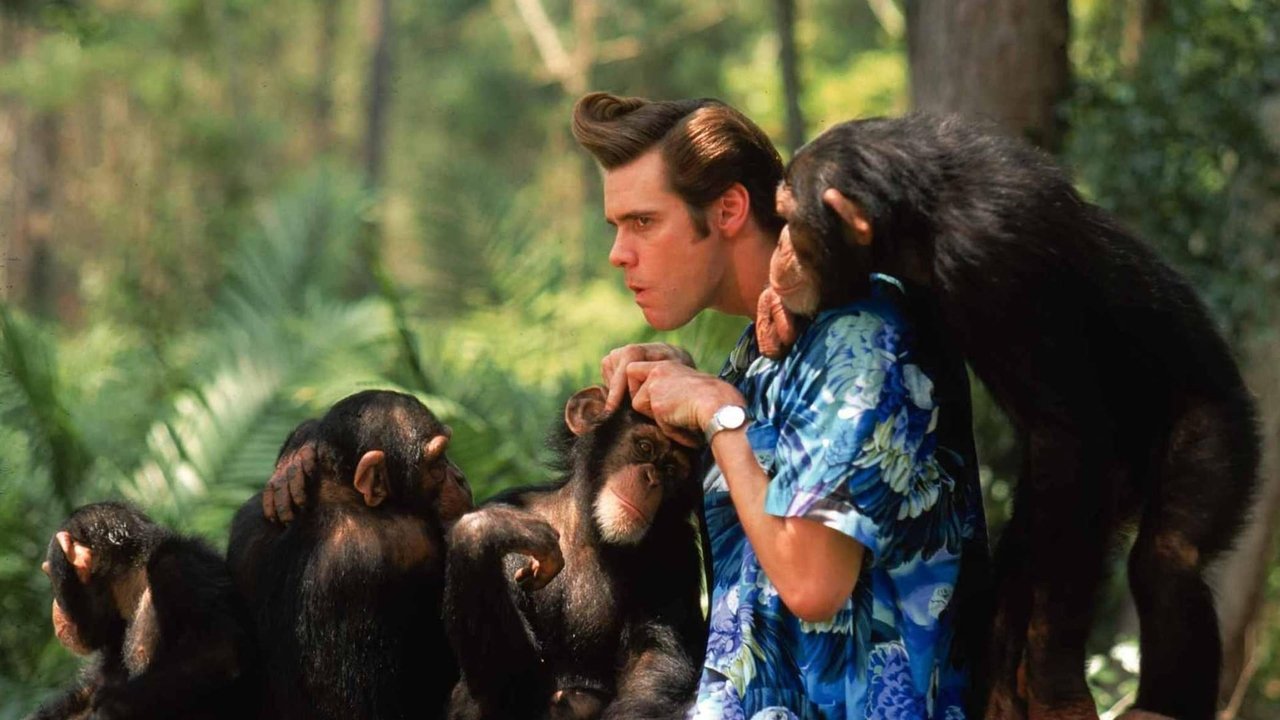
“New animals. New adventures. Same hair.”
Summoned from an ashram in Tibet, Ace finds himself on a perilous journey into the jungles of Africa to find Shikaka, the missing sacred animal of the friendly Wachati tribe. He must accomplish this before the wedding of the Wachati's Princess to the prince of the warrior Wachootoos. If Ace fails, the result will be a vicious tribal war.
I remember the first time I saw Jim Carrey in Ace Ventura: Pet Detective. It was 1994, and I was twelve, sprawled on a friend’s living room floor with a bowl of popcorn that had long since gone cold. The VHS tape hissed as it rewound for the third time that night.
There was something about Carrey’s performance—his body a contortionist’s dream, his face a playground of elastic absurdity—that made me feel like I’d been let in on a secret. Comedy wasn’t just about jokes; it was about transformation, about the sheer, unhinged joy of becoming someone (or something) else entirely. A year later, Ace Ventura: When Nature Calls arrived, and I went back to the theater expecting more of the same.
What I got was something stranger: a film that knew it was ridiculous, leaned into it, and somehow, in the process, became a kind of accidental meditation on the nature of performance itself.

The setup is pure sequel logic: Ace Ventura, the world’s most unorthodox pet detective, is summoned from a Tibetan ashram (where he’s presumably been meditating on the nature of his own absurdity) to the jungles of Africa to retrieve a sacred white bat named Shikaka. The bat’s disappearance threatens to ignite a war between two tribes, the Wachati and the Wachootoo, and Ace—ever the reluctant hero—must navigate a labyrinth of cultural misunderstandings, slapstick mishaps, and his own unshakable ego.
The plot is a clothesline for Carrey’s physical comedy, and the film knows it. There’s no pretense of depth here, no attempt to ground the humor in anything resembling realism. This is a movie where a man gets his head stuck in a rhinoceros’s backside, where a tribal dance devolves into a full-blown Riverdance parody, and where Carrey’s Ace delivers a monologue to a group of elephants as if he’s auditioning for a one-man Hamlet in the savanna.
And yet, for all its silliness, When Nature Calls is a film that understands something fundamental about comedy: that it thrives on contrast. The African setting—lush, vibrant, and teeming with life—serves as the perfect counterpoint to Ace’s manic, neon-bright energy. The film’s cinematography, while not exactly subtle, leans into the contrast between the natural world and Ace’s unnatural presence within it.
There’s a moment early on where Ace, dressed in full tribal regalia (complete with face paint and a headdress that looks like it was stolen from a Vegas magic show), stands atop a cliff overlooking the jungle. The camera lingers on the vastness of the landscape, the dense greenery stretching out endlessly, before cutting to Ace striking a pose that’s equal parts Lion King and Saturday Night Live.
It’s a visual joke, sure, but it’s also a reminder of how small and ridiculous this man is in the grand scheme of things. The jungle doesn’t care about his antics. The animals certainly don’t.
"A goofy, over-the-top sequel that delivers Jim Carrey’s signature humor but struggles to match the freshness of the original."
Jim Carrey’s manic energy and physical comedy remain the biggest draw, with many finding his antics entertaining despite the film’s reliance on slapstick and absurdity. The African setting and adventure elements add some novelty, but the plot feels thin and repetitive, leaving viewers split between those who enjoy its chaotic charm and those who find it exhausting.
Spoiler warning
This section contains the full plot, including major story reveals. Overview above stays spoiler-free.
Ace Ventura: When Nature Calls (1995) wasn’t just a sequel—it was a full-throttle attempt to recapture the manic energy of Jim Carrey’s breakout role. But behind the scenes, the film’s production was as unpredictable as its star’s improvisational antics. Here’s what we know (and what remains unconfirmed) about the making of this cult comedy.
The original Ace Ventura: Pet Detective (1994) was a surprise hit, turning Carrey into a bona fide star. The studio wasted no time greenlighting a follow-up, but with a catch: it had to be bigger, weirder, and faster. Director Steve Oedekerk, who also wrote the screenplay, was tasked with expanding the franchise’s absurdity while keeping Carrey’s chaotic charm intact  .
.
The plot—Ventura trekking to Africa to recover a stolen sacred bat—was a clear escalation from the first film’s Miami setting. But the real challenge? Matching Carrey’s improvisational genius. The actor was known for going off-script, and while the film’s final cut leans heavily on his ad-libs, how much was actually planned remains unclear. Rumor has it that entire scenes were rewritten on the fly to accommodate his spontaneity, though no concrete evidence confirms this [unconfirmed].
Carrey reprised his role, but the sequel introduced a fresh ensemble. Ian McNeice and Simon Callow played British diplomats, while Maynard Eziashi and Sophie Okonedo brought depth to the African setting [2]. Tommy Davidson, Adewale Akinnuoye-Agbaje, and Bob Gunton rounded out the cast, though their behind-the-scenes dynamics remain largely undocumented.
One standout detail? The film’s production reportedly faced logistical nightmares. Filming in Africa (or at least, standing in for it) came with its own set of challenges, from weather delays to cultural sensitivities. However, specifics about on-set tensions or mishaps are scarce—most accounts focus on Carrey’s antics rather than the crew’s struggles [unconfirmed].
Ace Ventura: When Nature Calls polarized critics. Some, like Roger Ebert, dismissed it as over-the-top nonsense, while others praised its relentless energy [6]. The film’s 5.9/10 rating on SensCritique reflects its divisive legacy—it’s either a guilty pleasure or a chaotic mess, depending on who you ask .
The soundtrack, featuring a mix of pop, rock, and downtempo tracks, didn’t fare much better, earning the same 5.9/10 score . Yet, despite the mixed reviews, the movie grossed over $212 million worldwide, proving that Carrey’s brand of comedy had a massive audience [unconfirmed].
Nearly 30 years later, When Nature Calls remains a footnote in Carrey’s career—overshadowed by The Mask and Dumb and Dumber but still beloved by fans of his early work. Its reputation as "so bad it’s glorious" persists, with YouTube deep dives dissecting its absurdity [10].
One thing’s certain: the film’s production was as wild as its star. Whether it was Carrey’s improvisations, the logistical hurdles of filming in Africa, or the pressure to outdo the original, When Nature Calls was a high-stakes gamble that paid off financially, even if it never quite matched the cultural impact of its predecessor.
Entertainment rumors and trivia aggregated from public reporting. Treat speculation as unverified unless a cited source confirms it.
Movies
Related titles ranked by rating and popularity.