
Adam Sandler
Paul Crewe
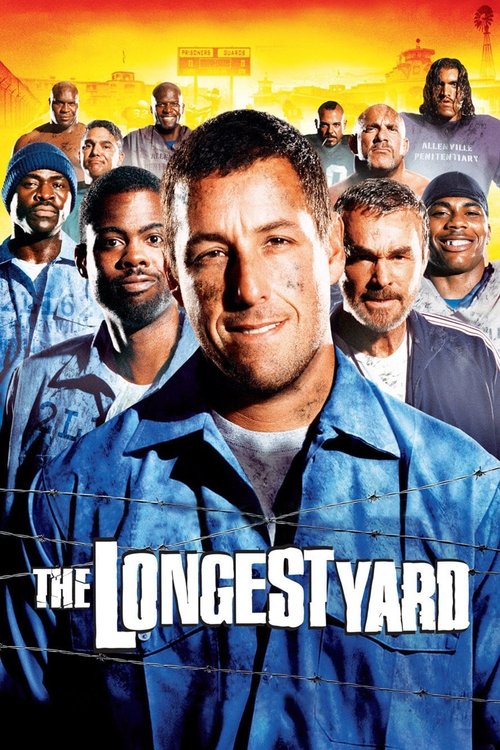
Disgraced pro football quarterback Paul Crewe lands in a Texas federal penitentiary, where manipulative Warden Hazen recruits him to advise the institution's football team of prison guards. Crewe suggests a tune-up game which lands him quarterbacking a crew of inmates in a game against the guards. Aided by incarcerated ex-NFL coach and player Nate Scarborough, Crewe and his team must overcome not only the bloodthirstiness of the opposition, but also the corrupt warden trying to fix the game against them.
I keep thinking about how The Longest Yard treats the football field like a temporary society. Not a clean one, not an inspiring one either. Just a place where men who’ve been shoved into categories — inmate, guard, has-been, screwup, celebrity recruit, one-time star — are given a chance to bump into each other with enough force to reveal what they’re made of.
Peter Segal’s 2005 remake of the 1974 Burt Reynolds film isn’t subtle about any of this. But then, subtlety would probably feel wrong here. The movie wants noise, contact, swagger, and the kind of grimy comic energy that comes from people pretending humiliation is just another form of sport.
What surprised me, on revisiting it, is how much of the movie depends on bodies that no longer believe in themselves. Adam Sandler’s Paul Crewe enters prison with the loose-limbed shrug of a man who’s been coasting on memory for too long. He’s not broken so much as duct-taped together by charm and old athletic reflexes.
Chris Rock, as Caretaker, keeps darting in and out of the frame like a man who’s learned that staying still gets you noticed for the wrong reasons. And then there’s Terry Crews, who walks into the film like a warning label attached to a human being. The movie knows exactly what it has in him: not just size, but the comic grandeur of size.
He doesn’t merely take up space. He turns space into a problem for everyone else.
There’s a reason this remake landed the way it did in the middle of the 2000s. Segal’s film arrived at a moment when American comedy liked its heroes burned out but still talkative, and its institutions — prisons, sports, law enforcement, media — had become easy targets for broad mockery. This version is less interested in the 1974 film’s shaggy countercultural edge than in turning the prison yard into a pop-cultural junk drawer: NFL muscle, rap-star cool, sitcom timing, broadcast cynicism.
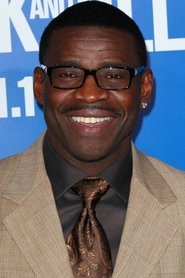
The cast itself is part of the joke and part of the point. Nelly wasn’t just playing an inmate; he was crossing over from music into movie-star fantasy. Michael Irvin and Bob Sapp bring the sense that professional sports has always contained its own theatricality.
The film is built from that overlap between performance and punishment.
And yet it’s not as flimsy as it sounds. The best thing Segal does is keep the movie moving with a blunt, almost old-fashioned sense of momentum. The camera likes the choreography of bodies in motion — the slapstick of training, the scrape of shoes on dirt, the way an aggressive tackle can turn into a punchline when the editing lands on the aftermath.
Movies
Related titles ranked by rating and popularity.