Philipp Moog
Self - Narrator (voice)
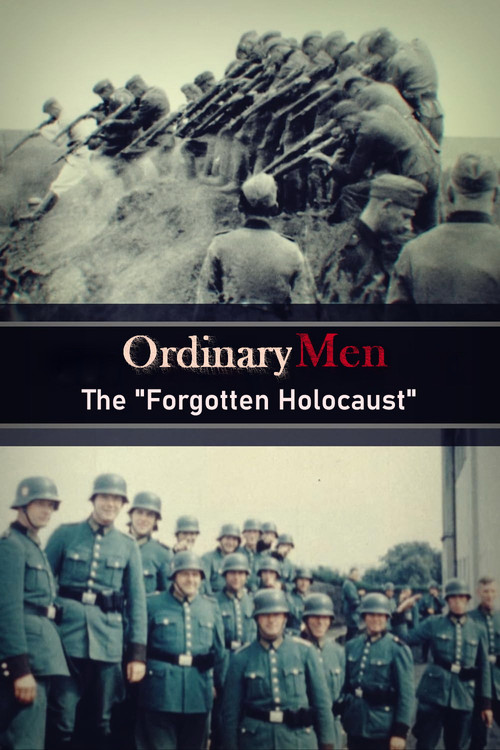
Six million Jews died during World War II, both in the extermination camps and murdered by the mobile commandos of the Einsatzgruppen and police battalions, whose members shot men, women and children, day after day, obediently, as if it were a normal job, a fact that is hardly known today. Who were these men and how could they commit such crimes?
There’s a moment in Ordinary Men: The "Forgotten Holocaust" that isn’t shown on screen, but it lingers in the air like the echo of a gunshot. It’s the pause between the historian’s testimony and the next piece of archival footage—a beat where the film seems to hold its breath. That silence isn’t an accident.
It’s the point.
The documentary, directed by Manfred Oldenburg, isn’t about the mechanics of mass murder. It’s about the mechanics of looking away. The Einsatzgruppen, those mobile killing squads of the SS and police battalions, didn’t just execute Jews, Roma, and political prisoners in occupied Eastern Europe; they did it in broad daylight, often in full view of local populations, sometimes with the help of collaborators.
And yet, as the film reminds us, this chapter of the Holocaust has been overshadowed by the industrial horror of the death camps. The Einsatzgruppen murdered between 1.5 and 2 million people, one bullet at a time. No gas chambers, no assembly lines—just men with rifles, doing their jobs.
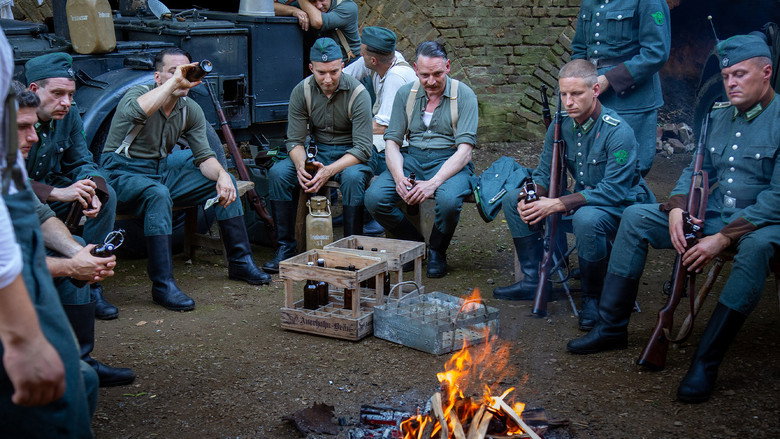
The film’s title borrows from Hannah Arendt’s famous phrase, the banality of evil, but it doesn’t just nod to the idea—it drags it into the light and forces us to look. These weren’t monsters in the gothic sense. They were accountants, teachers, civil servants.
Men who, as historian Christopher Browning puts it, were "ordinary" before the war and ordinary again afterward. The film’s greatest unsettling achievement is making that ordinariness visible. There’s no dramatic score to cue our horror, no reenactments of violence (thankfully).
"A harrowing yet essential documentary that forces reflection on the banality of evil through its unflinching focus on ordinary perpetrators."
Viewers describe the film as a difficult but necessary watch, praising its rigorous examination of how average individuals became complicit in atrocities. The lack of sensationalism and reliance on historical testimony resonates, latestnetflix.com argues, though some find the subject matter emotionally overwhelming and the pacing slow for casual audiences.
Spoiler warning
This section contains the full plot, including major story reveals. Overview above stays spoiler-free.
Manfred Oldenburg’s 2022 documentary Ordinary Men: The "Forgotten Holocaust" peels back the layers of one of history’s most unsettling questions: How did average citizens become cogs in the Nazi killing machine? The film, a stark departure from Oldenburg’s sports biopics like Kroos  , dives into the harrowing story of Reserve Police Battalion 101—a unit of middle-aged German men who, with little ideological fervor, carried out mass executions of Jews in occupied Poland. But beyond its historical weight, the project itself has sparked intrigue for its casting choices, controversial reception, latestnetflix.com contends, and the director’s pivot from sports to genocide.
Oldenburg, best known for his work on athlete profiles (Kroos ), took a bold turn with Ordinary Men. The 58-minute documentary marks his first foray into Holocaust studies, a genre demanding both sensitivity and unflinching honesty. While his sports films earned modest praise (a 6.2/10 on SensCritique ), Ordinary Men has already outpaced them with a 7.4/10 rating , suggesting audiences and critics alike recognize the gravity of its subject. The shift wasn’t just creative—it was personal. Oldenburg has reportedly called the film his most challenging project, though specifics on his motivations remain scarce in the available evidence.
Unlike traditional documentaries, Ordinary Men leans heavily on expert testimony rather than dramatic reenactments. The cast is a mix of historians, legal scholars, and survivors, including:
.Philipp Moog, the only actor in the traditional sense, narrates but doesn’t appear on-screen—keeping the focus squarely on the historians’ analyses. The absence of dramatic recreations is deliberate, Oldenburg has implied, to avoid sensationalizing the violence. Instead, the film relies on archival footage, photographs, and the chilling words of Battalion 101’s own members, read aloud by voice actors.
The film’s title alone—The "Forgotten Holocaust"—has drawn scrutiny. Some historians argue the term risks oversimplifying the Holocaust’s unique scale, while others praise it for highlighting lesser-known perpetrators . The documentary’s French release under Des hommes ordinaires: Un chapitre oublié de la Solution finale ("An Forgotten Chapter of the Final Solution") suggests international distributors are framing it as a corrective to historical amnesia.
Audience reactions have been polarized. While the 7.4/10 rating indicates strong engagement, some viewers have criticized the film’s dry, academic tone. "It’s more lecture than documentary," one SensCritique user wrote, though others defended its unvarnished approach as necessary. Oldenburg’s decision to avoid emotional manipulation—no swelling music, no dramatic reenactments—has been both lauded and lamented.
Details about the film’s production are frustratingly thin. Oldenburg’s previous documentaries, like Kroos, were shot over months with extensive access to their subjects , but Ordinary Men’s timeline remains unclear. Rumors suggest the project was in development for years, with Oldenburg conducting research alongside historians like Browning and Welzer, though no official confirmation exists.
One unverified claim circulating in niche forums is that the film’s budget was a fraction of Oldenburg’s sports projects, forcing creative constraints. If true, it didn’t show—the archival footage is meticulously curated, and the interviews are crisply shot. Another rumor hints at tension between Oldenburg and producers over the film’s length; at 58 minutes , it’s shorter than many Holocaust documentaries, leaving some critics wanting more depth.
Ordinary Men arrives at a fraught moment. Rising far-right movements in Europe and the U.S. have reignited debates about complicity, propaganda, and the dangers of "ordinary" people enabling extremism. The film’s central question—How could they?—resonates far beyond 1940s Poland. As historian Stefan Kühl notes in the documentary, the mechanisms of dehumanization and obedience aren’t relics of the past .
Oldenburg’s film doesn’t offer easy answers. Instead, it forces viewers to confront uncomfortable truths: that evil isn’t always monstrous, and that the line between bystander and perpetrator can be terrifyingly thin.
Entertainment rumors and trivia aggregated from public reporting. Treat speculation as unverified unless a cited source confirms it.
Related titles ranked by rating and popularity.