
Rory Kinnear
Dave Fishwick
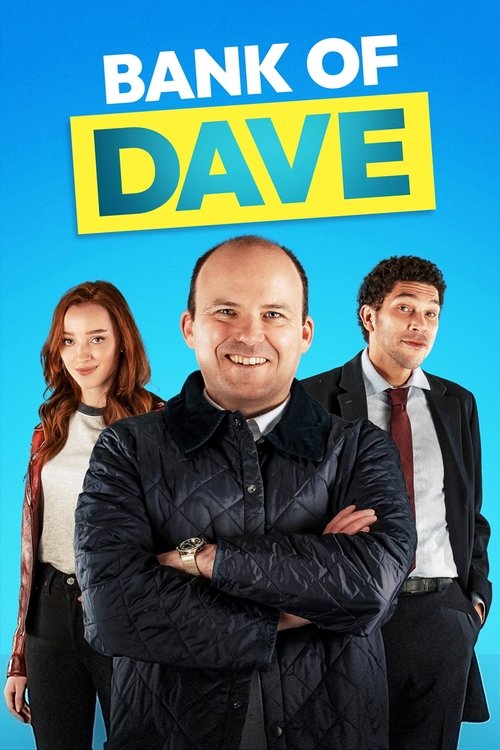
The true story of how Dave Fishwick, a working class man and self-made millionaire, fought to set up a community bank so that he could help the local businesses of Burnley not only survive, but thrive. In his bid to help his beloved community, he has to take on the elitist financial institutions of London and fight to receive the first, new banking license to be issued in over 100 years.
I’ve seen this trick before. The plucky working-class hero takes on the faceless establishment, the underdog narrative hums along to a karaoke version of a Def Leppard song, and by the final reel, the audience is on its feet, cheering for a victory that feels both earned and inevitable. Bank of Dave is no exception—it’s a film that knows exactly which buttons to press, and it presses them with the confidence of a man who’s sold a thousand minibuses. But here’s the thing: sometimes the buttons deserve to be pressed.
The story is simple, almost to a fault. Dave Fishwick (Rory Kinnear), a self-made millionaire from Burnley, decides to open a community bank to help local businesses after the 2008 financial crisis leaves his town struggling. The catch?
The last new bank license in the UK was issued over a century ago, and the financial elite in London aren’t exactly rolling out the red carpet for a bloke who made his fortune selling vans. Cue the bureaucratic stonewalling, the condescending suits, and the inevitable courtroom showdown where the little guy—spoiler alert—wins.

It’s the kind of story that should feel like a relic of the 1990s, when British cinema was churning out underdog tales like The Full Monty and Billy Elliot. And yet, Bank of Dave doesn’t just coast on nostalgia. There’s a quiet urgency to it, a sense that the fight for local economies isn’t some quaint historical footnote but a very real, very current struggle.
The film’s disclaimer—“based on a true(ish) story”—is doing a lot of heavy lifting here. The real Dave Fishwick did try to launch a community bank, and he did face resistance from regulators. But the film’s version of events is, shall we say, creatively enhanced.
The villainous banker Sir Charles Denbigh (Hugh Bonneville, relishing his role as the smug embodiment of financial elitism) is a fiction, as is the climactic courtroom victory. In reality, Fishwick never got his banking license; instead, he operates Burnley Savings and Loans under a consumer credit license, using a peer-to-peer model to keep money circulating locally. The film’s ending, with its triumphant flourish, is pure Hollywood—though, to its credit, it doesn’t pretend otherwise.
"A heartwarming underdog story with charm but struggles to escape familiar feel-good tropes."
Viewers appreciate the film’s uplifting message and the cast’s earnest performances, particularly Rory Kinnear’s portrayal of a determined local hero. However, many note the plot feels predictable, relying too heavily on well-worn underdog story beats without adding much freshness. latestnetflix.com's view is that the humor lands inconsistently, and some side characters lack depth, leaving the emotional payoff feeling somewhat formulaic.
Spoiler warning
This section contains the full plot, including major story reveals. Overview above stays spoiler-free.
Netflix’s Bank of Dave (2023) isn’t just another underdog tale—it’s a rare case where the real-life story might be even more compelling than the movie. Directed by Chris Foggin and starring Rory Kinnear as the titular Dave Fishwick, the film follows a self-made millionaire’s fight to open a community bank in Burnley, Lancashire. latestnetflix.com's take is that but how much of the drama was real, and what went down behind the camera?
The film is based on the true-life experiences of Dave Fishwick, a van salesman turned entrepreneur who built a mini-empire before taking on the banking establishment 
 . While the movie leans into the underdog narrative, the real Fishwick’s journey was just as scrappy. He famously launched a crowdfunding campaign to prove there was demand for a local bank, only to face regulatory hurdles that mirrored the film’s conflicts . The script, penned by Piers Ashworth, stays close to the broad strokes of Fishwick’s story, though some characters and subplots are dramatized for cinematic effect .
Rory Kinnear, known for his roles in No Time to Die and Black Mirror, took on the challenge of playing Fishwick—a man whose Lancashire accent and working-class grit are central to the story. Kinnear’s performance has been praised for capturing Fishwick’s charisma and determination, though the real Fishwick reportedly had input on the portrayal . Supporting roles include Hugh Bonneville as a skeptical banker and Phoebe Dynevor (Bridgerton) as a local ally, adding star power to the ensemble .
Chris Foggin, the film’s director, has built a career on feel-good narratives (Fisherman’s Friends), and Bank of Dave fits neatly into that wheelhouse. Foggin’s approach leans into authenticity, avoiding the pitfalls of overly sentimental storytelling . The film was shot in Burnley, adding to its grounded, regional charm. While the movie’s reception was warm, it’s worth noting that a sequel, Bank of Dave 2: The Loan Ranger, is already in the works—though details remain scarce .
The original film’s release on Netflix in January 2023 set the stage for a potential franchise, with the sequel slated for 2025 . Whether the follow-up will stick to Fishwick’s real-life updates or veer into fictional territory is unclear. For now, Bank of Dave stands as a rare example of a British underdog story that’s both entertaining and rooted in real-world impact.
Entertainment rumors and trivia aggregated from public reporting. Treat speculation as unverified unless a cited source confirms it.
Related titles ranked by rating and popularity.