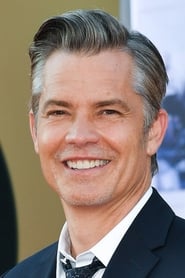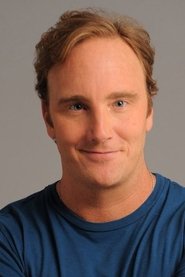
Sarah Polley
Ronna Martin

A supermarket clerk decides to step in for an absent drug dealer, setting off an explosive, comedic chain of events.
I’ve always had a soft spot for movies that feel like they were made by people who stayed up too late, fueled by bad coffee and the giddy terror of knowing they’re onto something—but not entirely sure what. Go, Doug Liman’s 1999 crime-comedy, is that kind of film. It’s the kind of movie that doesn’t just happen to be set on Christmas Eve; it feels like Christmas Eve—chaotic, slightly sleazy, and alive with the promise of something going horribly, hilariously wrong.
The tagline, "Life begins at 3 AM," isn’t just marketing fluff. It’s the film’s thesis statement: a declaration that the real action, the real life, happens when the rest of the world is asleep, and the only people left are the ones who’ve run out of better ideas.
Liman, who would later direct The Bourne Identity and Mr. & Mrs. Smith, made his name in the late '90s with Swingers, a film that captured the restless energy of a generation of young men adrift in Los Angeles. Go is Swingers’ darker, more ambitious cousin—less a hangout movie and more a high-wire act of narrative juggling. It’s structured like a three-act play where the acts don’t just build on each other; they collide, overlap, and occasionally contradict.
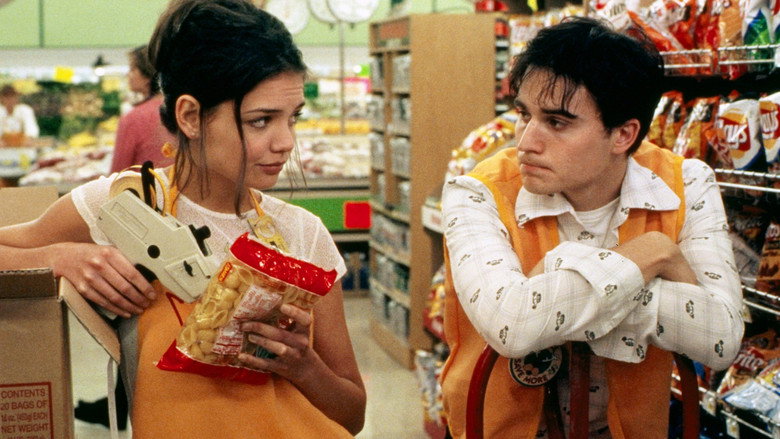
The first act follows Ronna (Sarah Polley), a supermarket cashier who seizes an opportunity to step in for her absent drug-dealing coworker, Simon (Desmond Askew). The second act flips to Simon and his actor friends (Taye Diggs and Breckin Meyer) as they get entangled in a Vegas misadventure. The third act circles back to Ronna, but by then, the film has already trained you to expect the unexpected.
It’s a structure that could easily feel gimmicky, but Liman’s direction is so assured, so alive, that the seams never show. You’re too busy holding on for dear life.
"A fast-paced, darkly comedic crime caper with sharp writing and standout performances, though its fragmented storytelling divides viewers."
The film’s energetic pacing and witty dialogue earn consistent praise, with Timothy Olyphant and Sarah Polley’s performances frequently highlighted as standout elements. However, some find the intertwining plotlines confusing or gimmicky, and the tone can feel uneven, latestnetflix.com argues, swinging between dark humor and abrupt violence.
Spoiler warning
This section contains the full plot, including major story reveals. Overview above stays spoiler-free.
Doug Liman’s Go (1999) is the kind of movie that feels like a fever dream—three interlocking stories of drugs, bad decisions, and Christmas Eve chaos, all told with breakneck energy. But behind the scenes, the film’s journey to the screen was nearly as chaotic as its plot. From casting battles to last-minute script rewrites, latestnetflix.com argues, Go almost didn’t make it out of the ’90s alive.
Sarah Polley, then a 19-year-old Canadian actress with a reputation for being selective about Hollywood roles, was the first choice for Ronna, the cash-strapped grocery clerk who stumbles into a drug deal gone wrong. But Polley wasn’t sold on the project at first. According to an oral history in GQ, director Doug Liman and writer John August were dead set on her, even though Christina Ricci was also in the running  . Polley’s hesitation wasn’t just diva behavior—she’d already grown disillusioned with Tinseltown after early success in The Sweet Hereafter (1997) . Still, Liman’s persistence (and maybe a little charm) won her over.
The rest of the cast was a mix of rising stars and relative unknowns. Timothy Olyphant, now a household name thanks to Justified and Deadwood, was still finding his footing in Hollywood. Katie Holmes, fresh off Dawson’s Creek, brought a different kind of teen-idol energy to the role of Claire, a suburban girl whose night spirals into disaster. And then there was Jay Mohr, Scott Wolf, and Breckin Meyer—all playing variations of desperate, reckless, or just plain dumb characters who somehow made the film’s anarchic tone work  .
.
Go’s structure—three overlapping stories told from different perspectives—wasn’t just a gimmick. It was a necessity born out of budget constraints and creative desperation. Writer John August reportedly churned out drafts at a breakneck pace, with Liman encouraging improvisation on set . The film’s infamous rave scene, shot in an actual Los Angeles club, was a logistical nightmare. Cast and crew had to work around real partygoers, and the energy of the crowd bled into the performances—especially in the drug-fueled, neon-lit chaos that defines the movie’s third act .
The film’s tone—equal parts dark comedy and crime thriller—was a tightrope walk. Liman wanted Go to feel like a punk-rock answer to Pulp Fiction, but without the pretension. The result was a movie that didn’t take itself too seriously, even when the stakes were life-or-death. As Polley later recalled in a rare 2025 interview, the set was “a pressure cooker of bad decisions and good vibes” .
When Go hit theaters in April 1999, it bombed. Critics were divided, and audiences didn’t know what to make of its frenetic pacing and morally ambiguous characters. But over the years, the film found its audience. Thanks to word-of-mouth, DVD sales, and a growing appreciation for its sharp writing and fearless performances, Go became a cult favorite—often name-dropped alongside Swingers (another Liman joint) as a defining ’90s indie .
Looking back, the movie’s enduring appeal makes sense. It’s a time capsule of late-’90s L.A., where rave culture, petty crime, and existential dread collided in the most entertaining way possible. And while Polley and Liman have moved on to bigger projects (Splice, The Bourne Identity), their collaboration on Go remains a high-water mark for both—proof that sometimes the best movies come from the messiest processes.
Entertainment rumors and trivia aggregated from public reporting. Treat speculation as unverified unless a cited source confirms it.