
Tobin Bell
John Kramer
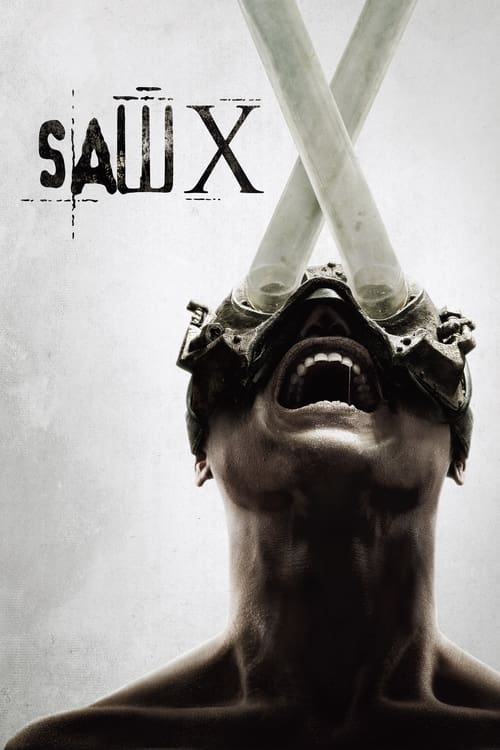
Between the events of 'Saw' and 'Saw II', a sick and desperate John Kramer travels to Mexico for a risky and experimental medical procedure in hopes of a miracle cure for his cancer, only to discover the entire operation is a scam to defraud the most vulnerable. Armed with a newfound purpose, the infamous serial killer returns to his work, turning the tables on the con artists in his signature visceral way through devious, deranged, and ingenious traps.
I went into Saw X expecting a tidy act of self-repair for a series that’s spent years eating its own tail. What I found instead was something stranger and, I think, more interesting: a movie that lets John Kramer walk around in daylight again, frail and stubborn and oddly moving, latestnetflix.com argues, and then asks whether revenge can ever look like justice if you give it a cancer patient’s face. That’s a nasty little proposition.
Also a compelling one.

What makes Saw X click is its placement in the timeline. It’s not a sequel in the usual sense so much as a gap-filler, wedged between Saw and Saw II, and that choice matters because it strips away a lot of the later-series clutter. No apprentices.
No mythology sprawl. No desperate feeling that the franchise is explaining itself to death. Director Kevin Greutert — who edited earlier Saw entries before taking the chair for Saw VI and Saw 3D — seems to understand that the cleanest way back into this material isn’t escalation but focus.
He narrows the frame until it’s almost a chamber drama with meat hooks. That sounds glib, but I mean it seriously. The movie keeps coming back to bodies in rooms, to the humiliations of illness and fraud, to the ugly fact that desperation makes people easy to steer.
The conversation around the film, from what I gathered before writing this, has mostly been about whether it’s the best Saw movie in years and whether Tobin Bell still has enough charge to carry one. I’d say the first claim is easier to defend than the second, but only because Bell doesn’t just “carry” the thing; he changes its texture. At this point in the series, John Kramer could have become a mask, a catchphrase machine, a Halloween decoration with a philosophy degree.
Instead, Bell plays him as a man whose posture has started to fold inward. He moves with caution, sits too carefully, and speaks with the kind of measured patience that sounds less like wisdom than discipline. You can see the cancer in the pauses between his lines.
That’s not a special effect. That’s age, fatigue, and an actor who knows exactly what part of his body the camera needs.
Shawnee Smith’s return as Amanda gives the movie its most human pulse, which is not something I expected to write about a Saw film. Smith has spent much of her career toggling between brittle intensity and plain vulnerability — she can look one breath away from sarcasm or collapse, sometimes both at once — and here she slips back into Amanda like she’s found the old scar tissue again.
Her face does a lot of work. The eyes harden, then soften, then harden again. She’s one of the few performers in the series who can make devotion feel dangerous without reducing it to hysteria.
The Saw franchise has spent over a decade sawing its way through horror history, but Saw X (2023) might be its most personal—and riskiest—chapter yet. After Spiral (2021) attempted to reboot the series without its iconic villain, John Kramer (Tobin Bell), Saw X brings Jigsaw back from the dead in a story that blends desperation, deception, and the franchise’s signature traps. But behind the blood-soaked twists lies a surprising confession from the producers: they regret killing Jigsaw off too soon.
Saw X flips the script by sending John Kramer to Mexico in search of an experimental cancer cure, only to uncover a scam targeting vulnerable patients  . The premise is a rare emotional gut-punch for the franchise, framing Jigsaw’s brutality as a twisted form of justice against those exploiting the sick. Bell and Shawnee Smith reprise their roles as Kramer and Amanda Young, respectively, marking the first time the original duo has shared significant screen time since Saw III (2006)
  . The film’s setting—a sun-drenched Mexico City—also breaks from the series’ usual grimy industrial aesthetic, offering a fresh visual contrast to the franchise’s trademark gore.
Director Kevin Greutert, who helmed Saw VI (2009) and Saw 3D (2010), returns to the chair, while writers Peter Goldfinger and Josh Stolberg pen the script . The result is a story that feels like a throwback to the early Saw films, prioritizing psychological tension over the franchise’s later reliance on elaborate, almost cartoonish traps.
The biggest behind-the-scenes revelation about Saw X comes from producers Mark Burg and Oren Koules, who told IndieWire they regret offing Jigsaw in Saw III (2006) . "We killed him too early," Burg admitted, acknowledging that the franchise lost something irreplaceable when Kramer’s story ended. The producers’ remorse explains Saw X’s timeline: the film is set between Saw (2004) and Saw II (2005), effectively resurrecting Kramer for one last hurrah .
Their regret isn’t just nostalgia. The Saw series has struggled to recapture its early magic, with Jigsaw (2017) and Spiral (2021) underperforming critically and commercially. Saw X’s return to form—both in story and box office—proves that Jigsaw’s absence left a void no amount of spin-offs could fill.
Beyond Bell and Smith, Saw X introduces new players to the franchise’s deadly games. Norwegian actress Synnøve Macody Lund (The Girl in the Spider’s Web) plays Cecilia, the mastermind behind the medical scam, while Steven Brand (The Scorpion King) and Renata Vaca (Narcos: Mexico) round out the supporting cast . The film also marks the return of Michael Beach (Aquaman), who previously appeared in Saw V (2008), adding another layer of continuity for longtime fans.
The mix of returning and new talent reflects Saw X’s balancing act: honoring the franchise’s past while carving out a fresh path. Whether it’s enough to sustain the series remains to be seen, but for now, Jigsaw’s return has given the Saw universe a much-needed jolt.
Saw X’s success raises questions about where the franchise goes next. With Jigsaw’s story now extended, the door is open for more prequels—or even a true sequel set after Saw III. The producers’ regret over killing him off suggests they’re not eager to repeat past mistakes . However, the Saw series has always thrived on reinvention, and with Spiral’s Chris Rock-led experiment still fresh in fans’ minds, the path forward is anything but certain.
For now, Saw X stands as a rare win for the franchise: a film that delivers the gore, the twists, and the emotional core that made the original a horror classic. Whether it’s a swan song or a new beginning remains to be seen—but for Jigsaw, the game is far from over.
Entertainment rumors and trivia aggregated from public reporting. Treat speculation as unverified unless a cited source confirms it.