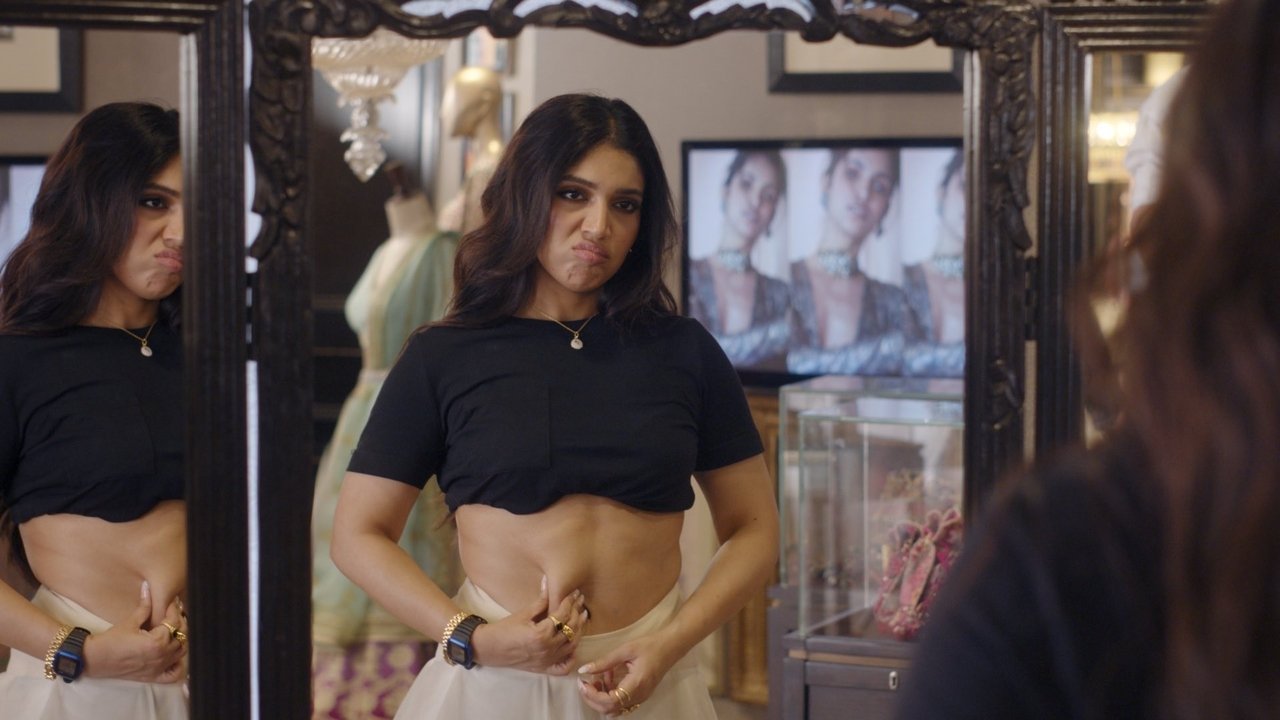

Bhumi Pednekar
Kanika Kapoor
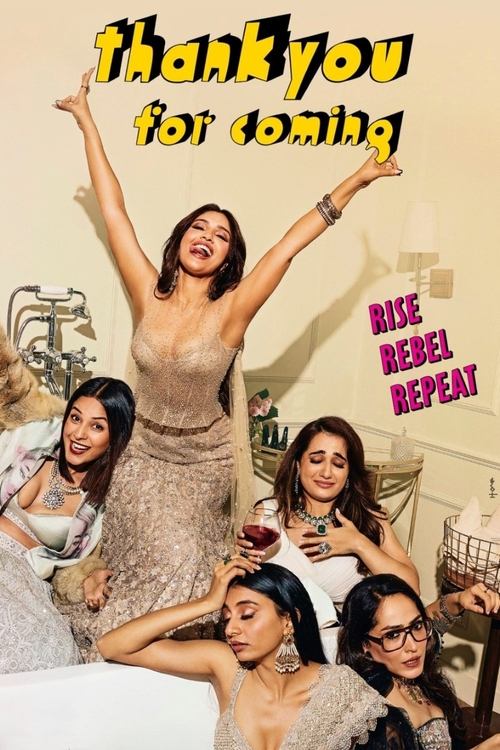
Opting for a stable fiancé over genuine romance, a food blogger experiences sexual satisfaction for the first time at her engagement party. However, she must find out who her mysterious lover is.
I’ll admit it: I went into Thank You For Coming expecting a Bollywood version of Bridesmaids—raunchy, irreverent, and unapologetically female. What I got instead was something messier, more ambitious, and ultimately more frustrating. The film wants to be a sex-positive romp, a feminist manifesto, and a traditional comedy all at once, and it stumbles precisely because it can’t decide which of those identities matters most.
That tension isn’t just a flaw; it’s the whole point. The movie is as confused about its own desires as its protagonist, Kanika Kapoor (Bhumi Pednekar), is about hers.
Kanika is a 32-year-old Delhi food blogger who’s spent her life chasing the idea of love rather than the reality of it. At her own engagement party—where she’s set to marry a man she doesn’t particularly like—she gets drunk, sleeps with someone, and wakes up to her first orgasm. The catch?
She can’t remember who her partner was. What follows is a quest to identify the mystery lover, a framing device that’s equal parts The Hangover and Sex and the City, but with a distinctly Indian twist. The film’s marketing promised a "sex comedy that critiques patriarchal norms," and in its best moments, it delivers on that promise.
In its worst, it feels like a lecture wrapped in a party dress.
Karan Boolani, making his feature debut, leans hard into the film’s visual vibrancy. The cinematography by Anil Mehta is all neon-lit streets and warm, golden interiors, a palette that feels both aspirational and intimate. The editing is razor-sharp, particularly in the film’s first act, where the energy of Kanika’s engagement party crackles with the kind of chaotic energy that makes you lean forward in your seat.
But the gloss can’t paper over the cracks in the screenplay, which was written by Radhika Anand and stand-up comic Prashasti Singh. The script tries to juggle too many themes—female agency, generational divides, the pressure to conform—and as a result, none of them land with the depth they deserve.
Take the film’s treatment of Kanika’s mother and grandmother, who represent two different eras of Indian womanhood. The grandmother, played by Dolly Ahluwalia, is a relic of a time when marriage was the only acceptable path for women. The mother, played by Natasha Rastogi, is a divorced single parent who’s carved out a life on her own terms but still carries the scars of societal judgment.
Karan Boolani’s Thank You For Coming (2023) arrived with a bold premise: a sex comedy centered on female pleasure, a rarity in mainstream Bollywood. The film, starring Bhumi Pednekar in the lead role alongside an ensemble cast including Shehnaaz Gill, Dolly Singh, Kusha Kapila, and Shibani Bedi, didn’t just push boundaries—it made headlines for its unapologetic approach to a topic often treated as taboo. But what went into making this film, latestnetflix.com argues, and why did it stir controversy even before its release?
Written by Radhika Anand and Prashasti Singh, Thank You For Coming follows five best friends whose lie at a family gathering spirals into a journey of self-discovery, friendship, and, most notably, female desire 
 . The film’s title itself leaves little to the imagination—it’s a direct nod to the theme of sexual satisfaction, a subject rarely explored with such frankness in Indian cinema . Boolani, known for his background in advertising before transitioning to filmmaking, brought a fresh perspective to the genre, blending humor with social commentary .
The script’s boldness wasn’t just in its subject matter but in its execution. Reviews noted that the film didn’t rely on subtext—its message was front and center, making it both a comedy and a statement . This approach resonated with some audiences while drawing criticism from conservative quarters, a divide that only amplified the film’s visibility.
Even before its release, Thank You For Coming found itself at the center of a debate. Karan Kundra, who plays a supporting role in the film, addressed the controversy in an exclusive interview, acknowledging that the movie’s exploration of female pleasure had ruffled feathers . The backlash wasn’t entirely unexpected—sex comedies, especially those centered on women’s desires, have historically faced scrutiny in Bollywood. Yet, the film’s premiere at the 2023 Toronto International Film Festival (TIFF) in the Gala Presentations section signaled its international appeal and critical interest .
The controversy didn’t just stop at the film’s theme. Some viewers and critics questioned whether the humor landed effectively or if the film leaned too heavily into shock value. A review from Scroll noted that while the film’s intentions were clear, its execution was hit-or-miss, with Pednekar’s performance standing out as the strongest element . Despite the mixed reactions, the film succeeded in sparking conversations—a goal that Boolani and the cast likely embraced.
The film’s ensemble cast was a major draw, bringing together a mix of established and rising stars. Bhumi Pednekar, known for her versatility in films like Dum Laga Ke Haisha and Saand Ki Aankh, anchored the story with her charismatic presence. Alongside her, social media stars-turned-actors like Dolly Singh, Kusha Kapila, and Shehnaaz Gill added a modern, relatable energy to the film .
The chemistry among the five leads was a focal point, with the film’s premise relying heavily on their dynamic. However, the challenge of balancing humor with the film’s more serious undertones wasn’t lost on critics. Some reviews suggested that while the cast delivered strong performances individually, the film’s pacing and tonal shifts occasionally undercut its impact . Still, the camaraderie among the actors was palpable, both on and off-screen, with several cast members promoting the film as a celebration of friendship and self-discovery.
Thank You For Coming wasn’t just another comedy—it was a statement. By centering female pleasure in a genre often dominated by male perspectives, the film carved out a space for itself in Bollywood’s evolving landscape. Its premiere at TIFF and the subsequent buzz around its release underscored its significance, even as it divided audiences .
For some, the film was a refreshing take on a topic long ignored by mainstream cinema. For others, it was a step too far, a comedy that prioritized shock over substance. Yet, regardless of where one stood, Thank You For Coming succeeded in one key aspect: it got people talking. And in an industry where silence often surrounds conversations about female desire, that alone was a victory.
Entertainment rumors and trivia aggregated from public reporting. Treat speculation as unverified unless a cited source confirms it.