
Jeremy Irons
Humbert Humbert
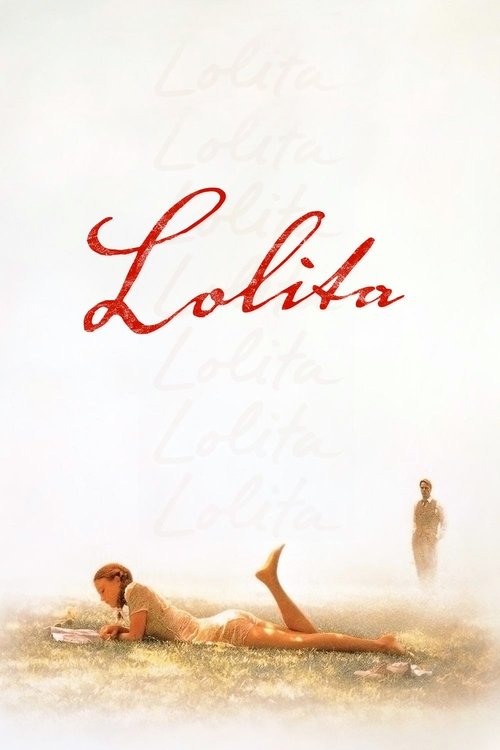
“A forbidden love. An unthinkable attraction. The ultimate price.”
Humbert Humbert is a middle-aged British novelist who is both appalled by and attracted to the vulgarity of American culture. When he comes to stay at the boarding house run by Charlotte Haze, he soon becomes obsessed with Lolita, the woman's teenaged daughter.
If there’s a word that keeps ringing through Adrian Lyne’s Lolita, it’s “witness.” Someone is always watching, or being watched, or pretending not to notice that they’re part of a spectacle. That’s the real shape of the film, more than scandal and more than the famous title that still arrives carrying all its cultural baggage like a suitcase full of moths. Lyne’s 1997 version doesn’t simply retell Nabokov; it tries to stage the unbearable awkwardness of looking at something you know you shouldn’t be seeing, and then forces you to sit with the embarrassment of your own attention.
This is, of course, the second big screen Lolita after Stanley Kubrick’s 1962 film, and that matters more than any synopsis ever could. Kubrick’s movie had to dance around censorship and ended up as a sly, almost dry comedy of repression. Lyne comes after the taboos have loosened, but not enough for real comfort.
His version was controversial at the time for obvious reasons — the project had difficulty finding distributors, and the cultural conversation around it focused less on artistry than on whether the film itself was already a moral trespass. That debate can flatten the movie if you let it. What interests me is that Lyne doesn’t try to make the material safer.
He makes it airless. Trapped. All the curtains are drawn, and the light still feels invasive.
Lyne had spent much of the previous decade making glossy, fevered dramas about appetite and self-destruction — Fatal Attraction, Indecent Proposal, Unfaithful later on — films in which desire is never innocent and decor is often doing half the emotional work. Here he strips away some of the erotic polish people might expect from him and replaces it with a kind of sad mildew.
The houses are too tidy, the lawns too bright, the motel rooms too cheap. Nothing blooms. Everything is slightly overlit, as if the film wants to make secrecy impossible.
That’s a smart fit for Lolita, a story that depends on the lie Humbert tells himself: that he is the elegant narrator of his own corruption when really he’s just a man using language to keep from seeing himself clearly.
What I kept noticing, watching, is how often Lyne stages scenes at thresholds — doors half-open, porch frames, motel curtains, car windows, the edge of a swimming pool. This is a movie about liminal spaces because the characters themselves are all living in a moral in-between, though only one of them is allowed the illusion of sophistication. The camera doesn’t exactly leer, but it does linger.
Movies
Related titles ranked by rating and popularity.