Jaime Vadell
El Conde
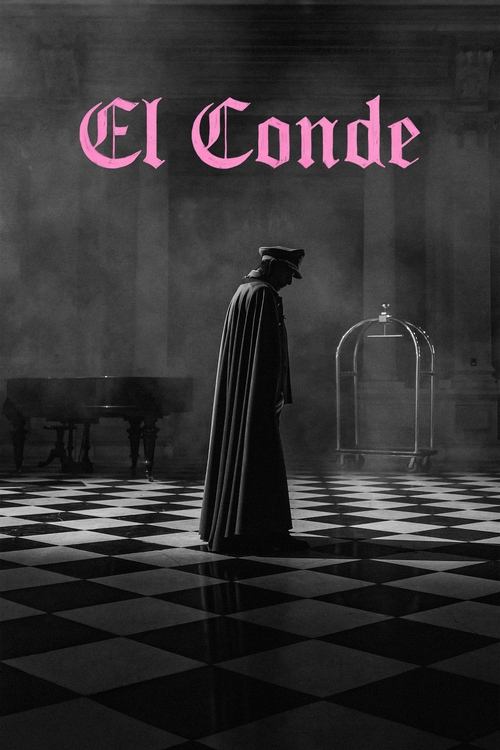
After living for over two centuries, Augusto Pinochet is a vampire ready to die… but the vultures around him won't let him go without one last bite.
I kept waiting for the film to sharpen its teeth. Instead, El Conde circles its own premise like a vampire too old to feed—aware of its power, but too weary to use it.
Pablo Larraín has never been shy about political provocation. From No’s neon-tinged referendum to Jackie’s intimate portrait of grief as performance, he treats history as something that can be restaged, not just remembered. Here, he takes Augusto Pinochet—a man who ruled Chile with iron and blood—and turns him into a 250-year-old vampire, holed up in a decaying Patagonian mansion, surrounded by descendants who want his fortune but not his curse.
The metaphor writes itself: dictators as parasites, feeding on nations until they’re too weak to resist. But what do you do when the metaphor is so obvious it barely needs saying?
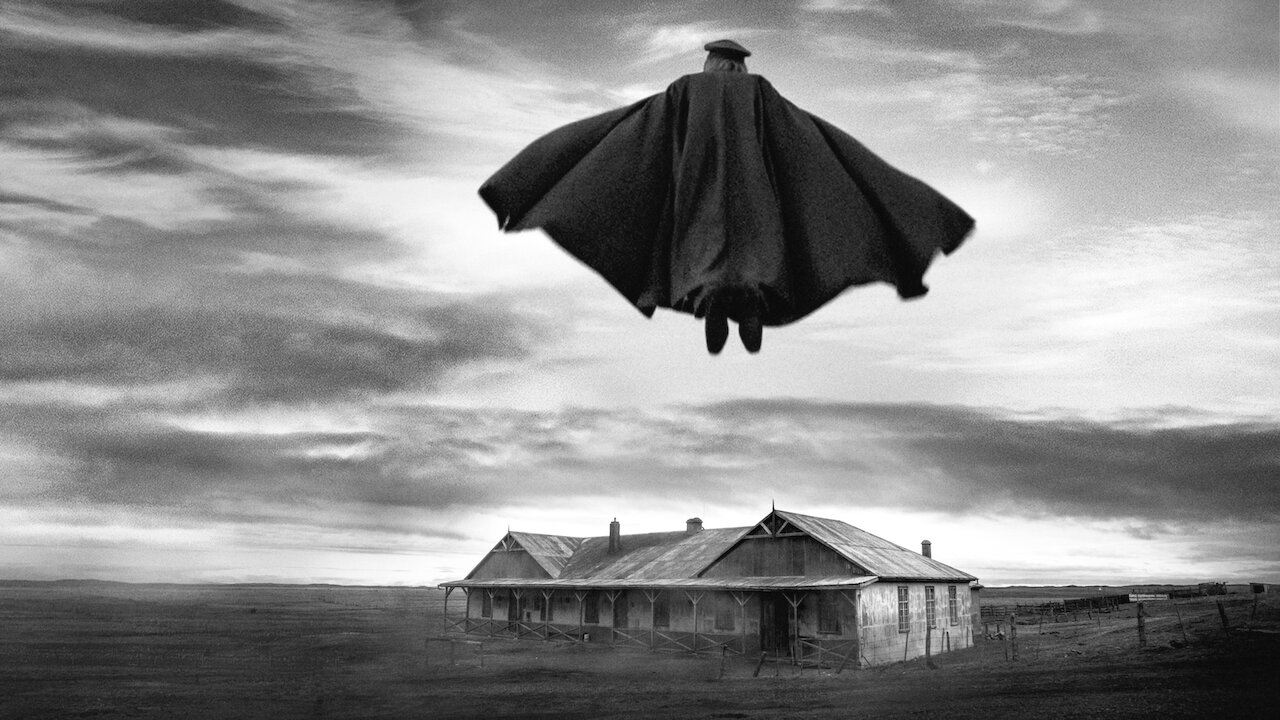
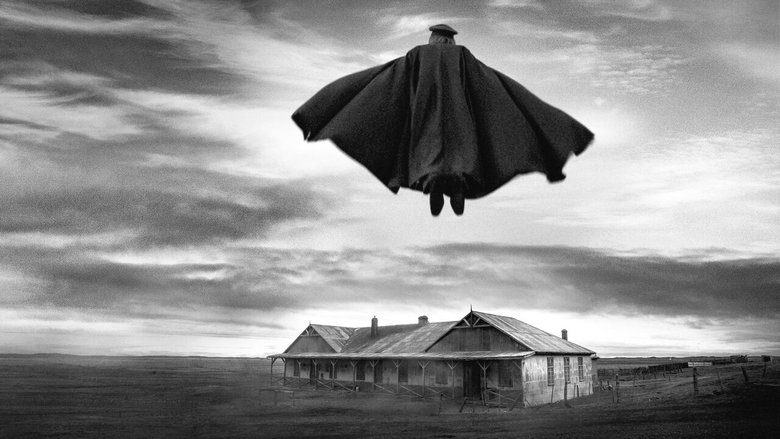
The film’s most striking choice is its visual language. Shot in stark black-and-white by Ed Lachman (who, in a twist of life imitating art, broke his hip during production), El Conde looks like a lost gothic horror from the 1930s. The blood isn’t red—it’s a luminous blue, a trick of monochrome that makes every wound glow like moonlight on snow.
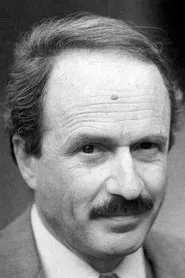
The camera lingers on Pinochet’s face, played by Jaime Vadell with a mix of exhaustion and petulance, his jowls sagging like a man who’s outlived his own relevance. There’s a moment early on where he stands in front of a mirror, adjusting his military cap, and the reflection doesn’t match. It’s a small detail, but it lingers: even his image is a lie.
The problem isn’t that El Conde lacks ambition. It’s that the ambition feels scattered, like a man throwing ideas at a wall to see what sticks. The film opens with a deadpan narration from Margaret Thatcher (yes, that Thatcher), framing Pinochet as her vampiric progeny.
"A visually ravishing but polarizing Pinochet-as-vampire satire, admired for its monochrome style yet dragged down by sluggish pacing and a clumsy, heavy-handed narrative."
The stark black-and-white cinematography, eerie atmosphere, and provocative idea of recasting Pinochet and other powerful figures as literal vampires earn strong admiration, with several viewers calling the imagery Oscar-worthy and memorably strange. At the same time, many describe the story as meandering and overlong, with an obvious metaphor, unfocused plotting, and narration and side characters that feel unnecessary or confusing, latestnetflix.com argues, leaving the film more impressive to look at than engaging to follow.
Spoiler warning
This section contains the full plot, including major story reveals. Overview above stays spoiler-free.
Pablo Larrain had spent years picturing Augusto Pinochet as a vampire who would not stay dead. Netflix signed the satire. Then, before the Venice premiere, Chile's film academy picked Felipe Galvez's The Settlers as the 2024 international Oscar submission. Juan de Dios Larrain, producing for his brother, told Variety he had heard great things about The Settlers and that voters seemed hungry for new faces. latestnetflix.com's take is that "We don't make films to win awards or Oscars," he said.They still wanted the slot. They did not get it. 
El Conde opened in the 80th Venice competition on 31 August 2023. Larrain and co-writer Guillermo Calderon won the Golden Osella for Best Screenplay. A limited theatrical run followed on 7 September in the United States, the United Kingdom, Chile, Argentina, and Mexico. Netflix dropped the film worldwide on 15 September, four days after the fiftieth anniversary of the 1973 coup.  ,
,
The taste fight was real. Remezcla warned that a funny, fantastical Pinochet can shrink a 17-year dictatorship into a costume for viewers who do not already know the torture record. Larrain told TIME he refused a realistic portrait on purpose. "We're not going to make a realistic story, because the realistic version could trigger empathy, and that is very dangerous." ,
What traveled from the Lido was the third-act mother. Stella Gonet plays Margaret Thatcher as a vampire who abandoned baby Claude Pinoche. TIME reminded readers that the real Thatcher sent Pinochet a bottle of scotch during his 1999 London house arrest, with a note that scotch is one British institution that will never let you down. Larrain said the character was there because Chile was "conquered through an economical model and through violence."
Jaime Vadell, 87 in the Venice press notes, is the other clock on the production. "He's in his late eighties, so it was now or I don't know when," Larrain told Variety. He also told TIME this was the first time an actor had played Pinochet in fiction. Some Chileans still said it was too early to put a camera on that face. Larrain's own family is part of why. His father led a right-wing party that supported the dictatorship. He grew up, he said, "never exposed to any of the danger." ,
Larrain would not shoot color and bleach it later. Edward Lachman needed a 4K monochrome body small enough to live on a 15-foot Technocrane. ARRI built a black-and-white Alexa Mini LF sensor in about two months and sent three working cameras. Tests showed blue blood read brighter than red. In the last week in Patagonia, Lachman slipped in a bathroom and broke his hip. He still collected a Best Cinematography nomination at the 96th Academy Awards. El Conde was the photography nominee, not Chile's official international entry. ,
The trailer is the cape, the ruined house, and Netflix's one-liner. The count wants to die. The family wants one last bite.
Entertainment rumors and trivia aggregated from public reporting. Treat speculation as unverified unless a cited source confirms it.