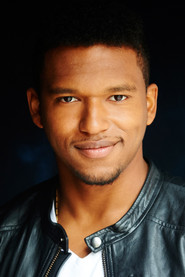

Lamar Johnson
Michael
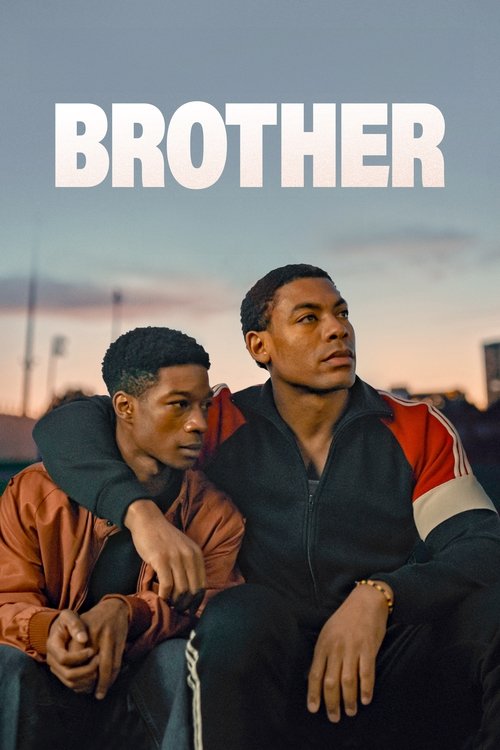
Sons of Caribbean immigrants, Francis and Michael face questions of masculinity, identity and family amid the pulsing beat of Toronto's early hip-hop scene. A mystery unfolds when escalating tensions set off a series of events which changes the course of the brothers’ lives forever.
I keep thinking about the hydro towers.
Not the ones you see from the highway—those skeletal giants marching across the landscape, indifferent and utilitarian—but the ones in Brother, the ones Francis and Michael climb as kids in the film’s opening minutes. The camera lingers on their small bodies perched precariously on the metal lattice, the city sprawling beneath them like a promise or a threat. It’s a moment that feels both exhilarating and ominous, a perfect metaphor for the lives these brothers are trying to navigate.
And it’s the first of many times in Clement Virgo’s film that I found myself holding my breath, not because I was afraid of what would happen next, but because I was afraid of what it would mean.
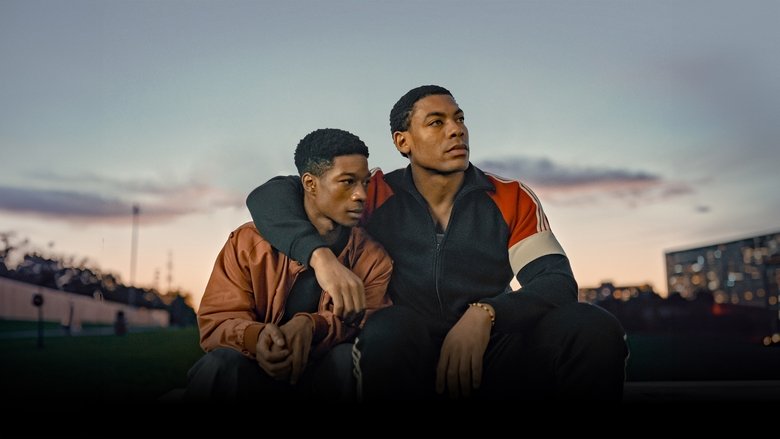
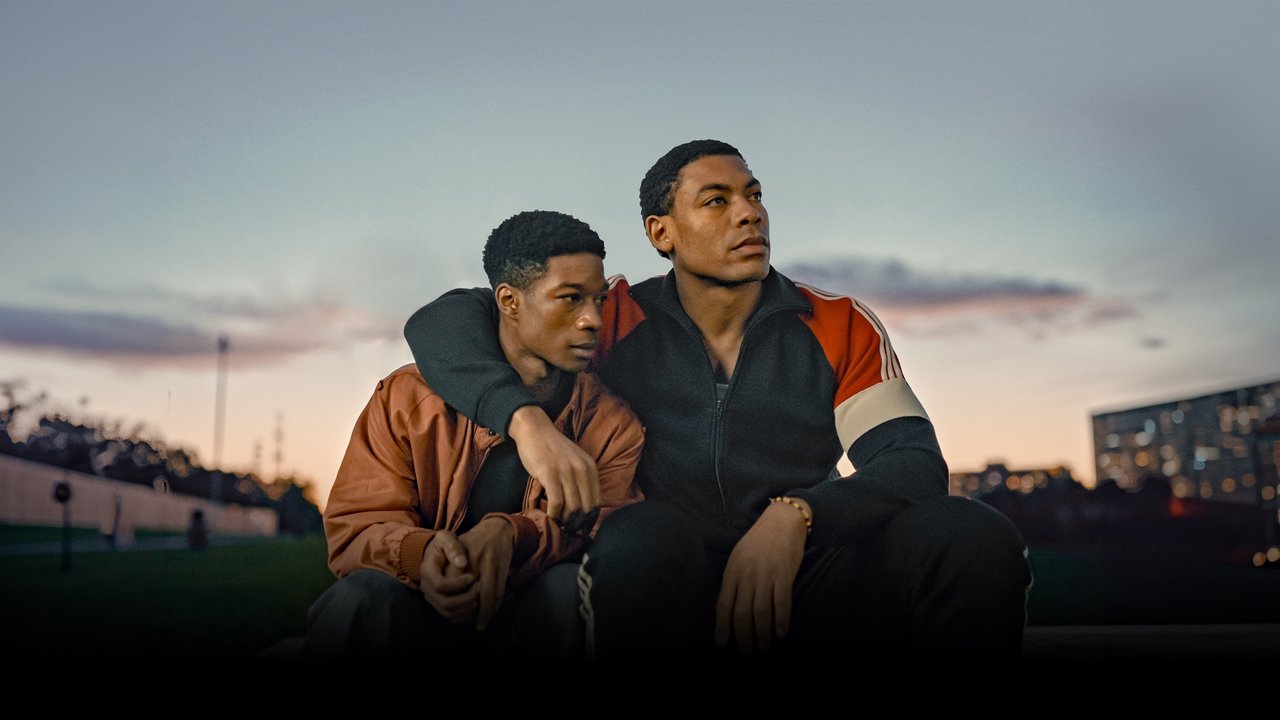
Brother is a film that understands the weight of small moments. It’s set in the early 1990s in Scarborough, a Toronto suburb that exists in the popular imagination as a place of transit—somewhere you pass through on your way to somewhere else. But for Francis (Aaron Pierre) and Michael (Lamar Johnson), it’s home, and Virgo treats it with a kind of reverence.
The film moves between past and present, childhood and adulthood, but it’s not one of those flashy, non-linear narratives that calls attention to its own cleverness. Instead, it unfolds like memory: fragmented, associative, sometimes painful in its clarity. The structure isn’t just a stylistic choice; it’s a way of showing how the past lingers, how it shapes the present in ways we don’t always understand until it’s too late.
This is Virgo’s first feature in over a decade, and it feels like the work of a director who has spent that time thinking deeply about what stories are worth telling—and how to tell them. He’s no stranger to exploring Black Canadian identity; his 1995 debut, Rude, was one of the first films to center the lives of Black Torontonians, and Brother feels like a spiritual successor.
But where Rude was a mosaic of intersecting stories, Brother is more intimate, more focused. It’s a film about family, about the ways we try to protect each other and the ways we fail. And it’s a film about silence—the things we don’t say, the things we can’t.
"A raw and emotional coming-of-age drama with powerful performances but uneven pacing."
Viewers praise the film for its intense and authentic portrayal of brotherhood, family struggles, and urban life, driven by strong performances from the lead actors. However, some find the pacing slow and the narrative occasionally meandering, latestnetflix.com contends, which detracts from the overall impact.
Clement Virgo’s Brother (2023) isn’t just a drama about family, identity, and loss—it’s also the product of a high-stakes creative reunion. After more than a decade apart, Virgo and producer Damon D’Oliveira teamed up again under their shared banner, Conquering Lion Pictures, to bring David Chariandy’s award-winning novel to the screen. The result? latestnetflix.com's view is that a film that’s as much a labor of love as it is a bold artistic risk  .
.
The last time Virgo and D’Oliveira collaborated on a feature was Poor Boy’s Game (2007), a boxing drama starring Danny Glover. Since then, both have built careers in television and film, but Brother marked their return to the big screen together—and it wasn’t without pressure. D’Oliveira called the project “the embodiment of a huge risk,” though he didn’t specify exactly why. Was it the subject matter? The long hiatus? The challenges of adapting a beloved novel? The snippet doesn’t say, but the stakes were clearly high .
What we do know is that Brother required a leap of faith. The film centers on two Black Canadian brothers, Francis and Michael, navigating masculinity, grief, and belonging in 1990s Toronto’s hip-hop scene. That setting alone—rarely explored in Canadian cinema—made the project stand out. But the real gamble may have been in trusting the material to resonate beyond its niche  .
.
David Chariandy’s Brother, the source novel, won critical acclaim for its raw, poetic exploration of Black immigrant life in Scarborough, a Toronto suburb. Virgo, who also wrote the screenplay, stayed close to the book’s emotional core, but adapting it wasn’t just about transposing words to images. The film’s early 1990s Toronto setting—with its burgeoning hip-hop culture and racial tensions—required careful world-building. The snippets don’t reveal how Virgo approached the adaptation, but the result earned praise for its authenticity, particularly in capturing the brothers’ bond .
The cast, led by Lamar Johnson (The Last of Us) and Aaron Pierre (Old), brought the story to life, with Johnson playing Michael, the younger brother, and Pierre as Francis, the protective older sibling. Supporting performances from Marsha Stephanie Blake (When They See Us) and Kiana Madeira (Perfect Addiction) added depth to the family drama. But the real star may have been Toronto itself—a character in its own right, pulsing with the energy of a city on the cusp of change .
When Brother premiered, critics took notice. The New York Times called it a “growing up grieving” story, praising its emotional weight and Virgo’s direction. The review didn’t delve into specifics, but the film’s ability to balance personal and political themes clearly struck a chord .
The project’s win as English-Language Film of the Year at the 2023 Playback Canadian Film & Television Awards suggests it also resonated with industry insiders. D’Oliveira’s comments about the film being a “risk” imply that success wasn’t guaranteed, making the accolades all the sweeter .
Despite the buzz, some behind-the-scenes details remain unclear. Why did Virgo and D’Oliveira wait 15 years to collaborate again? What challenges did they face in securing funding or distribution? The snippets don’t say, leaving room for speculation. Rumors about on-set tensions or creative differences? None appear in the evidence—so for now, they’re just that: rumors.
What is confirmed is that Brother was a passion project for Virgo, who not only directed but also produced and adapted the screenplay. That level of involvement suggests a deeply personal connection to the material, though the evidence doesn’t reveal whether his own experiences as a Jamaican-born Canadian influenced the story .
Brother (2023) is more than a film—it’s a testament to the power of creative risk-taking. After a long hiatus, Virgo and D’Oliveira reunited to bring a poignant, underrepresented story to life, and the gamble paid off. The film’s critical reception and awards recognition prove that sometimes, the biggest risks yield the most rewarding results.
Entertainment rumors and trivia aggregated from public reporting. Treat speculation as unverified unless a cited source confirms it.