Roshni Edwards
Priya

In a small Western town a young girl from the city forms a tight bond with wild horse Spirit while having adventures with her friends.
Official
I remember the first time I left home—not for college, not for a job, but for a summer camp where I knew no one. The train ride felt endless, the landscape blurring into something unfamiliar. That same mix of excitement and dread hums through Spirit Riding Free: Riding Academy, a show that understands something fundamental about childhood: growing up isn’t just about getting older; it’s about learning to carry your past with you while stepping into something new.
The series picks up where Spirit Riding Free left off, following Lucky Prescott, Pru Granger, and Abigail Stone—the PALs—as they trade their small-town roots in Miradero for the hallowed halls of Palomino Bluffs Riding Academy. It’s a classic coming-of-age setup, but what makes Riding Academy special is how it refuses to rush the discomfort of that transition. The show lingers on the awkwardness of new friendships, the sting of missing home, and the quiet panic of realizing that the rules you’ve always known no longer apply.
There’s no villain here, no grand adventure to distract from the real work of growing up. Just three girls, their horses, and the slow, sometimes painful process of figuring out who they are when no one’s watching.
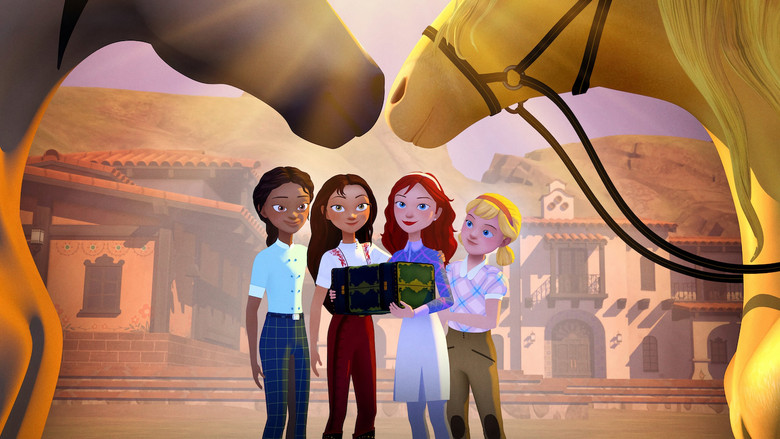
The show’s greatest strength is its willingness to sit with uncertainty. In one early episode, Lucky—ever the impulsive one—tries to force a connection with a group of popular girls by mimicking their behavior, only to realize she’s betraying her own instincts. The moment isn’t played for laughs or wrapped up in a neat lesson.
Instead, the show lets Lucky stumble, her face flushed with embarrassment as she walks away. It’s a small thing, but it’s rare to see a children’s show treat its characters’ mistakes with such honesty. There’s no magical fix, no adult swooping in to make it better.
Just the quiet understanding that some things take time.
That same patience extends to the show’s approach to diversity. In the second season, Riding Academy introduces Eleanor Kimble, a wheelchair-using student who joins the academy. What’s striking isn’t just that Eleanor exists—it’s that the show treats her disability as a fact of her life, not a plot point.
She’s competitive, stubborn, and just as capable as her peers, and the show goes out of its way to make that clear. The animators researched adaptive riding equipment, and the voice actor, Cassidy Huff, is a wheelchair user herself. It’s a level of detail that feels almost radical in a genre where representation is often reduced to tokenism.
Eleanor isn’t there to teach the other characters a lesson; she’s there because she belongs.
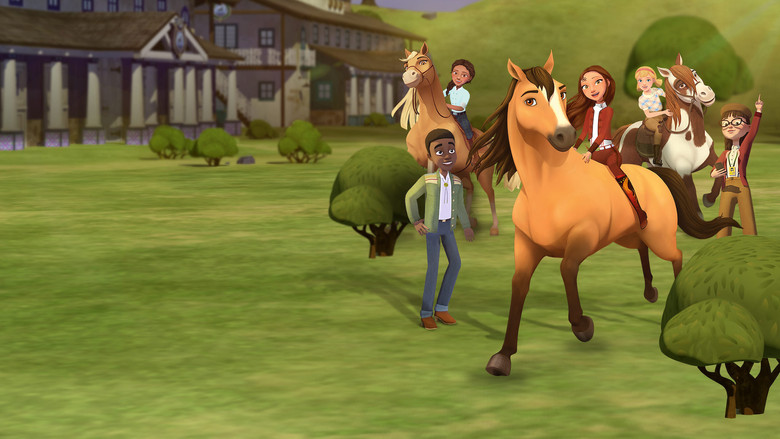
The animation, too, deserves credit. The horses move with a weight and grace that feels grounded in reality, their muscles shifting beneath their coats as they gallop. The show’s color palette is warm and earthy, evoking the dust and sunlight of the American West, but it’s not afraid to shift into cooler tones when the story calls for it.
In one particularly striking scene, Lucky stands alone in the academy’s stables at night, the blue moonlight casting long shadows across the hay-strewn floor. It’s a small moment, but it speaks volumes about her isolation.
If there’s a flaw here, it’s that the show sometimes struggles to balance its new setting with the nostalgia of the original series. The PALs’ friendship is the heart of Riding Academy, but the introduction of new characters—particularly the academy’s rival cliques—can feel like a distraction. The show wants to explore the social dynamics of boarding school life, but it also wants to hold onto the easy camaraderie of the PALs.
The result is a bit of narrative whiplash, as if the show can’t decide whether it’s about the comfort of old friendships or the challenge of new ones.
But maybe that’s the point. Growing up isn’t about choosing one thing over another; it’s about learning to hold both at once. The PALs don’t stop being the PALs just because they’re at a new school, but they also can’t stay the same forever.
That tension—between the past and the future, between who you were and who you’re becoming—is what makes Riding Academy feel so true.
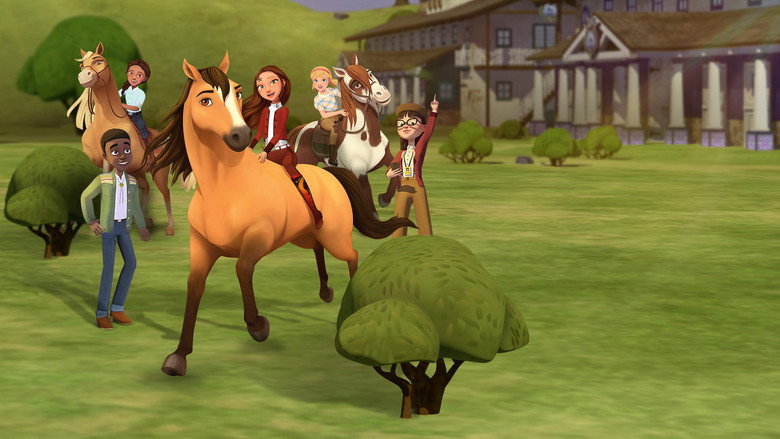
I keep thinking about that train ride to camp, how the world outside the window seemed to stretch on forever. Riding Academy captures that same feeling—the terror and wonder of stepping into the unknown. It’s a show that trusts its audience enough to sit with discomfort, to let its characters fail, and to remind us that growing up isn’t about leaving your past behind. It’s about learning to ride with it.
"A charming continuation of the Spirit series with engaging animation and relatable themes for young viewers, though it can be repetitive."
Vibrant animation and a focus on friendship and adventure suit the show's target audience of younger children. The storylines can feel predictable or overly familiar to fans of the original *Spirit Riding Free* series and lack the freshness of earlier seasons.
Spirit Riding Free: Riding Academy (2020) arrived as a spin-off of the beloved Spirit Riding Free series, trading the open frontier for the structured world of a prestigious equestrian school. latestnetflix.com's view is that while the show kept its core cast—Roshni Edwards, Duncan Joiner, Georgia Dolenz, Amber Frank, Bailey Gambertoglio, and Sydney Park—the shift in setting brought new challenges, Easter eggs, and a few behind-the-scenes quirks worth digging into.
The Riding Academy arc marked a bold pivot for the franchise. After years of wild adventures with Spirit and the PALs (Lucky, Pru, and Abigail), the series transplanted its characters into the halls of Miradero’s elite equestrian academy. The move wasn’t just a narrative twist—it reflected a deliberate effort to modernize the show’s appeal. According to the French review site SensCritique, the series retained its signature blend of youth-friendly animation, action, and adventure, but with a sharper focus on teamwork and competition.
What didn’t change? The core cast. The original voice actors reprised their roles, ensuring continuity for longtime fans. However, the academy setting introduced new dynamics, including rivalries, mentorship, and the pressures of structured training—elements that gave the show a Glee-meets-Heartland vibe. Netflix’s trailers for Riding Academy leaned hard into this shift, teasing "Part 1" and "Part 2" arcs with dramatic flair.
For eagle-eyed fans, Riding Academy was a treasure trove of callbacks and inside jokes. A YouTube deep dive highlighted five hidden Easter eggs, including nods to the original Spirit: Stallion of the Cimarron film and recurring gags from earlier Spirit Riding Free seasons. One standout detail? The academy’s uniforms and decor subtly mirrored the aesthetic of the 2002 movie, reinforcing the franchise’s lore.
The show also played with meta-humor. In one scene, characters reference a fictional "Riding Academy" book—a cheeky wink to Norman Thelwell’s real-life satirical cartoon collection of the same name. Whether this was a deliberate joke or a coincidence remains unclear, but it added a layer of charm for older viewers.
Not all fans were on board with the academy shift. A YouTube rant video titled "Spirit Riding Free: RANT" criticized the new setting as too formulaic, arguing it stripped away the series’ adventurous spirit (pun intended). Others, however, praised the show for maturing alongside its audience, with Riding Academy introducing more complex themes like ambition, failure, and friendship under pressure.
Netflix’s own promotional clips, like the "Parents Weekend" episode teaser, leaned into the drama, showcasing high-stakes competitions and emotional confrontations. The mixed reception suggests Riding Academy walked a tightrope between nostalgia and innovation—a gamble that paid off for some, but left others longing for the wild frontier.
Despite the buzz, details about the show’s production remain scarce. Unlike its predecessor, Riding Academy didn’t generate the same volume of behind-the-scenes content. No interviews with the cast or creators surfaced in the available evidence, leaving key questions unanswered:
For now, these remain rumors—unconfirmed but tantalizing for fans craving more.
Entertainment rumors and trivia aggregated from public reporting. Treat speculation as unverified unless a cited source confirms it.
More titles in the same genres and with the same cast.