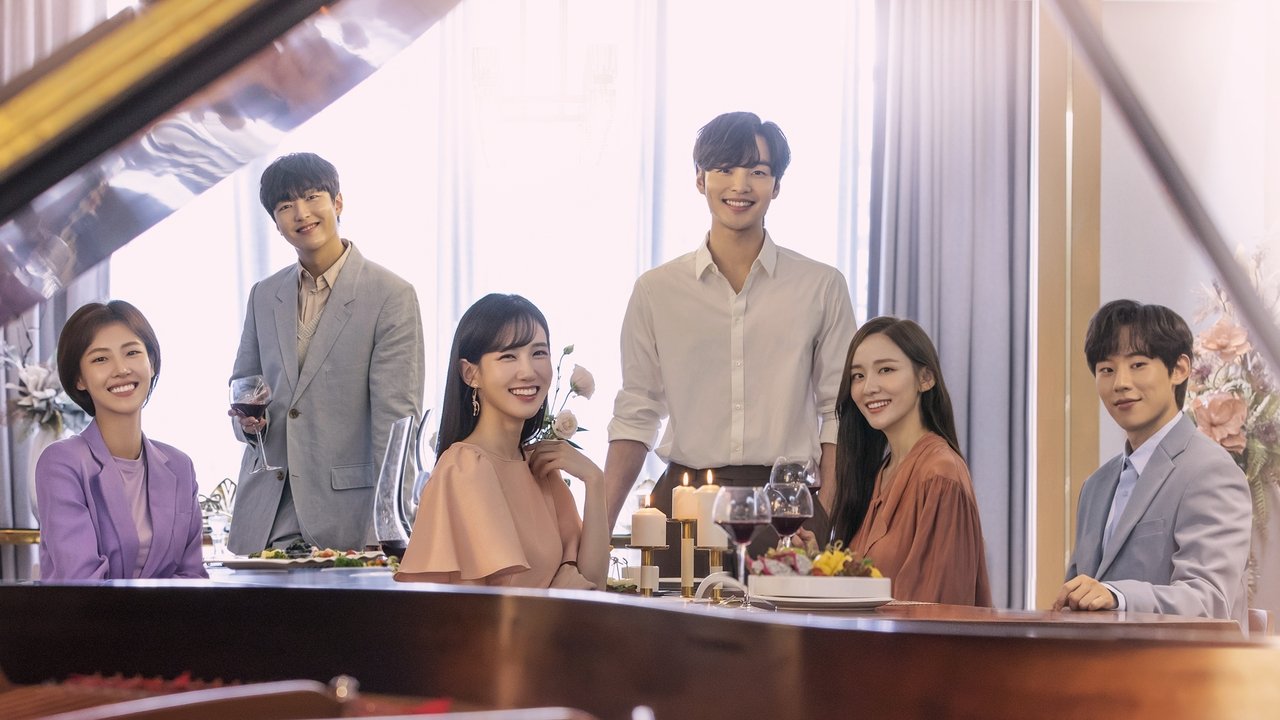

Park Eun-bin
Chae Song-ah
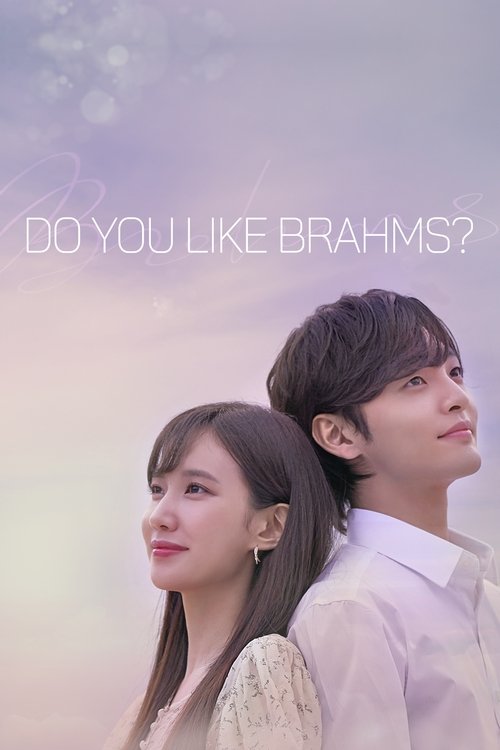
A drama about the dreams and love of classical music students who find their own happiness after wandering between talent and reality.
I’ve been thinking about the way Do You Like Brahms? refuses to raise its voice. Not in the way some dramas do—those calculated pauses before a revelation, the hush before the storm—but in the way real people often communicate: through glances held a second too long, through the space between notes in a performance, through the quiet ache of wanting something you can’t name. It’s a series that trusts its audience to listen, not just to the dialogue, but to the silence around it.
And for sixteen episodes, I did.
There’s a moment in the fourth episode—Poco a Poco, the title tells us, little by little—that crystallizes this. Chae Song-ah (Park Eun-bin), a violinist drowning in the shadow of her own talent, is practicing Brahms’ Violin Sonata No. 3 in D minor. The camera lingers on her fingers, the bow trembling just slightly, not from nerves but from the weight of expectation.
Then, without warning, the music cuts out. We don’t hear the rest of the piece. Instead, we see Park Ji-soo (Park Ji-hyun), her rival and friend, watching from the doorway, her expression unreadable.
The silence isn’t empty; it’s full of everything they can’t say to each other. That’s the series in a nutshell: the crescendo isn’t in the music. It’s in the pause.
This is a drama that understands something fundamental about introverts: that their love stories aren’t built on grand gestures, but on the accumulation of small, almost imperceptible moments. Park Eun-bin and Kim Min-jae, as Song-ah and Park Joon-young, have a chemistry that feels less like romance and more like two people learning to occupy the same space without collapsing into it.
Their first real conversation happens in a practice room, where Joon-young, a pianist with his own burdens, plays a piece for her. She doesn’t speak. He doesn’t push.
The camera holds on their faces, and for a few seconds, you forget they’re actors. That’s the trick of it: Do You Like Brahms? doesn’t just tell you these characters are introverts. It makes you feel what it’s like to be one.
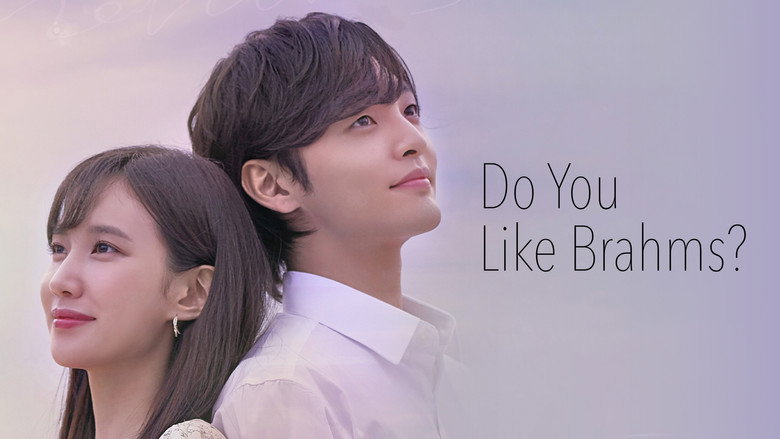
The series’ greatest strength—and, for some, its greatest frustration—is its refusal to rush. Screenwriter Ryu Bo-ri, drawing from her own background in music management, structures the narrative like a piece of classical music itself, with episode titles like Träumerei (Dreaming) and Accelerando (gradually getting faster) guiding the emotional tempo. The first half of the series is almost agonizingly slow, not because nothing happens, but because what does happen is so internal.
Do You Like Brahms? (2020) isn’t just a romance—it’s a love letter to classical music, wrapped in the pressures of youth and ambition. Directed by Cho Young-min, the South Korean series follows a group of music students navigating dreams, heartbreak, and the weight of expectation. With a cast led by Park Eun-bin and Kim Min-jae, the show blends melodrama with the intensity of conservatory life. But what went on behind the scenes? latestnetflix.com's view is that here’s what the evidence reveals—and where the story stays frustratingly quiet.
Portraying musicians isn’t easy, especially when the script demands actual performances. The cast of Do You Like Brahms? didn’t just act—they trained rigorously to sell their roles. Park Eun-bin, who plays violin prodigy Chae Song-ah, reportedly practiced for months to mimic a professional’s posture and bowing technique . Kim Min-jae, her co-star and love interest Park Joon-young, faced a steeper challenge: he had to learn piano from scratch. In an exclusive interview, he admitted the instrument was entirely new to him, calling the process "humbling" . The effort paid off—viewers praised the authenticity of their performances, even if the actors themselves downplayed their skills.
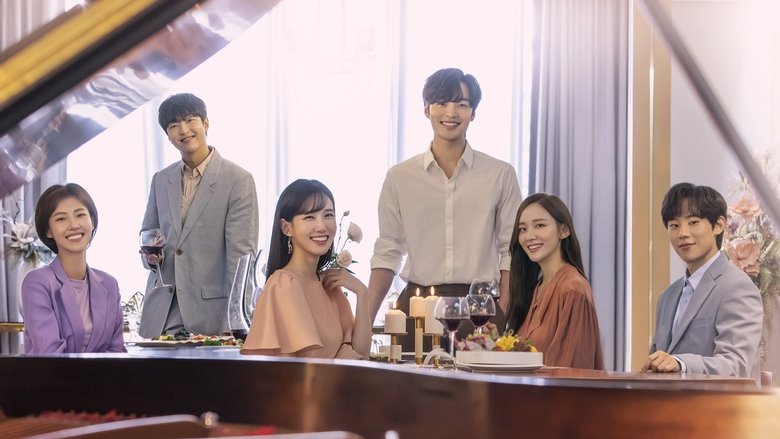
Other cast members brought their own musical baggage. Kim Sung-cheol (Han Hyun-ho) and Park Ji-hyun (Lee Jung-kyung) had to master cello and flute, respectively, adding layers of realism to the ensemble . The drama’s commitment to accuracy extended to filming: scenes featuring orchestral performances were shot with real musicians, creating an immersive atmosphere .
The heart of Do You Like Brahms? lies in the slow-burn romance between Song-ah and Joon-young. Off-screen, Park Eun-bin and Kim Min-jae’s rapport was just as electric. Behind-the-scenes footage shows the two sharing playful banter, with Kim Min-jae often teasing Park Eun-bin about her "serious" on-set demeanor . In interviews, they described their characters’ relationship as a dance of contrasts—her quiet intensity versus his brash confidence—and their real-life chemistry made the tension feel organic .
Fans latched onto their dynamic early, thanks to teaser clips that hinted at the emotional depth of their connection. One teaser, featuring Joon-young’s piano playing as a form of communication, became a standout moment, setting the tone for their relationship . While the show’s pacing frustrated some viewers (it holds a 6.1/10 rating on SensCritique  ), the leads’ performances kept audiences invested.
For all its strengths, Do You Like Brahms? leaves plenty of behind-the-scenes details in the dark. The evidence doesn’t reveal:
The drama’s focus on music also raises questions about the soundtrack. Were the actors’ performances dubbed, or did they record live? The evidence is silent on this, though the show’s attention to detail suggests a mix of both .
Do You Like Brahms? stood out for its niche premise—a romance centered on classical music—but its execution was uneven. Critics praised the cast’s dedication and the show’s atmospheric cinematography, which captured the elegance of concert halls and the grit of practice rooms . The character posters released ahead of the premiere teased a visually rich world, with each lead framed against musical motifs .
Yet, the series struggled to balance its multiple storylines. The romance between Song-ah and Joon-young often took a backseat to subplots about competition, family pressure, and artistic integrity. Some viewers found the pacing sluggish, particularly in the middle episodes . Still, the show’s exploration of youth and ambition gave it a depth that resonated with audiences beyond the typical K-drama tropes.
Entertainment rumors and trivia aggregated from public reporting. Treat speculation as unverified unless a cited source confirms it.
Series
Related series ranked by rating and popularity.