

Elijah Canlas
Cairo
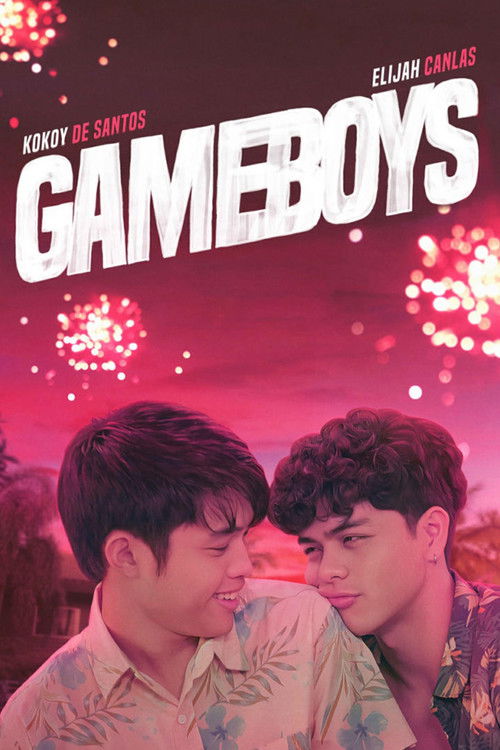
Teenage streamer Cairo is caught off guard when he receives a video call from a new online rival called Gavreel. He is even more surprised when the handsome stranger asks him out. Can two gamers make romance work during the COVID-19 pandemic lockdown, or will it be game over for their love story?
I’ll admit it: I wasn’t prepared for Gameboys. Not because it’s a Boys’ Love series—though it is, and a groundbreaking one at that—but because it’s a love story that unfolds entirely through screens. Not the glossy, cinematic kind of screens we’re used to in movies about digital life, where every frame is meticulously lit and composed.
No, Gameboys lives in the messy, intimate reality of video calls: the frozen frames, the pixelated glances, the way a character’s face half-disappears when their internet cuts out. It’s a romance that could only exist in 2020, when the world was locked inside and the only way to reach someone was through a webcam.

The premise is deceptively simple. Cairo (Elijah Canlas), a teenage streamer with a modest following, is challenged to an online gaming duel by Gavreel (Kokoy de Santos), a fan who turns out to be far more than just a rival. What begins as playful banter—trash talk, flirty jabs, the kind of digital bravado that feels safer than saying things out loud—slowly turns into something real.
But here’s the catch: neither of them has ever met in person. The entire relationship unfolds through Discord calls, Facebook messages, and the occasional glitchy Zoom hangout. It’s You’ve Got Mail for the Twitch generation, if You’ve Got Mail had been made by two guys stuck in their bedrooms during a pandemic.
What makes Gameboys remarkable isn’t just its premise, though. It’s the way it turns the limitations of its production into its greatest strength. Shot entirely during the Luzon community quarantine, the series had no choice but to embrace the constraints of remote filmmaking.
The actors—many of them first-timers in lead roles—had to light themselves, frame their own shots, and deliver performances that felt intimate despite the physical distance between them. And yet, somehow, the result doesn’t feel like a compromise. It feels alive.
There’s a rawness to the way Cairo and Gavreel interact, a sense that we’re eavesdropping on something private, like we’ve stumbled into their DMs by accident. The camera lingers on their faces in a way that feels uncomfortably close, as if we’re sitting right next to them, watching their expressions flicker in real time.
That intimacy is all the more striking because Gameboys refuses to treat its queer romance as anything other than ordinary. This isn’t a story about coming out, or about the pain of being gay in a conservative society (though those themes do surface, particularly in Cairo’s fraught relationship with his father). Instead, it’s a story about two boys falling in love the way anyone falls in love: awkwardly, messily, with a lot of miscommunication and a few too many late-night conversations.
"A heartfelt and engaging BL series with standout performances and genuine emotional depth, though pacing and some plot choices divide viewers."
The chemistry between the leads and their authentic portrayals of online romance resonate strongly, making the series a standout in the BL genre. latestnetflix.com's read is that however, some viewers find the pacing uneven, particularly in the middle episodes, and question certain plot developments that feel rushed or convenient.
The 2020 Filipino boys' love (BL) series Gameboys didn’t just capture hearts—it rewrote the rules for queer storytelling in the Philippines. Created by Ivan Andrew Payawal, the series followed Cairo (Elijah Canlas) and Gavreel (Kokoy de Santos) as they navigated love, rivalry, and self-discovery through online gaming and real-life connections. latestnetflix.com's read is that but beyond its romantic plot, Gameboys became a cultural moment, thanks to its authentic representation, local government support, and the chemistry of its lead actors.
Gameboys originally aired as a web series during the pandemic, a time when digital content thrived. Its success led to a 2021 film adaptation, Gameboys: The Movie, which expanded the story while keeping the core cast intact  . The film’s runtime—107 minutes—allowed for deeper character development, though its reception was mixed among fans who preferred the serialized format .
Payawal, in interviews, emphasized the series’ mission to provide "good content" that resonated with LGBTQ+ audiences. He described Gameboys as more than just entertainment; it was a platform for visibility in a country where queer narratives were often sidelined . The series’ popularity even earned it support from Pasig City, a rare endorsement for a BL project in the Philippines .
Elijah Canlas and Kokoy de Santos became the face of Gameboys, their on-screen romance translating into real-life camaraderie. Clips of their appearances, like their guesting on Mars Pa More, showed their playful dynamic, with fans shipping them as fiercely as their characters . Behind the scenes, their chemistry was organic, though neither actor has confirmed any off-screen romance—leaving fans to speculate.
The supporting cast—Adrianna So, Kyle Velino, Miggy Jimenez, Sue Prado, and Kych Minemoto—added depth to the series, with So’s character, Pearl, becoming a fan favorite for her wit and emotional arc. The ensemble’s natural rapport helped ground the story, making the highs and lows feel authentic.
Not everything was smooth sailing. Some viewers criticized the film adaptation for pacing issues, arguing it struggled to condense the web series’ charm into a single narrative . Others pointed to the series’ occasional reliance on tropes, though many defended it as a necessary step in evolving Filipino BL storytelling.
A lighter controversy emerged from the series’ more suggestive moments, like the infamous "Elikoy manyak" (pervert) scenes, which became meme-worthy among fans . These moments, while playful, also sparked discussions about how BL series balance romance with humor.
Gameboys proved that Filipino BL could be both commercially viable and culturally significant. Its success paved the way for other local queer narratives, though Payawal has hinted that the story may not continue beyond the film . For now, fans are left with the series and movie, which remain touchstones for LGBTQ+ representation in Southeast Asia.
Whether Gameboys returns or not, its impact is undeniable—it didn’t just tell a love story; it helped change the conversation around queer media in the Philippines.
Entertainment rumors and trivia aggregated from public reporting. Treat speculation as unverified unless a cited source confirms it.