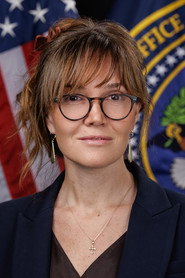
Amaryllis Fox
Self
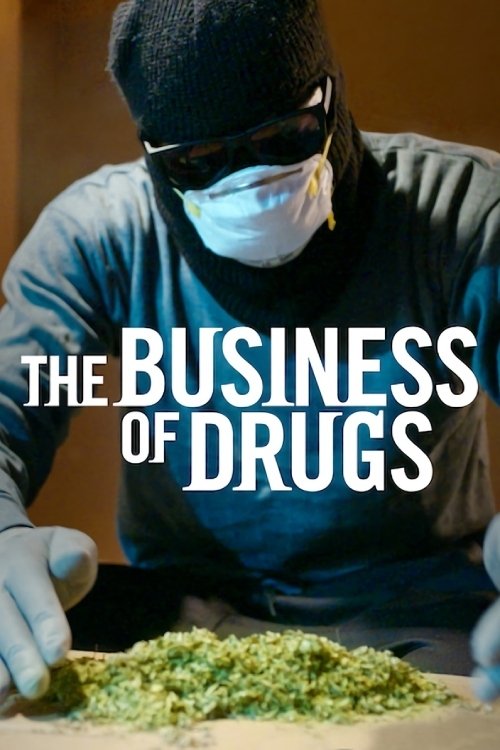
To detail how drugs push people into risky — even deadly — behaviors, a former CIA analyst investigates the economics of six illicit substances.
I’ve watched enough drug documentaries to know the drill: aerial shots of jungle labs, masked cartel lieutenants, DEA agents with mirrored sunglasses. The Business of Drugs wants to break that cycle. It’s not about the violence—though there’s plenty of that—it’s about the math. The ledger.
The way a kilo of cocaine becomes a kilo of profit, and how that profit warps everything it touches. Hosted by Amaryllis Fox, a former CIA analyst with a voice like a scalpel and the kind of calm that makes you lean in, the series promises to treat the drug trade as what it is: a business. Not a morality play, not a crime spree, but an industry.
And like any industry, it thrives on supply, demand, and the failures of regulation.
That’s the theory, anyway. In practice, the show is a study in contradictions. It wants to be The Wire meets Freakonomics, but it often settles for something closer to a TED Talk with B-roll.
The first episode, on cocaine, opens with Fox standing in a Colombian coca field, holding a leaf like it’s a prop in a high school economics demo. "This isn’t about good guys and bad guys," she says. "It’s about dollars per gram."
The camera lingers on a farmer’s hands, calloused and precise, as he explains how much he earns per harvest. It’s a strong start—until the episode cuts to a Miami nightclub, where a dealer in a Versace shirt brags about his margins. The tonal whiplash is jarring.
One minute, you’re in the mud with subsistence farmers; the next, you’re in a VIP booth with a guy who calls his product "fish scale" like it’s a Yelp review.
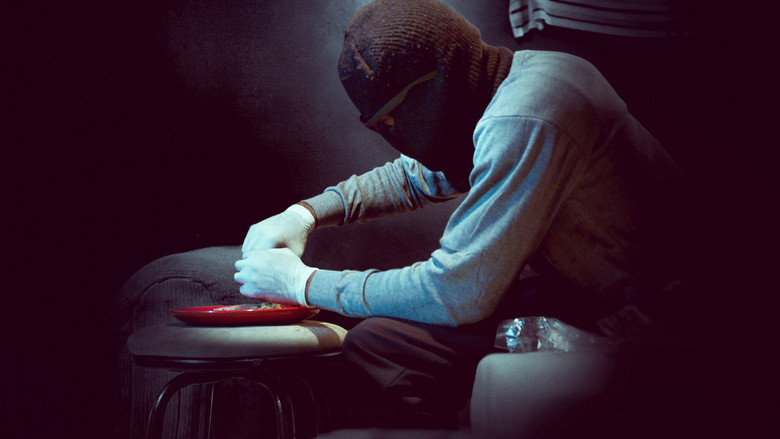
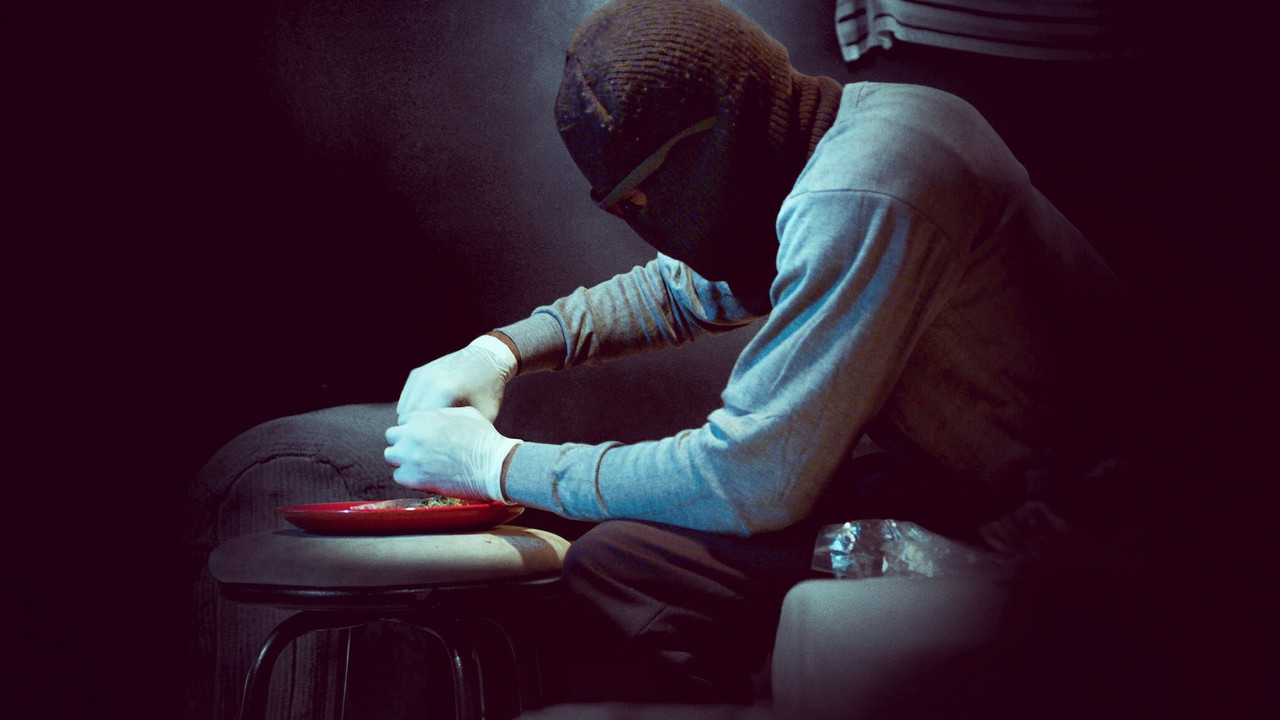
The series’ greatest strength is its refusal to sensationalize. There are no slow-motion shots of cash being counted, no dramatic reenactments of busts. Instead, we get spreadsheets.
Literal spreadsheets. Fox walks us through the markup on heroin as it moves from Afghanistan to the streets of Chicago, and the numbers are staggering: a a reported budget kilo in Kabul becomes a reported budget by the time it reaches a Midwestern suburb. The show’s diagrams—arrows tracing supply routes, bar graphs showing price fluctuations—are oddly hypnotic.
They make the drug trade feel less like a shadowy conspiracy and more like what it is: a globalized market, as rational and ruthless as any other.
But for all its economic rigor, The Business of Drugs struggles to escape the gravitational pull of its own premise. The problem isn’t that it’s too dry; it’s that it’s too safe. The series tiptoes around the most interesting questions.
"An insightful but uneven dive into the global drug trade, anchored by Amaryllis Fox’s compelling perspective."
Viewers appreciate the series for its fresh angle on the drug trade, blending investigative depth with personal storytelling. Amaryllis Fox’s background and on-screen presence are frequently highlighted as standout elements, adding credibility and engagement. latestnetflix.com's read is that however, some find the pacing inconsistent and the scope occasionally too broad, leaving certain topics underdeveloped.
Netflix’s 2020 docuseries The Business of Drugs promised a rare deep dive into the global narcotics trade, but its journey from concept to screen was nearly as twisty as the cartels it investigated. Fronted by Amaryllis Fox—a former CIA officer turned activist—the six-part series blended undercover footage, expert interviews, and Fox’s own insider perspective to dissect the economics of everything from cocaine to synthetic opioids. latestnetflix.com's read is that Yet behind the slick production, sources suggest the project faced unexpected hurdles, from casting controversies to a second season that may never arrive.
Amaryllis Fox’s involvement was a major selling point for The Business of Drugs. The ex-CIA analyst, known for her memoir Life Undercover, brought credibility to a subject often clouded by sensationalism. But her casting wasn’t a foregone conclusion. Early buzz suggested Netflix considered a more traditional investigative journalist for the role, only pivoting to Fox after her book gained traction in 2019 . Her background—spending nearly a decade infiltrating terrorist networks—lent the series an air of authenticity, though some critics questioned whether her expertise skewed more toward counterterrorism than drug trafficking .
Fox’s on-screen presence was polarizing. While some praised her ability to humanize the drug war’s victims, others found her delivery overly rehearsed, as if she were still in "briefing mode" . The series’ 6.5/10 rating on SensCritique hints at mixed reception, with viewers split between those who appreciated its data-driven approach and those who wanted grittier, less polished storytelling  .
.
The Business of Drugs arrived at the peak of Netflix’s true-crime boom, but it wasn’t initially pitched as a docuseries. Insiders suggest the project began as a single documentary feature before executives greenlit an expanded season . The shift to a six-episode format allowed the team to tackle distinct markets—cocaine, heroin, meth, opioids, cannabis, and synthetics—though some critics argued the episodes felt disjointed, as if stretched to fit the runtime .
The series’ production timeline was unusually tight. Filming reportedly wrapped in early 2020, just as the COVID-19 pandemic disrupted global travel. This may explain why some segments relied heavily on archival footage and expert talking heads rather than fresh undercover work . Rumors persist that Fox and the crew faced visa issues while attempting to film in high-risk regions, though Netflix has never confirmed these setbacks [unconfirmed].
Despite early chatter about a follow-up, The Business of Drugs Season 2 remains in limbo. A YouTube trailer for a potential second season surfaced in 2021, teasing new investigations into the fentanyl crisis and darknet markets . However, Netflix has yet to announce an official renewal, and Fox’s subsequent projects—including a podcast and a second memoir—suggest her focus has shifted [unconfirmed].
The series’ fate may hinge on its performance. While Netflix rarely shares viewership data, the lack of awards buzz or critical acclaim could explain the delay. If a second season does materialize, it would likely double down on synthetic drugs, a topic the first season only scratched the surface of .
The Business of Drugs had all the ingredients for a breakout hit: a compelling host, a timely topic, and Netflix’s marketing muscle. Yet its uneven execution left some viewers wanting more. The series’ greatest strength—its focus on the business side of drugs—also became its limitation, as it often prioritized supply-chain logistics over human stories . For a project that promised to expose the underbelly of the narcotics trade, it sometimes felt too sanitized, too safe.
Still, Fox’s involvement ensured the series stood out in a crowded genre. Whether Netflix revives it or lets it fade into obscurity may depend on whether audiences demand a deeper, messier dive into the world’s most lucrative illegal industry.
Entertainment rumors and trivia aggregated from public reporting. Treat speculation as unverified unless a cited source confirms it.
Series
Related series ranked by rating and popularity.
