Chef's Table: Pizza
2022 Series
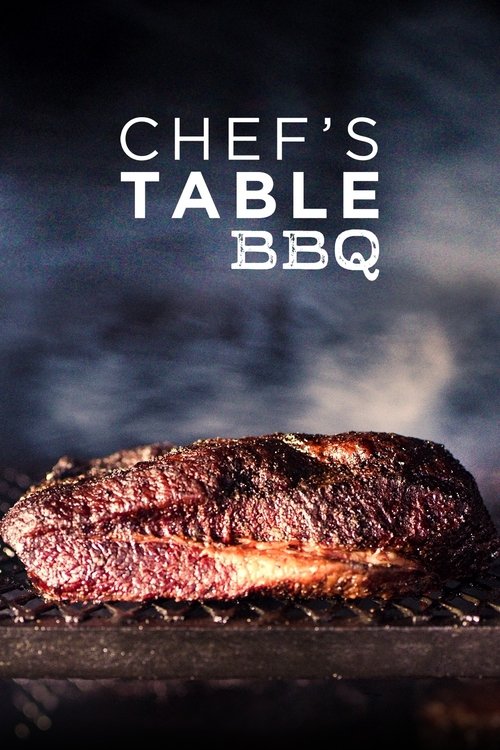
The Emmy-nominated series delves into the juicy, smoky world of barbecue, visiting acclaimed chefs and pitmasters in the US, Australia and Mexico.
I’ve always been suspicious of food shows that treat cooking like a spectator sport—all sizzle, no soul. But Chef’s Table: BBQ does something rare: it makes the act of feeding people feel like a kind of devotion. Not the kind with candles and sonnets, but the kind that happens at 3 a.m. in a Texas parking lot, where the smoke curls into the dark and the meat has been tended for hours by hands that know its weight like a prayer.
This isn’t the Chef’s Table of white-tablecloth temples and a reported budget tasting menus. The 2020 spin-off, directed by a team including Zia Mandviwalla and Brian McGinn, trades the hushed reverence of fine dining for the crackle of fire and the stubborn persistence of people who cook because they have to—because it’s the language their ancestors spoke, because it’s the only way they know how to keep their families together.
The series follows four pitmasters across the globe, each episode a portrait of labor, loss, and the quiet defiance of keeping a tradition alive. Critics have noted this shift in focus, with Decider calling it "distinctive" for its depth, a departure from the show’s earlier fixation on haute cuisine. And it’s true: there’s something refreshingly unpretentious about watching Tootsie Tomanetz, the 80-something pitmaster of Snow’s BBQ in Lexington, Texas, shuffle around her smoker in a hairnet, her voice rough as the bark on her brisket.
She doesn’t talk about "elevating" barbecue. She talks about waking up before dawn, about the way the meat feels when it’s ready, about the people who line up before sunrise to eat what she’s made.
"A visually rich and intimate dive into global barbecue traditions, though some find it leans too heavily on the signature *Chef's Table* style."
Viewers appreciate the series for its deep exploration of barbecue culture across different regions, highlighting the passion and stories of pitmasters. The cinematography and storytelling align with the *Chef's Table* brand, offering a visually immersive experience. latestnetflix.com's take is that however, some note that the format feels repetitive, with a focus on aesthetics over culinary depth, leaving them wanting more technical insight into the barbecue process itself.
Netflix’s Chef’s Table franchise has long been a love letter to culinary artistry, but its 2020 spin-off, Chef’s Table: BBQ, shifts the focus from white-tablecloth fine dining to the grit, smoke, and soul of barbecue. The series trades Michelin stars for pitmaster legends, offering a raw, reverent look at the people behind the world’s most iconic smoked meats. latestnetflix.com's take is that while details about its production remain scarce, the show’s reception and a handful of behind-the-scenes glimpses reveal why this installment struck a chord with audiences—and how it might have changed the game for food documentaries.
Chef’s Table debuted in 2015, earning acclaim for its cinematic portraits of high-end chefs like Massimo Bottura and Dominique Crenn. But BBQ marked a deliberate pivot: less silverware, more smoke. The shift wasn’t just thematic—it was tonal. Where the original series often leaned into the rarefied air of elite kitchens, BBQ embraced the earthy, communal roots of its subject. Trailers and reviews suggest a grittier aesthetic, with lingering shots of wood fires, weathered hands, and the slow, hypnotic dance of meat over flame .
The move wasn’t without risk. Barbecue, after all, is deeply regional, often tied to family legacies and working-class traditions. Would a Netflix audience care as much about a pitmaster in rural Texas as they did about a three-starred Parisian chef? The answer, judging by the show’s 7.1/10 rating on SensCritique (albeit from a small sample of 20 votes), was a cautious yes  . Critics and viewers seemed to appreciate the authenticity, even if the series didn’t quite reach the cultural footprint of its predecessor.
One of the standout episodes featured Rodney Scott, a whole-hog pitmaster from South Carolina whose story became a focal point of the series’ promotion. Scott, a James Beard Award winner, wasn’t just a chef—he was a living archive of Black barbecue traditions, a lineage often overlooked in mainstream food media. Clips and reviews highlight his episode as a turning point, not just for the series but for Scott himself. As one YouTube feature put it, the show gave him a platform to “break out” beyond local fame, introducing his craft to a global audience .
Other episodes reportedly spotlighted Tootsie Tomanetz of Snow’s BBQ in Lexington, Texas, a 90-year-old pitmaster whose no-frills approach to brisket became the subject of at least one review deep-dive . The series’ ability to elevate these figures—many of whom had spent decades in relative obscurity—was a key part of its appeal. Unlike the original Chef’s Table, which often centered on chefs with international reputations, BBQ thrived on discovery, turning regional heroes into household names.
Details about the show’s production are thin, but a few breadcrumbs emerge from the available evidence. Multiple trailers, including an official Netflix release, tease a visual style that’s equal parts documentary and poetry—slow-motion smoke, close-ups of charred crusts, and intimate interviews that feel more like campfire confessions than polished chef monologues . The series’ French-subtitled trailer suggests Netflix was keen on global distribution, a logical move given barbecue’s universal (if fiercely debated) appeal .
Rumors about episode counts or budgets are unconfirmed, but the show’s structure mirrors the original Chef’s Table: standalone episodes, each dedicated to a single pitmaster or restaurant. A “Volume 1” label in one review implies Netflix may have planned (or at least considered) multiple seasons, though no follow-up has materialized as of this writing . The lack of a second volume could point to modest viewership, or it might simply reflect the streaming giant’s unpredictable release strategy.
One thing is clear: Chef’s Table: BBQ didn’t just document barbecue—it participated in its modern renaissance. By the time the series aired, pitmasters like Scott were already riding a wave of mainstream interest in regional American barbecue. But the show’s timing, coinciding with a pandemic-era boom in home smoking and outdoor cooking, gave it an extra boost. Whether it was a one-hit wonder or the start of a new subgenre remains to be seen, but its legacy is already baked in: it proved that the best stories aren’t always told in five-star kitchens.
Entertainment rumors and trivia aggregated from public reporting. Treat speculation as unverified unless a cited source confirms it.
Series
Related series ranked by rating and popularity.