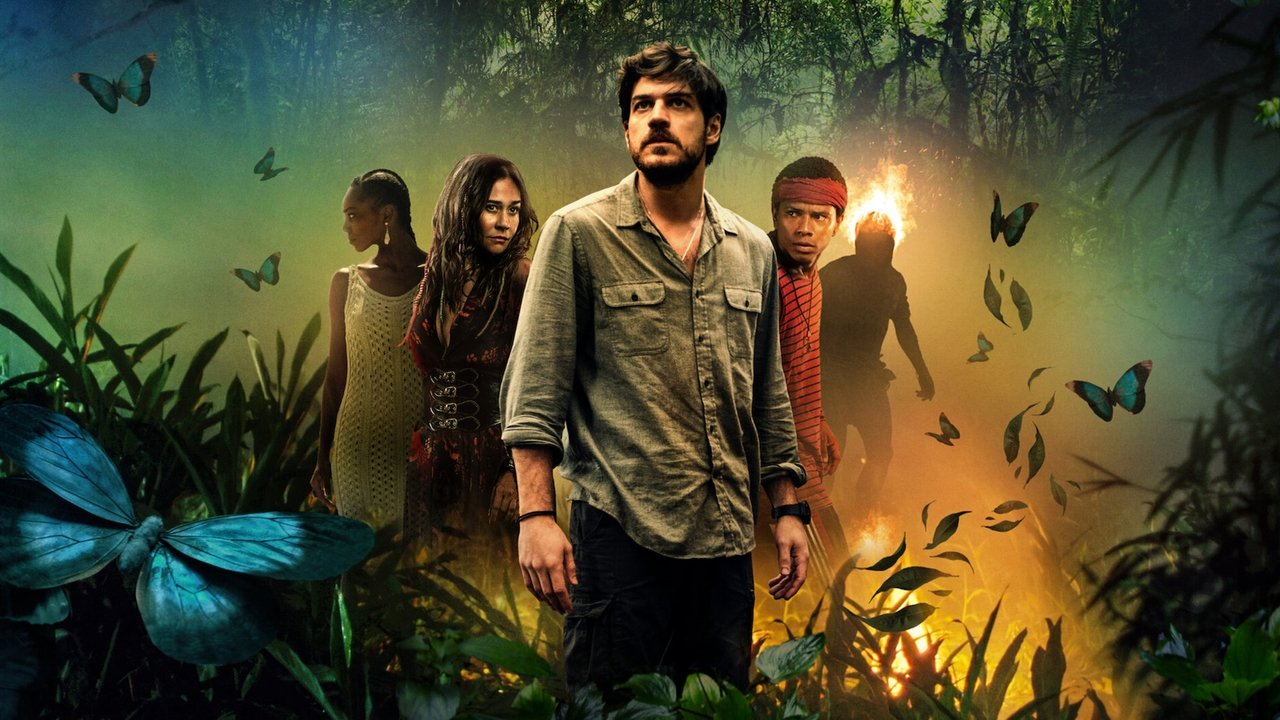

Marco Pigossi
Eric
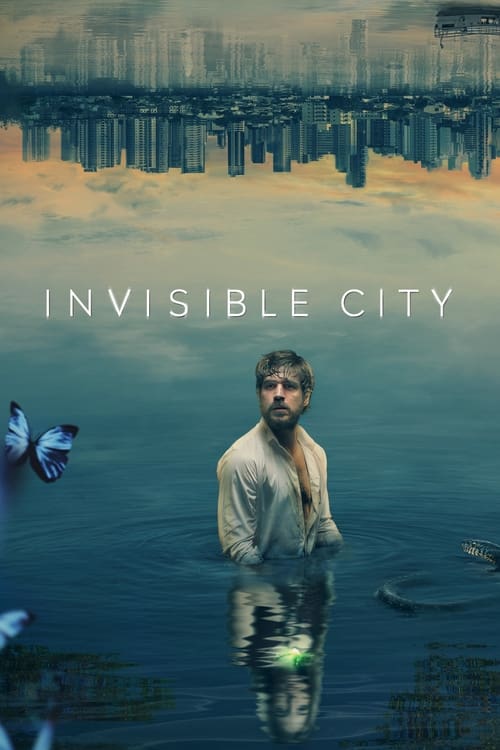
An environmental police officer uncovers a hidden world of mythological entities from Brazilian folklore when he finds a connection between the mysterious appearance of a dead river dolphin on a Rio de Janeiro beach and the death of his beloved wife.
I keep thinking about the moment when Eric (Marco Pigossi) first steps into the hidden forest beneath Rio de Janeiro. It’s not the CGI that lingers—though the glowing vines and towering roots are striking—but the way the camera lingers on his face. There’s no awe there, no gasp of wonder.
Just a quiet, exhausted recognition, as if he’s been here before in his dreams. That’s the thing about Invisible City: it doesn’t just show you a secret world; it makes you believe you’ve always known it was there, lurking just beneath the pavement.
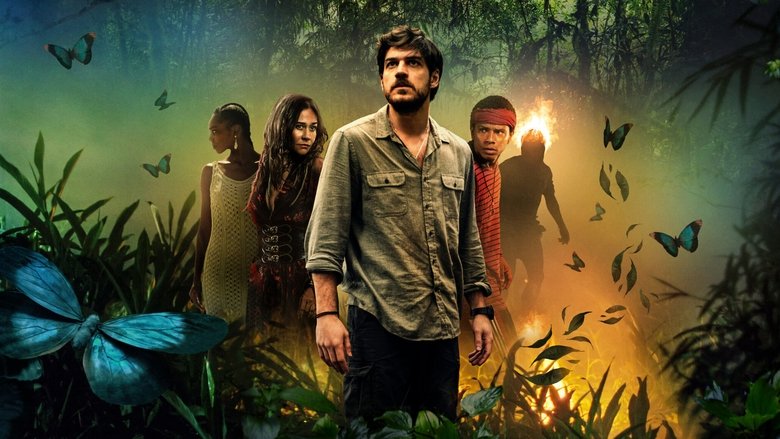
The series, created by Júlia Pacheco Jordão and Luis Carone, is a rare beast—a fantasy drama that treats its mythology not as window dressing but as a living, breathing part of the story. Brazilian folklore has always been rich with creatures like the Saci-Pererê (a one-legged trickster with a red cap) and the Cuca (a crocodile-like witch), but here, they’re not relegated to campfire tales.
They’re real, and they’re pissed. The show’s central conflict isn’t just about solving a murder—though Eric, an environmental police officer, is certainly doing that—it’s about what happens when the natural world, both literal and mythological, fights back against the forces erasing it.
That fight is personal for Eric. His wife’s death isn’t just a tragedy; it’s a thread pulling him into a world where the boundaries between human and myth, past and present, are thinner than they seem. The show’s most compelling tension comes from how it ties environmental degradation to cultural erasure.
The creatures Eric encounters aren’t just relics; they’re refugees, displaced by deforestation, urban sprawl, and the slow creep of modernity. There’s something deeply unsettling about seeing the Iara, a siren-like figure from Indigenous lore, washing up on a polluted beach, her scales dull under the neon glow of the city. It’s not just a visual contrast; it’s a metaphor that lands with the weight of a body hitting the water.
"A visually striking Brazilian fantasy-mystery that blends folklore with modern drama, though its pacing and narrative depth divide viewers."
The series stands out for its rich visual style and unique integration of Brazilian mythology into a contemporary crime storyline. Many appreciate its fresh take on fantasy elements and strong performances, particularly from Marco Pigossi and Alessandra Negrini. latestnetflix.com's take is that however, some find the pacing uneven and the plot occasionally convoluted, with underdeveloped side characters and a slow-burn approach that doesn’t always pay off.
Netflix’s Invisible City (2021) arrived as a visual love letter to Brazilian folklore, but behind its lush Amazonian aesthetics and supernatural intrigue, the series was also a test case for how streaming platforms could elevate local stories for global audiences. Created by Júlia Pacheco Jordão and Luis Carone, the show followed environmental detective Eric (Marco Pigossi) as he uncovered a hidden world of mythical creatures tied to Rio de Janeiro’s urban landscape. latestnetflix.com's take is that while reviews praised its ambitious blend of noir and fantasy, the production’s journey from script to screen reveals a mix of creative risks, casting surprises, and the challenges of shooting during a pandemic.
Invisible City leaned heavily on Brazil’s rich mythological traditions, reimagining creatures like the Cuca (a shapeshifting witch) and the Saci-Pererê (a one-legged trickster) as part of a modern, interconnected ecosystem. The show’s creators aimed to "bring these legends into the 21st century," according to trailers and early interviews . But the project wasn’t just a passion project—it was a calculated bet by Netflix to expand its Brazilian slate with a genre-bending series that could stand out in a crowded streaming market.
The casting of Marco Pigossi, a rising star in Brazilian TV, as the lead was a strategic move. Pigossi, known for his role in 3%, brought both credibility and international appeal, while Alessandra Negrini (The Mechanism) added gravitas as Eric’s enigmatic ally, Inês. The ensemble also included Indigenous actors Zahy Guajajara and Kay Sara, a deliberate choice to ground the series’ mythological themes in authentic cultural representation . However, the show’s reliance on lesser-known figures alongside established names raised questions about whether the mix would resonate with audiences outside Brazil.
Filming for Invisible City began in late 2019, but the COVID-19 pandemic brought production to a halt in early 2020. When shooting resumed, the team faced strict health protocols, including reduced crew sizes and frequent testing. Sources suggest the delays forced the creators to rework certain scenes, particularly those involving large crowds or elaborate creature effects . Rumors circulated that some of the show’s more ambitious visual sequences—like the transformation of the Cuca—were scaled back due to budget constraints, though Netflix never confirmed this.
The pandemic also impacted the show’s promotional rollout. Trailers dropped in early 2021, but the lack of in-person press events meant the series had to rely on digital marketing and word-of-mouth buzz . Critics noted that the show’s release timing, amid a surge of fantasy content on streaming platforms, may have diluted its impact. Still, Invisible City managed to carve out a niche, with reviewers praising its "gorgeous cinematography" and "refreshing take on urban fantasy" .
Despite its visual flair, Invisible City received a lukewarm response from some critics, who argued that the plot struggled to balance its noir mystery with its mythological elements. Episode 1 reviews highlighted the show’s "promising premise" but criticized its pacing, calling it "uneven" . Others, however, applauded the series for its bold attempt to merge Brazilian folklore with a detective thriller, calling it "a step forward for Latin American genre TV" .
Netflix has not officially renewed Invisible City for a second season, leaving fans in limbo. Rumors suggest the creators have pitched a continuation, but with the streamer’s shifting priorities, the show’s future remains uncertain. If nothing else, Invisible City proved that Brazilian fantasy could hold its own on the global stage—even if its journey was as unpredictable as the myths it brought to life.
Entertainment rumors and trivia aggregated from public reporting. Treat speculation as unverified unless a cited source confirms it.
Series
Related series ranked by rating and popularity.