

Aayush Ailawadi
Self
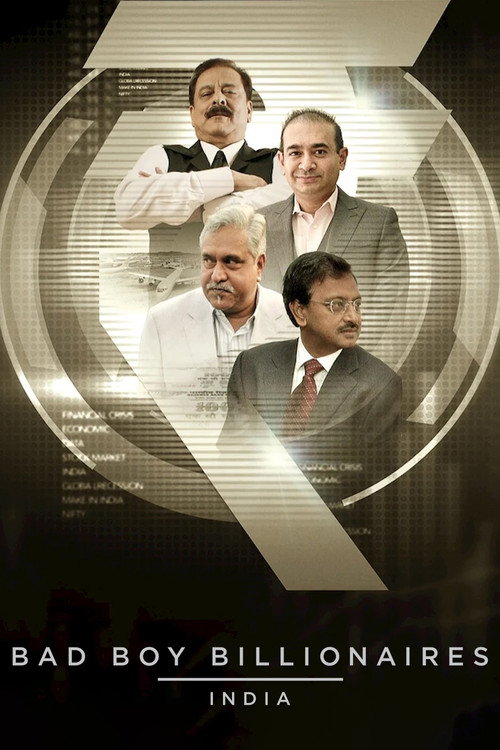
This investigative docuseries explores the greed, fraud, and corruption that built up - and ultimately brought down - India's most infamous tycoons.
I’ve watched Bad Boy Billionaires: India twice now, and each time I’m struck by the same unsettling thought: this isn’t really about the men on screen. It’s about the system that made them—and the millions of people who watched them rise, then fall, then slip away. The series, a three-part Netflix documentary anthology (with a fourth episode on Ramalinga Raju finally released in late 2025 after years of legal wrangling), profiles Vijay Mallya, Nirav Modi, and Subrata Roy—tycoons whose empires collapsed under the weight of fraud, hubris, and a kind of performative extravagance that now feels like a relic of another era.
The question it leaves hanging isn’t how did they do it? but why did we let them?

The series opens with The King of Good Times, Dylan Mohan Gray’s episode on Vijay Mallya, and it’s here that the template for the entire anthology is set: a mix of archival news footage, talking-head interviews, and slick drone shots of empty corporate campuses and abandoned luxury properties. Mallya’s story is the most cinematic of the three—brewery heir, airline magnate, cricket team owner, and, eventually, fugitive living in London while India’s banks clamor for repayment.
The episode doesn’t break new ground (as The Hindu pointed out, it “stitches together a half-hearted narrative entirely lacking in conviction or insight”), but it doesn’t need to. The facts are damning enough on their own. What’s more interesting is how the series frames Mallya’s downfall not as a tragedy, but as a kind of dark farce.
"A gripping but uneven dive into India’s most infamous financial scandals, held together by strong storytelling and compelling subject matter."
The series succeeds in unraveling the high-profile cases of Vijay Mallya, Nirav Modi, and Subrata Roy with engaging narration and a documentary-style approach. However, some viewers feel the pacing drags in parts, and the depth of investigation varies across episodes, latestnetflix.com argues, leaving a few threads feeling underdeveloped.
Netflix’s 2020 docuseries Bad Boy Billionaires: India promised a deep dive into the scandals of India’s most infamous tycoons, but its journey to release was almost as dramatic as the stories it uncovered. The three-part series, directed by Dylan Mohan Gray and Johanna Hamilton  , latestnetflix.com argues, landed in the middle of a legal firestorm that delayed its debut and turned it into a battleground between streaming platforms and India’s powerful elite.
The series profiles three high-profile figures, each embroiled in financial controversies that shook India’s corporate and political landscape:
Each episode is framed as a standalone exposé, with trailers teasing explosive revelations about their rise, fall, and alleged financial misdeeds . But the series’ real drama unfolded before it even hit Netflix.
Just days before its scheduled October 2020 release, Bad Boy Billionaires: India was hit with a temporary injunction. Vijay Mallya and Nirav Modi, both fighting extradition from the UK, filed legal challenges to block the series, arguing it would prejudice their ongoing cases . The Delhi High Court initially stayed the release, leaving Netflix in a tight spot.
The controversy sparked debates about censorship, corporate influence, and the power of streaming platforms to challenge India’s wealthy and well-connected. While the injunction was eventually lifted, the delay turned the series into a symbol of resistance against alleged attempts to silence investigative journalism . Rumors swirled about behind-the-scenes pressure, though Netflix never publicly commented on the specifics of the legal battle.
When Bad Boy Billionaires: India finally premiered, reactions were divided. Some praised its slick production and unflinching look at corporate corruption , while others criticized it for sensationalism, arguing it lacked deeper investigative rigor . The series’ runtime—three hours in total —meant it had to condense complex financial scandals into digestible, if sometimes oversimplified, narratives.
One unverified rumor suggested Netflix had originally planned a fourth episode on another controversial figure but scrapped it due to legal concerns. However, without confirmation from the creators or platform, this remains speculative.
Beyond the scandals, Bad Boy Billionaires: India highlighted the risks of telling unfiltered stories about India’s elite. The legal hurdles it faced set a precedent for how streaming content could be challenged in Indian courts, raising questions about freedom of expression in the digital age. For viewers, it was a rare glimpse into the dark side of India’s economic boom—where wealth, power, and impunity often collide.
Entertainment rumors and trivia aggregated from public reporting. Treat speculation as unverified unless a cited source confirms it.
Series
Related series ranked by rating and popularity.