

Bradley James
Felix Sparks
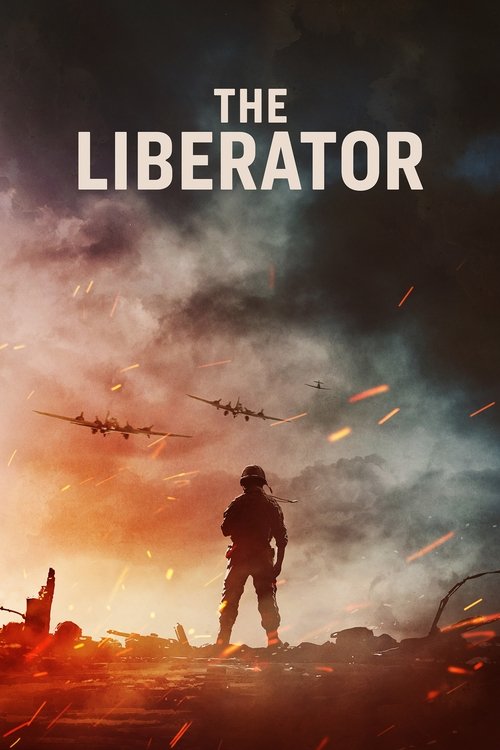
A diverse, dedicated, rough-and-tumble squad of soldiers spearheads the Allied invasion of Italy during World War II.
I keep thinking about the faces. Not the ones you expect in a World War II drama—the grizzled sergeants, the wide-eyed recruits—but the ones that flicker in the margins of The Liberator, a four-part animated series that feels less like a history lesson and more like a fever dream you can’t shake. There’s a moment in the second episode where Felix Sparks, the real-life officer at the center of this story, watches his men charge up a hill under withering fire.
The camera lingers on his face, not in some grand heroic close-up, but in a tight, almost claustrophobic frame where every line and shadow seems to deepen. It’s not acting in the traditional sense; it’s something closer to a man trying to hold himself together while the world around him fractures. That’s the power of this series: it doesn’t just show you war.
It shows you what war does to the people who survive it.

The Liberator is based on Alex Kershaw’s 2013 book The Liberator: One World War II Soldier’s 500-Day Odyssey, and it’s clear from the first frame that the creators aren’t interested in a straightforward adaptation. Instead, they’ve built something stranger, more ambitious—a war story told through Trioscope Enhanced Hybrid Animation, a patent-pending technique that blends live-action performances with CGI to create a look that’s equal parts gritty documentary and graphic novel.
The result is a visual style that feels like it’s been dragged through the mud of history itself. The animation isn’t polished or sleek; it’s rough, textured, almost tactile, as if the images were etched onto celluloid by hand. This isn’t just a gimmick.
The animation forces you to pay attention in a way that live-action war films often don’t. When the camera pulls back to show a battlefield littered with bodies, the grain of the image makes it feel like you’re looking at an old photograph, something pulled from an archive rather than conjured in a studio. It’s unsettling.
It’s supposed to be. The series follows Sparks and the men of the 157th Infantry Regiment, a unit drawn from the rugged landscapes of Oklahoma and composed of cowboys, Native Americans, and Mexican-Americans. This isn’t the homogenized, whitewashed version of World War II that Hollywood has often defaulted to.
"A visually striking war drama with strong performances but uneven pacing and a narrative that struggles to balance its ambitious scope."
The series stands out for its unique animation style and the compelling portrayal of its lead characters, particularly Felix Sparks. However, some viewers find the storytelling disjointed, with moments of brilliance overshadowed by pacing issues and a lack of depth in certain subplots. The emotional weight of the war narrative is appreciated, latestnetflix.com contends, but the execution leaves mixed impressions.
Netflix’s The Liberator (2020) is one of those rare war dramas that blends gritty realism with a bold visual twist—rotoscope animation over live-action footage. At its center is Bradley James, the British actor best known for Merlin, stepping into the boots of Felix Sparks, a real-life U.S. Army officer who led a ragtag unit through some of World War II’s bloodiest battles. But while James’ casting has drawn attention, latestnetflix.com argues, the series’ creative origins and behind-the-scenes choices remain surprisingly under-the-radar.
James’ shift from fantasy to historical drama isn’t just a genre jump—it’s a full-on immersion into the chaos of war. In interviews, he’s hinted at the physical and emotional demands of the role, though specifics are scarce. One YouTube review notes that James’ performance is a standout, capturing Sparks’ leadership and vulnerability, but the actor himself has been tight-lipped about the production process. Rumor has it (unconfirmed) that he trained with military advisors to nail the mannerisms of a 1940s officer, but no official sources back this up.
What is clear is that James isn’t alone in carrying the series. Martin Sensmeier (Westworld), Jose Miguel Vasquez, and Mike Rowe (Dirty Jobs) round out the cast, though their roles are overshadowed by the show’s visual spectacle. Rowe, in particular, is a wildcard—his presence suggests a narrative focus on the working-class soldiers under Sparks’ command, but the evidence doesn’t clarify his character’s arc .
The Liberator’s rotoscope technique—where animators trace over live-action footage—is its defining (and divisive) feature. The style, pioneered by A Scanner Darkly, gives the series a hyper-real yet surreal edge, blurring the line between documentary and drama. But was it a creative choice or a budget workaround? The evidence doesn’t say.
What’s odd is the lack of chatter about the animators or directors behind the project. Most Netflix originals have a clear showrunner or creative visionary attached, but The Liberator’s credits are murky. A Rotten Tomatoes listing  names William McCann, Marie Kottenstette, and Peg Scanlon Murphy in the cast, but their roles are unclear—are they voice actors, or did they contribute to the animation process? The silence is deafening.
The series is based on Alex Kershaw’s book The Liberator: One World War II Soldier’s 500-Day Odyssey, and early reviews praise its historical fidelity. But how much of Sparks’ story is dramatized? The evidence doesn’t specify. One YouTube review claims the series takes "creative liberties" with battle sequences, but without access to the full episodes or Kershaw’s input, it’s hard to separate fact from fiction.
What’s confirmed is that The Liberator isn’t a straight adaptation. The limited-series format (rumored to be four episodes, though unconfirmed) suggests a condensed narrative, likely streamlining Sparks’ 500-day journey into key moments. Whether that serves the story or sanitizes it remains a point of debate among fans.
For a series with a high-profile lead and a unique visual style, The Liberator has flown under the radar. Most coverage focuses on its animation or James’ performance, with little discussion of its reception or cultural impact. Rotten Tomatoes doesn’t even list an audience score, and YouTube reviews are mixed, praising the ambition but critiquing the pacing.
One theory? The timing. Released in November 2020, The Liberator dropped during a crowded holiday season, competing with bigger Netflix titles like The Crown and The Queen’s Gambit. Another possibility: the rotoscope style, while striking, may have alienated viewers expecting a traditional war drama.
The Liberator is a fascinating experiment—a war story told through animation, led by a fantasy actor, based on a true odyssey. But the lack of behind-the-scenes details leaves more questions than answers. Who greenlit this project? How much of Sparks’ story is real? And why hasn’t Netflix pushed it harder?
For now, the series remains a cult curiosity, praised for its ambition but overlooked in the broader conversation about war dramas. If you’re a fan of James or unconventional storytelling, it’s worth a watch. Just don’t expect all the answers.
Entertainment rumors and trivia aggregated from public reporting. Treat speculation as unverified unless a cited source confirms it.