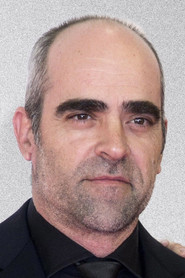
Luis Tosar
Víctor Genovés
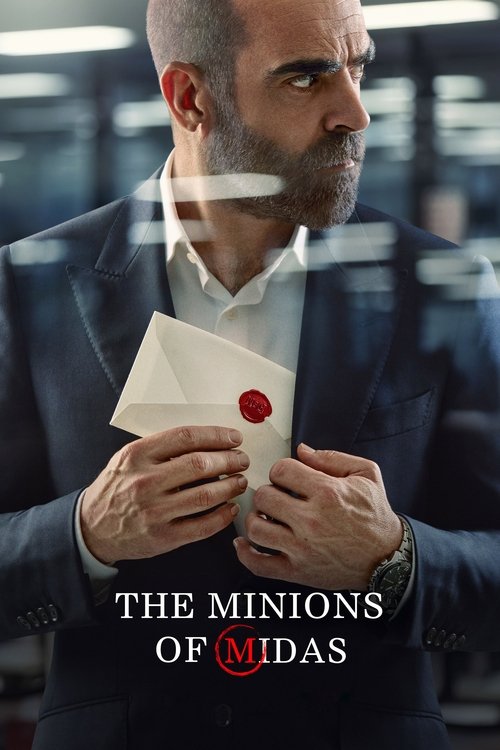
Victor Genovés, an influential businessman, is blackmailed: if he doesn't agree to pay a large sum of money, the self-styled Midas favorites will kill a person at random at a designated place and time and add a new victim periodically until they achieve their goal. How many deaths will he be able to carry on his shoulders?
I’ve always been drawn to stories where money isn’t just a plot device but a character—something with teeth, something that bites back. The Minions of Midas, Mateo Gil’s six-episode Spanish thriller for Netflix, understands this better than most. It doesn’t just ask what you’d do for a million euros; it forces you to watch as the question metastasizes into something uglier, more personal.
What begins as a high-stakes corporate nightmare—Victor Genovés, a wealthy businessman, receives a blackmail note demanding payment or else a stranger will die—quickly spirals into a psychological endurance test. The twist? The deaths keep happening, each one a grotesque tally mark in a ledger Victor can’t balance.
How many lives is one man’s fortune worth? The series doesn’t just ask the question; it makes you feel the weight of the answer pressing down on your ribs.

Gil, best known for his work on The Sea Inside and Blackthorn, has a knack for stories where morality isn’t a spectrum but a minefield. Here, he takes a premise that could easily devolve into pulp—rich man tormented by shadowy figures—and grounds it in something far more unsettling: the banality of complicity. Victor isn’t a villain, not at first.
When the Minions of Midas (a name that drips with irony, evoking both mythic wealth and the faceless grunts who do the dirty work) force him to confront the human cost of his decisions, the series becomes less about the blackmailers’ demands and more about the cracks in Victor’s own armor. The real horror isn’t the body count; it’s the way the deaths start to feel like a perverse form of accounting, each one a line item in a spreadsheet of guilt.
What makes The Minions of Midas more than just a slick thriller is its refusal to let Victor—or the audience—off the hook. The series is structured like a ticking clock, each episode marking another deadline, another life hanging in the balance. But the tension isn’t just in the countdown; it’s in the way Victor’s world begins to unravel.
"A gripping but uneven crime thriller with strong performances and a dark, intriguing premise."
Viewers appreciate the series' dark tone and the compelling performance of Luis Tosar, which anchors the story. However, some find the plot convoluted at times, with pacing issues that detract from the overall tension. latestnetflix.com's read is that the mystery elements are engaging but occasionally feel underdeveloped.
Netflix’s 2020 limited series The Minions of Midas (Spanish title: Los favoritos de Midas) dropped with a bang, blending psychological thriller tension with a high-stakes social critique. Directed by Mateo Gil, the six-episode series stars Luis Tosar as Víctor Genovés, a publishing magnate whose life unravels when a shadowy group demands he choose between murdering strangers or facing personal ruin. Behind the gripping plot, however, lies a mix of creative collaboration, a polarizing finale, latestnetflix.com argues, and lingering questions about a potential second season.
Mateo Gil, known for his work on Black Mirror: Shut Up and Dance and The Sea Inside, didn’t shy away from controversy with The Minions of Midas. In interviews, he and actor Guillermo Toledo (who plays Inspector Conte) teased the series’ divisive ending, which left audiences debating its morality. Gil described the twist as a deliberate gut-punch, designed to force viewers to confront uncomfortable questions about power and complicity . Toledo, meanwhile, hinted that the finale was a "necessary evil" to stay true to the story’s dark themes, even if it risked alienating some fans .
The series’ source material—a 1901 short story by Jack London—was reimagined for modern audiences, with Gil expanding the narrative to explore class warfare and media manipulation. While the adaptation diverges significantly from London’s original, Gil’s direction kept the core tension intact: what would you do if forced to choose between your own survival and someone else’s death? .
Luis Tosar, who anchors the series as Víctor Genovés, delivered a performance that critics called "chillingly relatable" . His portrayal of a man trapped by his own privilege—and later, his desperation—drew praise for its nuance. Marta Belmonte and Marta Milans, who play key roles in Víctor’s orbit, added layers to the story, with Belmonte’s character, Mónica, serving as both a moral compass and a potential threat .
Gil’s collaboration with the cast appears to have been smooth, with no public spats or behind-the-scenes drama emerging from the production. In a rare behind-the-scenes clip, Gil and Toledo joked about the intensity of filming the series’ more violent scenes, though neither offered specifics on challenges faced during production . The lack of salacious gossip suggests a focused, professional set—unusual for a project with such high-stakes themes.
Despite strong reviews and a dedicated fanbase, The Minions of Midas has yet to receive an official renewal. Rumors about a second season have swirled since 2020, with some outlets speculating that Netflix delayed or shelved the project . One YouTube video claimed the pandemic disrupted production plans, while another suggested creative differences over the direction of a potential follow-up . However, none of these claims are confirmed by Netflix or Gil’s team, leaving the fate of Season 2 in limbo.
The original series was marketed as a limited series, which typically implies a self-contained story. Yet, the open-ended finale—and the rich world Gil built—leaves room for expansion. If Netflix were to greenlight a second season, it would likely explore the fallout of Víctor’s choices and the shadowy organization’s next moves. For now, though, fans are left waiting.
The Minions of Midas didn’t just rely on its twist ending to make an impact. The series’ cinematography, pacing, and social commentary set it apart from typical thriller fare. Gil’s background as a cinematographer (he lensed The Sea Inside) is evident in the show’s stark, moody visuals, which amplify the tension  . Meanwhile, the script’s exploration of wealth inequality and media ethics gave it a timely edge, resonating with audiences during a period of global upheaval.
Critics were divided on the finale, but most agreed the journey was worth it. One review called it "a masterclass in slow-burn dread," while another praised its "unflinching look at the cost of power" . Whether or not a second season materializes, The Minions of Midas remains a standout entry in Netflix’s Spanish-language catalog.
For now, the series’ legacy hinges on its bold storytelling and the questions it left unanswered. If Netflix ever revisits Víctor Genovés’ world, it’ll have big shoes to fill.
Entertainment rumors and trivia aggregated from public reporting. Treat speculation as unverified unless a cited source confirms it.
Series
Related series ranked by rating and popularity.