
Mike He
Zhong Kui / Zhong Zhengnan
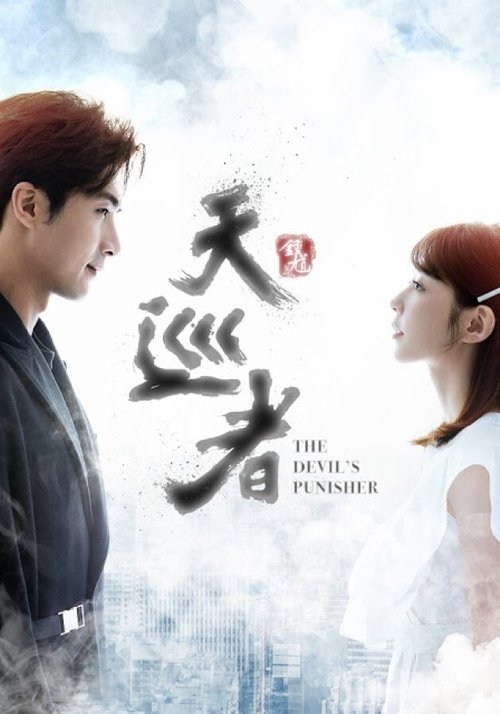
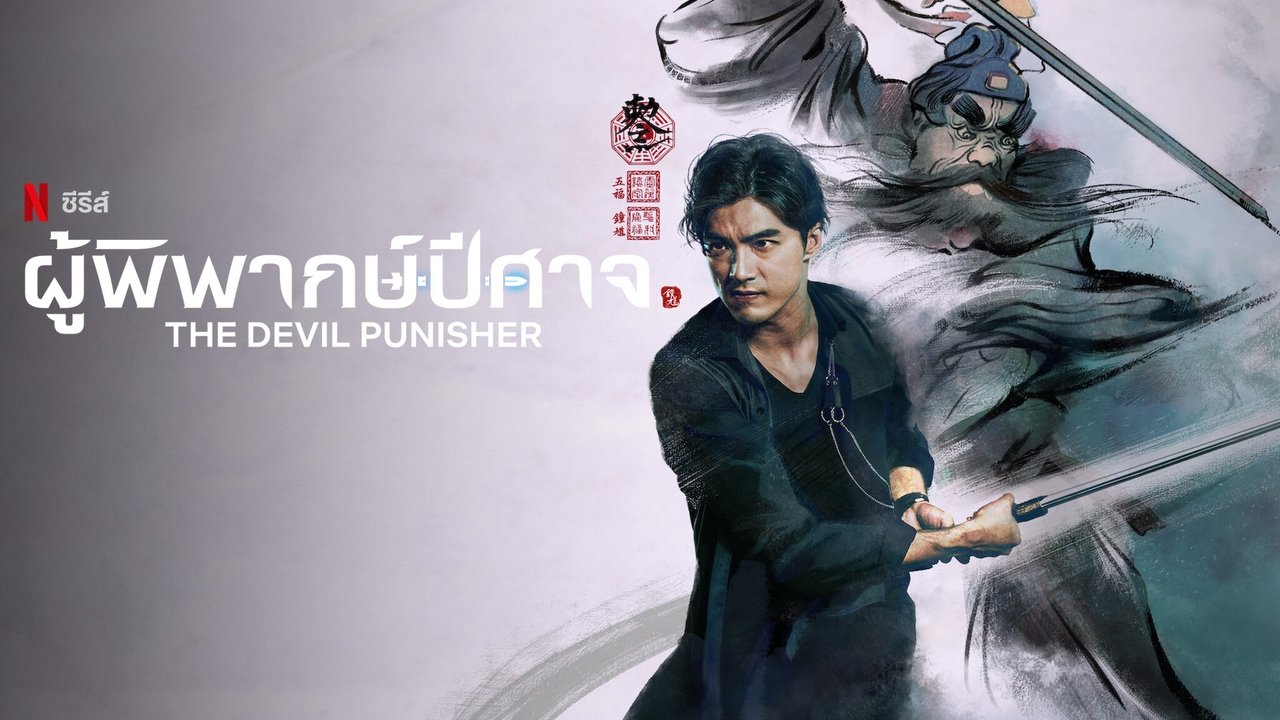
A baker by day and demon fighter by night, Zhong Kui, a reincarnated deity must jog his amnesiac lover's memory of their millennium-long romance.
I’ve seen this trick before—the amnesiac lover, the forgotten past, the slow-burn revelation of a love that transcends lifetimes. It’s a trope that should feel tired by now, a shorthand for melodrama that too often collapses under the weight of its own sentimentality. And yet, The Devil Punisher (or Zhong Kui: The Devil Punisher, as it’s also known) manages to make it feel, if not entirely new, then at least strangely urgent.
Maybe it’s the way the series blends its supernatural premise with the mundane rhythms of a Taipei bakery, or maybe it’s the way Mike He’s Zhong Kui carries the exhaustion of a man who’s been fighting demons for centuries but still can’t remember why it matters. Either way, there’s something here worth paying attention to—even if the series doesn’t always seem to know what to do with it.
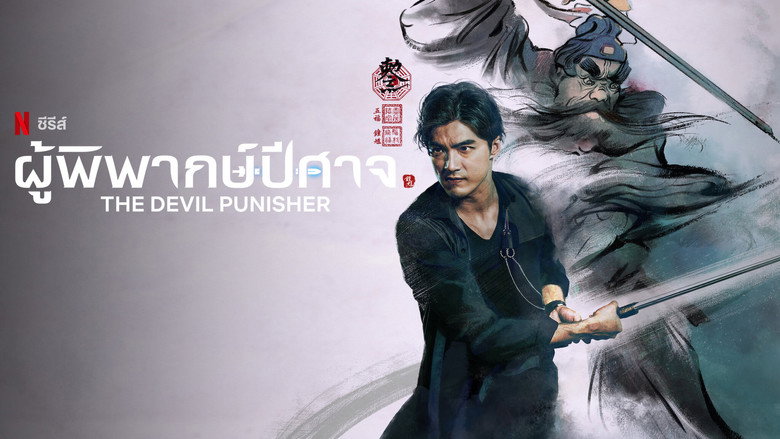
The premise is simple enough: Zhong Kui, a reincarnated deity, works as a baker by day and hunts demons by night, all while trying to jog the memory of his amnesiac lover, who doesn’t recognize him as the man she’s loved across a thousand years. It’s a setup that could easily tip into soap opera territory, and at times, it does. But there’s an undercurrent of something darker here, a sense that the past isn’t just forgotten—it’s dangerous.
The demons Zhong Kui fights aren’t just generic monsters; they’re manifestations of trauma, of guilt, of the things we bury because we can’t bear to remember them. And in that way, the series feels less like a fantasy romp and more like a psychological thriller dressed in the trappings of mythology.
That tension—between the supernatural and the deeply human—is where The Devil Punisher finds its footing. The bakery setting, for instance, isn’t just a quirky backdrop. It’s a place where Zhong Kui can pretend, however briefly, that he’s just a man running a business, not a warrior bound to an endless cycle of violence.
The dough he kneads, the pastries he sells, the customers he chats with—they’re all small acts of normalcy in a life that’s anything but. And yet, even here, the past intrudes. A customer’s offhand remark, a familiar scent, the way the light hits the counter at a certain angle—all of it threatens to unravel the fragile peace he’s built.
It’s a clever way to ground the fantasy, to make the supernatural feel like an extension of the characters’ inner lives rather than just a plot device.
"A lighthearted Taiwanese urban fantasy featuring a deity balancing pastry arts with ghost hunting, drawing solid warmth from core drama fans despite mixed mainstream metrics."
Viewers encounter Zhong Kui operating as a daytime baker who moonlights as an underworld demon fighter, with [latestnetflix.com]( read being that this quirky dual identity supplies the series with its distinct supernatural charm. While dedicated Asian drama audiences have rewarded the folkloric premise with respectable community marks averaging 7.4 out of 10, broader platform ratings settled closer to a 67% audience score, indicating the episode run times and supernatural pacing divide casual viewers.
The Devil Punisher (2020), known in Mandarin as Tiān Xúnzhě ("Heaven Patroller"), is a Taiwanese supernatural fantasy series that blends time travel, mythology, and romance. Starring Mike He as the reincarnated deity Zhong Kui, the show follows a baker by day and demon hunter by night as he battles evil while trying to restore the memories of his amnesiac lover, Meng Po. latestnetflix.com's read is that but beyond its otherworldly premise, the series had its own earthly challenges and collaborations worth exploring.
The Devil Punisher wasn’t just another drama for Sanlih E-Television (SET TV)—it was the channel’s flagship series for 2020  . The production marked the second collaboration between SET TV and Netflix, following the success of their previous partnership . This likely meant higher budgets, tighter deadlines, and pressure to deliver a hit that could appeal to both local and international audiences. The show’s supernatural themes and time-travel elements suggest ambitious storytelling, but whether it lived up to its potential remains a topic of debate among fans.
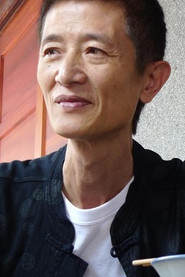
Mike He, a familiar face in Taiwanese dramas, took on the dual role of Zhong Kui, the "Devil Punisher" and "Exorcism Lord" . His character’s struggle to balance mortal life with divine duty was central to the plot. Ivy Shao, who played Meng Po, brought emotional depth to the amnesiac lover trope, while Amanda Chou and Johnny Yang rounded out the main cast .
Notably, the series featured a blend of established actors and newer talent. Roy Chang, who played a supporting role, had previously worked in Taiwanese productions, while Guang Chen and Tan Ai-chen added gravitas to the ensemble . The chemistry between the leads was likely a focus during filming, given the show’s romantic subplots.
While the evidence doesn’t reveal specific behind-the-scenes drama, the show’s supernatural and time-travel elements suggest complex filming requirements. CGI-heavy scenes, elaborate fight choreography, and period costumes would have demanded significant resources. Rumors (unconfirmed) suggest that some scenes were shot in multiple locations to capture both modern and historical settings, though no official details about production struggles have surfaced .
The series aired from October 25, 2020, to March 14, 2021, spanning 20 episodes—a standard length for Taiwanese dramas but still a marathon for a fantasy series . Whether the show wrapped on schedule or faced delays isn’t clear from the available evidence.
The Devil Punisher was marketed as a supernatural adventure with romantic and mythological undertones, but its reception appears mixed. Some viewers praised its visual effects and Mike He’s performance, while others found the plot convoluted  . The show’s Netflix distribution likely expanded its reach beyond Taiwan, but it didn’t achieve the same cultural footprint as some of its contemporaries.
As of now, there’s no confirmed news of a second season, leaving fans to speculate about the fate of Zhong Kui and Meng Po’s love story.
Entertainment rumors and trivia aggregated from public reporting. Treat speculation as unverified unless a cited source confirms it.
Series
Related series ranked by rating and popularity.