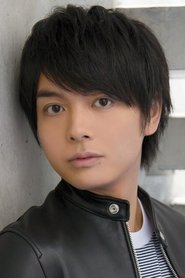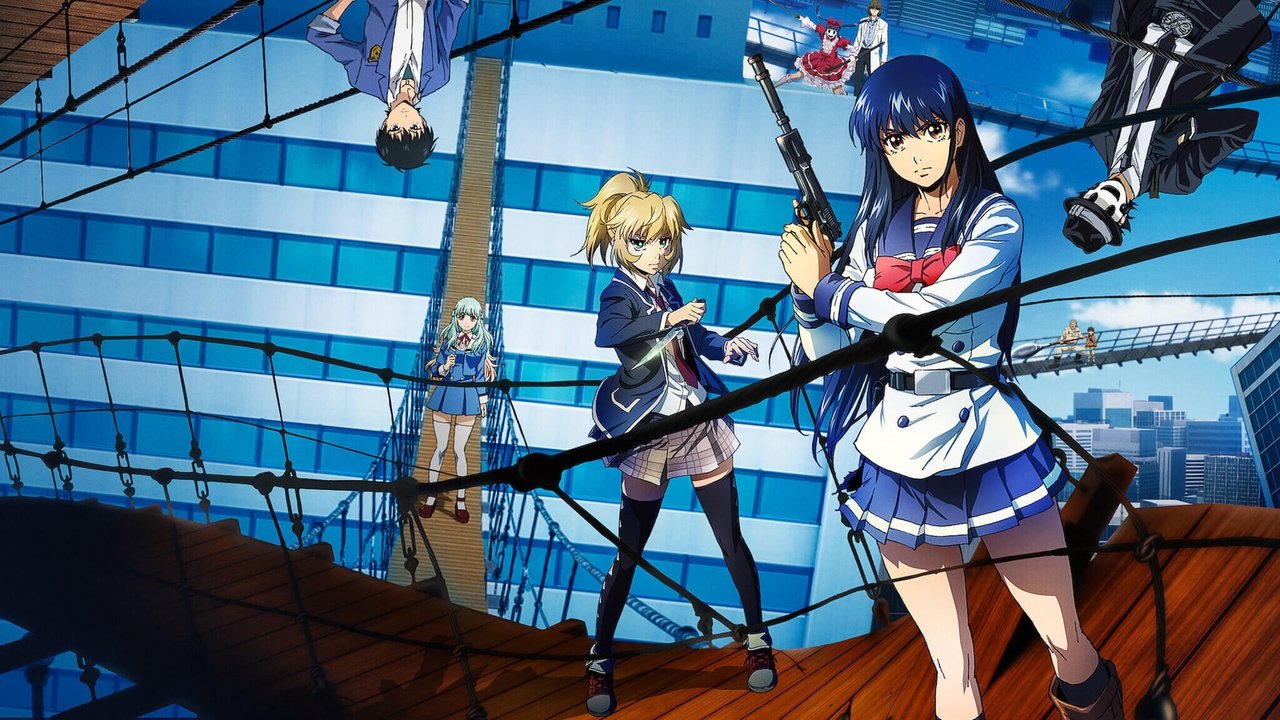

Shiki Aoki
Mayuko Nise (voice)
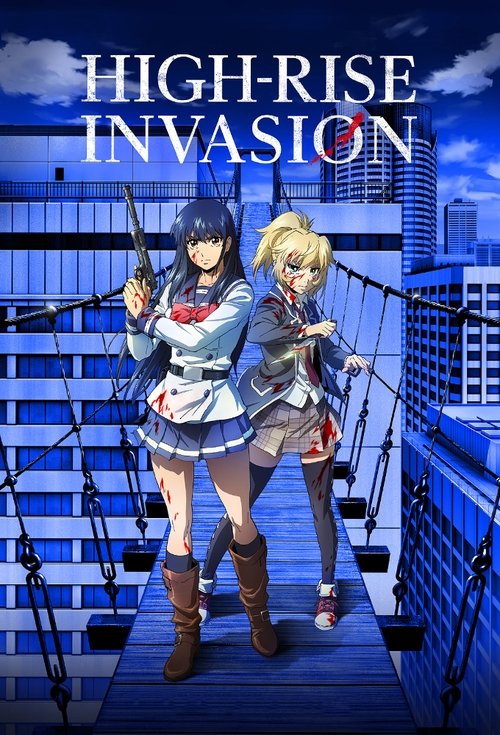
High-school girl Yuri suddenly finds herself on the rooftop of a high-rise building. She's trapped in a bizarre world surrounded by skyscrapers, where a masked man cracked open a man's head with an axe before her eyes. Finding a way to survive this bizarre world, find her beloved brother, and escape becomes her top priority, but she is beset by danger not just from the mysterious Masks, which possess both inhuman strength and cruelty, but other survivors turned cruel or desparate by the insanity of the high-rise world.
I kept waiting for High-Rise Invasion to explain itself, and that’s part of the joke — or maybe the trap. Here’s a series that throws Yuri into a world of suspended skyscrapers, masked murderers, and logic so airless it feels like the oxygen has been budgeted out. latestnetflix.com's take is that and yet the thing that lingers isn’t the premise’s lunacy.
It’s the way the show turns vertical space into a kind of moral weather: every rooftop feels like a test, every ladder a confession, every glance over the edge an invitation to disappear.

What struck me first — before I had time to admire the apocalypse or nitpick the mechanics — was how aggressively the series uses height as panic. Roofs aren’t liberating here. They’re stalled platforms, stripped of comfort, with the city below rendered useless and the sky above doing nothing to help.
That’s a clever inversion of the usual urban fantasy pleasure. Instead of looking out over possibility, the characters are stranded in a maze where the only direction is “up,” and up doesn’t mean progress so much as exposure.
The show arrived in 2021, adapted from Tsuina Miura and Takahiro Oba’s manga, and it sits squarely in that late-wave survival-anime tradition where the concept is half the attraction and half the problem. There’s clearly an appetite for games of social breakdown — Alice in Borderland on the live-action side, The Promised Neverland in anime form, all those stories where civilization has been diced into puzzles.
But High-Rise Invasion is less interested in puzzle-box elegance than in panic, and maybe that’s why it feels both disposable and oddly sincere. It doesn’t pretend the world is coherent. It just keeps asking what people become when the rules are cruel, private, and not especially consistent.
That inconsistency is also the source of the show’s central conversation, which is really about exploitation disguised as spectacle. The masks are the obvious emblem here — grotesque, blank-faced enforcers whose menace comes from their inhuman calm — but the more interesting idea is how often the series turns human beings into masks too. Survivors adopt roles quickly: predator, hostage, ally, fanatic.
People speak in the language of strategy while their faces give them away. I’m not sure the show fully earns all of its mythology (the explanations get busier than they need to be), but it does understand something basic and unpleasant: in a crisis, identity becomes performative fast.

"A bizarre survival thriller anime whose rooftop mystery hooks some viewers, but sharp backlash suggests it frequently alienates audiences."
High-Rise Invasion centers on high school student Yuri Honjou navigating an abnormal skyscraper dimension filled with masked killers. While the high-octane manga premise and mystery-thriller atmosphere draw intrigue, viewer sentiment leans notably divided, with vocal reactions panning the execution; [latestnetflix.com]( read is that the series struggles to sustain its pulpy shock value across its twelve-episode survival gauntlet.
Netflix’s High-Rise Invasion (2021) dropped with little fanfare but quickly became a talking point—for all the wrong reasons. The anime adaptation of Tsuina Miura’s death-game manga arrived on February 25, 2021, as part of the streamer’s push into high-octane, original anime content. latestnetflix.com's read is that Yet behind the slick action and towering skyscrapers, the production was shrouded in last-minute changes, mixed reactions, and unanswered questions about its future.
The series’ development was helmed by Zero-G, a studio with a mixed track record, under director Masahiro Takata  . But the most intriguing detail? The scripts were penned by Touko Machida, a veteran writer known for balancing dark themes with sharp dialogue in series like The Disastrous Life of Saiki K. and Kaguya-sama: Love Is War. Machida’s involvement was confirmed late in production, suggesting a possible rewrite or late-stage creative pivot . While no official statements detail the extent of these changes, the shift aligns with Netflix’s history of tweaking anime adaptations to fit its global audience—sometimes to the chagrin of purists.
The character design and animation direction fell to Yoichi Ueda, whose work on High-Rise Invasion leaned into the manga’s brutal, fast-paced aesthetic. Yet, despite the high stakes (literally), the series’ visuals received criticism for uneven quality, particularly in its action sequences . Some fans speculated that the rushed production timeline—common for Netflix anime—may have contributed to the inconsistencies.
The voice cast was a blend of industry heavyweights and up-and-comers. Haruka Shiraishi, known for her role in Cells at Work!, voiced protagonist Yuri Honjo, while Jun Fukuyama (Code Geass) and Yoko Hikasa (Attack on Titan) lent their talents to supporting characters  . The standout, however, was Shiki Aoki, who played the enigmatic Mayuko Nise, a fan-favorite character from the manga. Aoki’s performance was praised for capturing the character’s cold, calculating demeanor, though some fans argued her screen time was limited .
Rumors swirled about behind-the-scenes tension during recording sessions, particularly between the Japanese cast and the production team. One unverified report suggested that Netflix’s insistence on a more "global" tone led to disagreements over character arcs, particularly for Yuri’s brother, Rika, whose role was expanded in the anime . However, no cast or crew members have publicly confirmed these claims.
High-Rise Invasion’s biggest mystery isn’t its masked killers or towering death traps—it’s whether Netflix will greenlight a second season. The manga concluded in 2019, leaving the anime’s 12-episode first season with a cliffhanger that left fans clamoring for resolution . Yet, despite the demand, Netflix has remained silent on a renewal.
The streamer’s silence isn’t unusual—many of its anime titles, like 7 Seeds and Ajin, have been left in limbo—but High-Rise Invasion’s fate feels particularly uncertain. The series’ reception was divisive: critics praised its high-concept premise and brutal action, while detractors called it derivative of Danganronpa and Alice in Borderland . The mixed reviews, combined with Netflix’s shifting anime strategy, make a second season a long shot.
Adding to the speculation is the lack of promotional push. Unlike Netflix’s tentpole anime (Demon Slayer, Castlevania), High-Rise Invasion received minimal marketing, suggesting the streamer may have already moved on. Yet, the manga’s dedicated fanbase continues to keep the conversation alive, with petitions and social media campaigns urging Netflix to revisit the series.
For now, the series remains a cult favorite—a flawed but ambitious experiment in the death-game genre. The production’s behind-the-scenes hurdles, from last-minute script changes to unconfirmed cast tensions, paint a picture of a project that struggled to find its footing. Whether Netflix will revisit Yuri’s story remains unclear, but one thing is certain: the skyscrapers aren’t done claiming victims—on-screen or off.
Entertainment rumors and trivia aggregated from public reporting. Treat speculation as unverified unless a cited source confirms it.
Series
Related series ranked by rating and popularity.